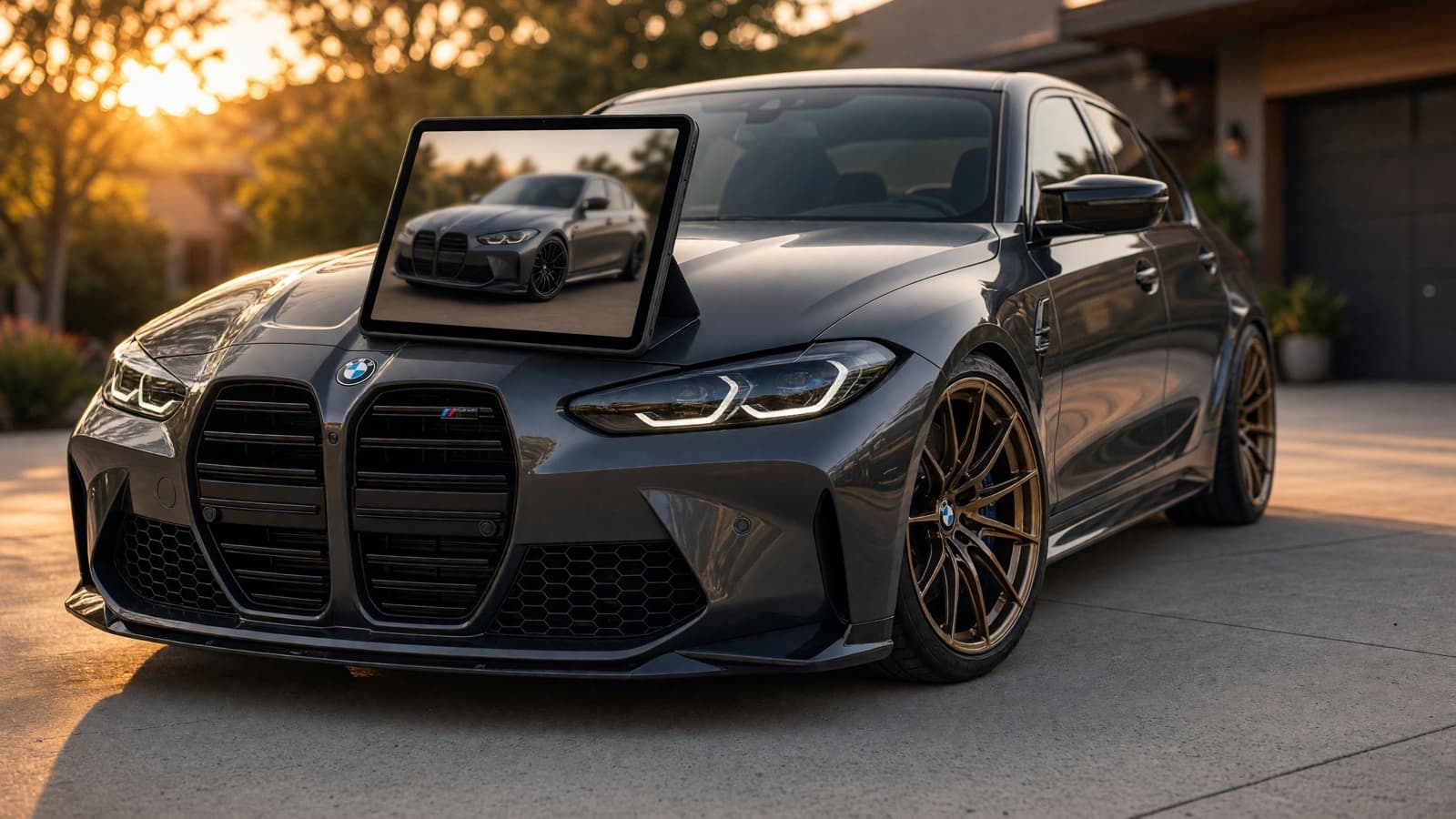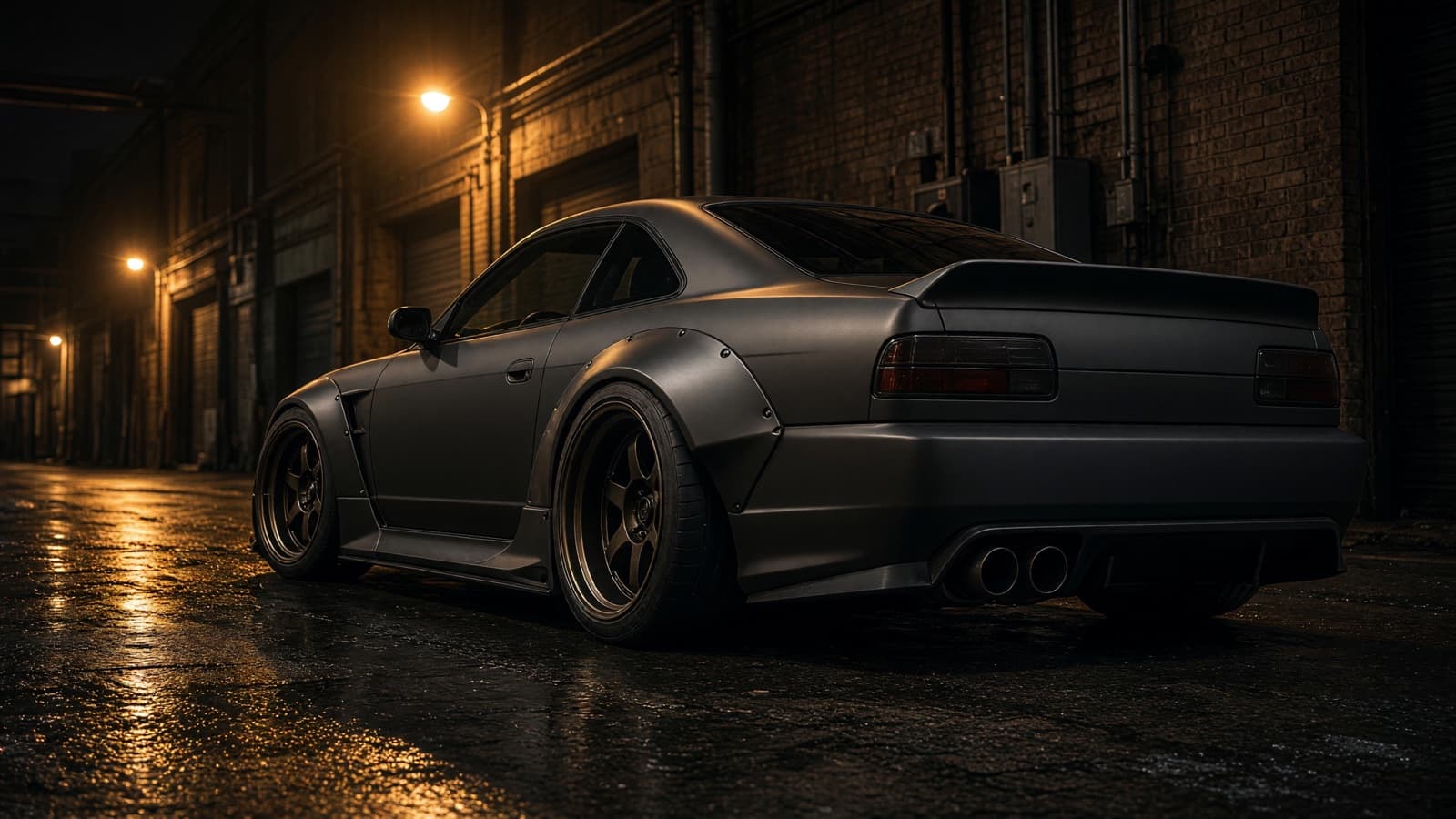
When Dodge added 3.5 inches of width to the Challenger Hellcat, the result wasn't just a look. Stellantis' own numbers: skidpad grip up from .93 g to .97 g, about 2 seconds a lap faster on a 1.7-mile track, 305-section tires where 275s used to fit. That's the whole argument for a wide body kit in one press release - width is what lets you run the rubber that makes the car faster and the stance that makes it look faster.
The aftermarket version of that idea runs from $170 bolt-on flares to $150,000 Liberty Walk conversions. This guide covers what a wide body kit actually is and the four types makers sell, real 2026 prices, what the kits demand in wheels and bodywork, what the OEM widebodies prove, whether it's legal, and the two Japanese builders whose cut-up supercars started the whole thing.
What is a wide body kit?
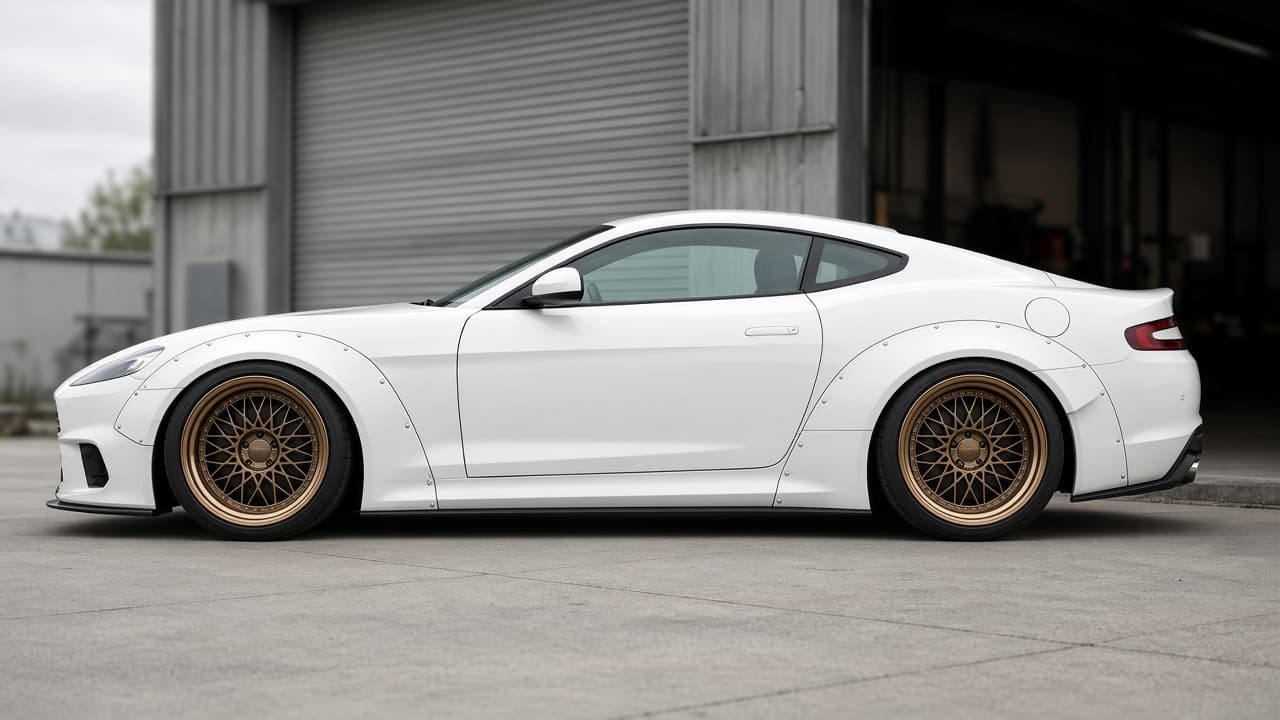
A kit that widens the fenders and quarter panels so wider wheels fit under - not past - the body. The makers describe four ways of doing it:
- Rivet-on overfenders that require cutting. The stance-culture default. Liberty Walk's kit pages say it plainly - "Cutting body is required for install" - and its install video shows the method: cut the fenders, tap-screw the flares on. Rocket Bunny/Pandem kits come the same way: "Body cutting and inner fender sealing are required for installation." Pandem's GR86 overfenders add +65 mm per side in front and +85 mm at the rear.
- Molded fiberglass-blend panels. Extreme Dimensions' Duraflex material is "fiberglass, plastic, and polyester resin" with a proprietary polymer blend for flexibility - full replacement panels that need blocking, filling, and paint.
- Carbon versions of either - same shapes, big premium (more below).
- No-drill bolt-on flares at the mild end: truck-style Bushwacker flares that mount in existing fender holes, and universal ABS flares from makers like Clinched.
The common thread from every maker: kits ship raw. Liberty Walk lists its parts as "Unpainted," Pandem's arrive "in a raw gel-coat finish, that will require paint prep," and Extreme Dimensions' FAQ answers "do our kits come painted?" with a flat no.
Widebody vs. fender flares: which do you actually need?
Flares add width; a widebody rebuilds the car's silhouette. Clinched's universal flares are the clearest middle ground: 3 mm ABS - the material OE bumpers use - sold per pair from $170 (3 cm) to $330 (15 cm), riveted and bolted on. They still require drilling and cutting the stock fenders, and Clinched's own fitment note tells you what you're really signing up for: "You will need to install a lowered suspension and wider wheels to achieve the right stance."
At the other end, Liberty Walk's Silhouette WORKS kits "replace everything but the roof and doors." That's not a flare decision; it's a body-shop project measured in months. If the goal is 20-30 mm of extra wheel per side and a weekend, flares. If the goal is a different car, a widebody.
What does a wide body kit cost in 2026?
From $170 a pair to more than a new car - and always plus paint. Live prices:
| Kit | Price (Sept 2026) | Notes |
|---|---|---|
| Clinched universal flares | $170-330 per pair | 3 mm ABS, drill and cut to fit |
| Duraflex Grid widebody, Mustang S550 | $4,018-4,976 (15 pieces) | fiberglass blend, unpainted |
| Pandem GR86 V1 | $5,490 / $6,690 with wing | FRP, raw gel-coat, 2-4 month lead time |
| Liberty Walk GR86 | $4,950-12,980 | FRP base, carbon hood and wing options |
| Liberty Walk GT-R R35 Silhouette | $27,000-64,930 | FRP to dry carbon |
| Liberty Walk Ferrari F40 | $127,600-151,800 | yes, really |
Carbon is the multiplier: the same GR86 kit runs $4,950 in fiberglass and $12,980 with carbon hood and wing, and Autoblog reports a full dry-carbon Aventador conversion approaches $200,000 before installation.
Then the second budget line. Every maker expects professional installation - Extreme Dimensions requires test fitting before any paint and warns DIY install "may void the warranty" - and fiberglass prep is where the hours go: Duraflex's own guidance has installers sanding "every square millimeter," block sanding, and filling pinholes before primer. No reputable shop publishes a flat widebody labor rate because every kit and every car differs; get a per-project quote, and expect paint and bodywork to rival the kit price on anything beyond bolt-on flares.
What factory widebodies prove
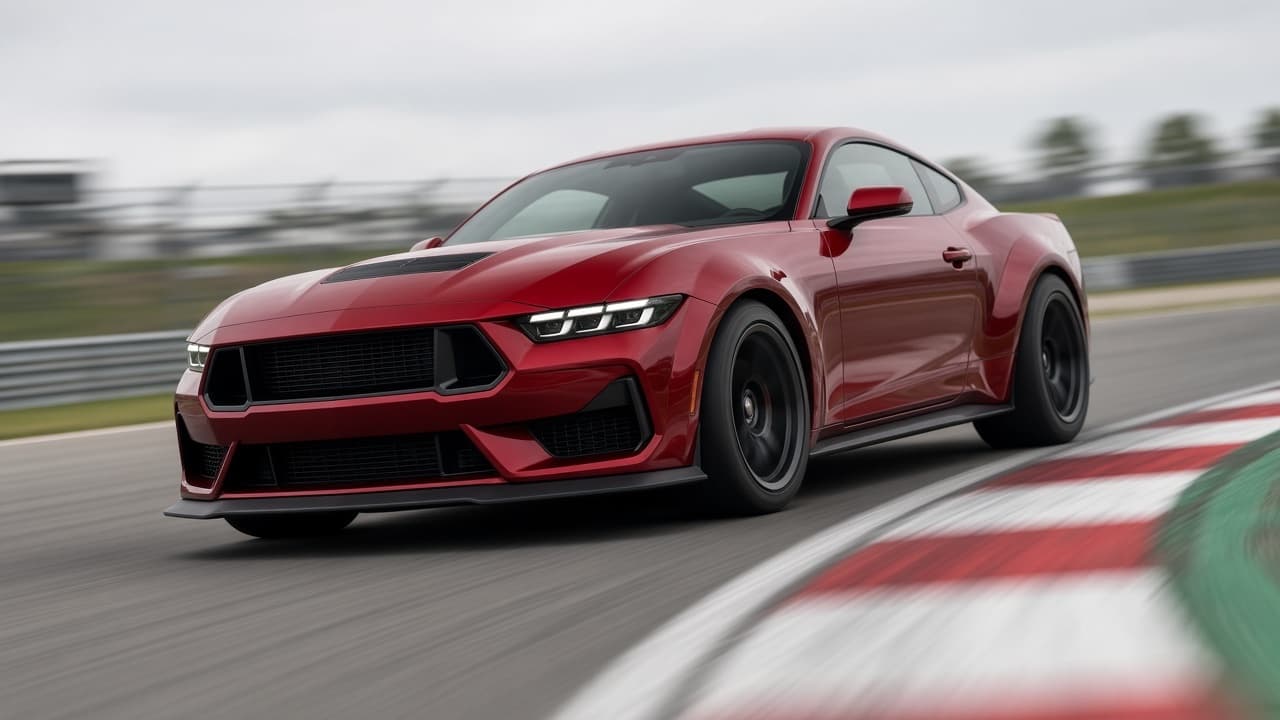
Automakers widen cars for one reason - to fit tires - and they publish the results. The numbers, from the manufacturers' own press releases:
| Factory widebody | Width added | What it bought |
|---|---|---|
| Dodge Challenger Hellcat Widebody | +3.5 in (2017) | 305/35ZR20 tires; .93 → .97 g; ~2 s/lap on a 1.7-mi track |
| Dodge Charger Widebody | +3.5 in (2019) | Hellcat .96 g, Scat Pack .98 g; up to 2.1 s/lap on a 2.1-mi course |
| Porsche 911 Turbo S (992) | +45 mm front, 1,900 mm rear (+20) | 255 front / 315 rear tires; track +42 mm front, +10 mm rear |
| Toyota GR Yaris | +60 mm vs. standard Yaris | 225/40R18 tires; "wide track and flaring of the rear wings" |
| Toyota GR Corolla | +30 mm fenders front and rear | track +60 mm front, +85 mm rear; "high-speed cornering performance improved" |
| Hyundai IONIQ 5 N | +50 mm "at the bottom" | "to accommodate wider tyres" - 275/35R21 |
Sources: Stellantis, Porsche, Toyota, Hyundai. Notice what Dodge changed alongside the fenders: stiffer springs, retuned dampers, bigger sway bars. The width is the enabler; the grip comes from the system. An aftermarket kit gives you the enabler and leaves the system to you - which is why a widebody without wider tires, suspension work, and an alignment is purely cosmetic.
Fitment: what all that width is for
Wide bodies exist to legalize wheel specs that would poke past a stock fender. Pandem doesn't leave it to guesswork - its GR86 kit page recommends 18x9.5 ET-30 front and 18x11 ET-40 rear, offsets that would stick out by inches on the factory car (our offset guide explains why negative ET pushes wheels outward). Liberty Walk's GT-R page states the overfenders "require much larger (width) wheels" and recommends air suspension for the fitment. It's the staggered, cambered, low-offset stance recipe with the fenders finally moved out of the way.
Race cars show the engineering version. Porsche's 992-generation 911 GT3 R runs fender extensions with aramid wheel arches, and the 2026 update added louvres on the front arches that vent pressure to counter nose-dive under braking. On a race car the arch is an aero device; on a street build it's a permission slip for wider rubber.
Is a widebody legal?
Usually - and a widebody often makes an aggressive wheel setup more legal. State fender laws are about coverage, not width. Washington's RCW 46.37.500 requires fenders or flaps that "shall be as wide as the tires behind which they are mounted"; California's Vehicle Code 27600 requires coverage "at least as wide as the tire tread"; Oregon's ORS 815.180 wants fenders extending "at least to each side of the width of the tire," with violations a Class C traffic offense; Montana's 61-9-407 does the same for rear wheels. A wheel poking past a stock fender fails all four. The same wheel tucked under a widebody flare passes.
Germany is stricter and more explicit. TÜV Rheinland's tuning guidance: a wheel may not protrude beyond the body at any point, and widened bodywork needs a parts certificate (Teilegutachten) or ABE - or, for parts without one, an individual inspection (Einzelabnahme). Cut fenders and riveted flares are exactly the kind of modification that route exists for.
Insurance and resale: the paperwork nobody budgets
Tell your insurer before the flares go on. Progressive's guidance is direct: fail to notify the company and "the custom elements may not be covered," rates may rise, and some insurers won't cover heavily modified cars at all; its custom parts coverage typically caps at $5,000, which a Liberty Walk kit clears before paint. UK insurer Admiral says the same about cosmetic changes. On resale, Kelley Blue Book notes body kits can add value but narrow the buyer pool - and a car with cut fenders can't go back to stock. The upside, per Hagerty's modified-market data: modified owners insure their cars for $48K on average versus $35K for stock owners. Widebody buyers are not the budget segment.
Where it came from: Kato, Miura, and cutting up Lamborghinis
Two Japanese builders turned a rule-breaking idea into a global aesthetic. Wataru Kato founded Liberty Walk in Nagoya in 1993; when his widebody Murciélago appeared at SEMA in 2009 it broke, as Autoblog put it, "a sacred rule of car culture: you simply do not cut up a Lamborghini." The look traces to kaido racer culture - the exaggerated 1980s Japanese street style Kato grew up in, documented by Japanese Nostalgic Car back in 2012.
Kei Miura - ex-Kanjo racer, founder of TRA Kyoto - built the other lineage: Rocket Bunny (named for the Kei cars he first made parts for) and Pandem, designed by 3D-scanning every car and CNC-milling the molds, with a stated philosophy of converting "new cars into old styles." Speedhunters followed both from 2012 through 2021. Between them they made riveted overfenders the visual shorthand for the entire stance movement.

See the widebody on your car before anyone cuts a fender
Every other modification on this blog is reversible. A widebody isn't - once the fenders are cut, the car is a widebody car for the rest of its life, and the kit, paint, wheels, and suspension together run well into five figures. That makes it the single most important build decision to see before committing to it.
Upload a photo of your car to VizTunr's free demo and preview the whole look - flared arches, the wheels and stance to fill them - rendered photorealistically on your actual car in about a minute. It's the same virtual try-on technology tuning and body shops use to show a customer the finished build before the first cut. Measure twice, cut once, render first. No account needed.
TuningWide Body KitBody KitsStance
September 5, 2026 · 11 min readCategory: Tuning
Explore related