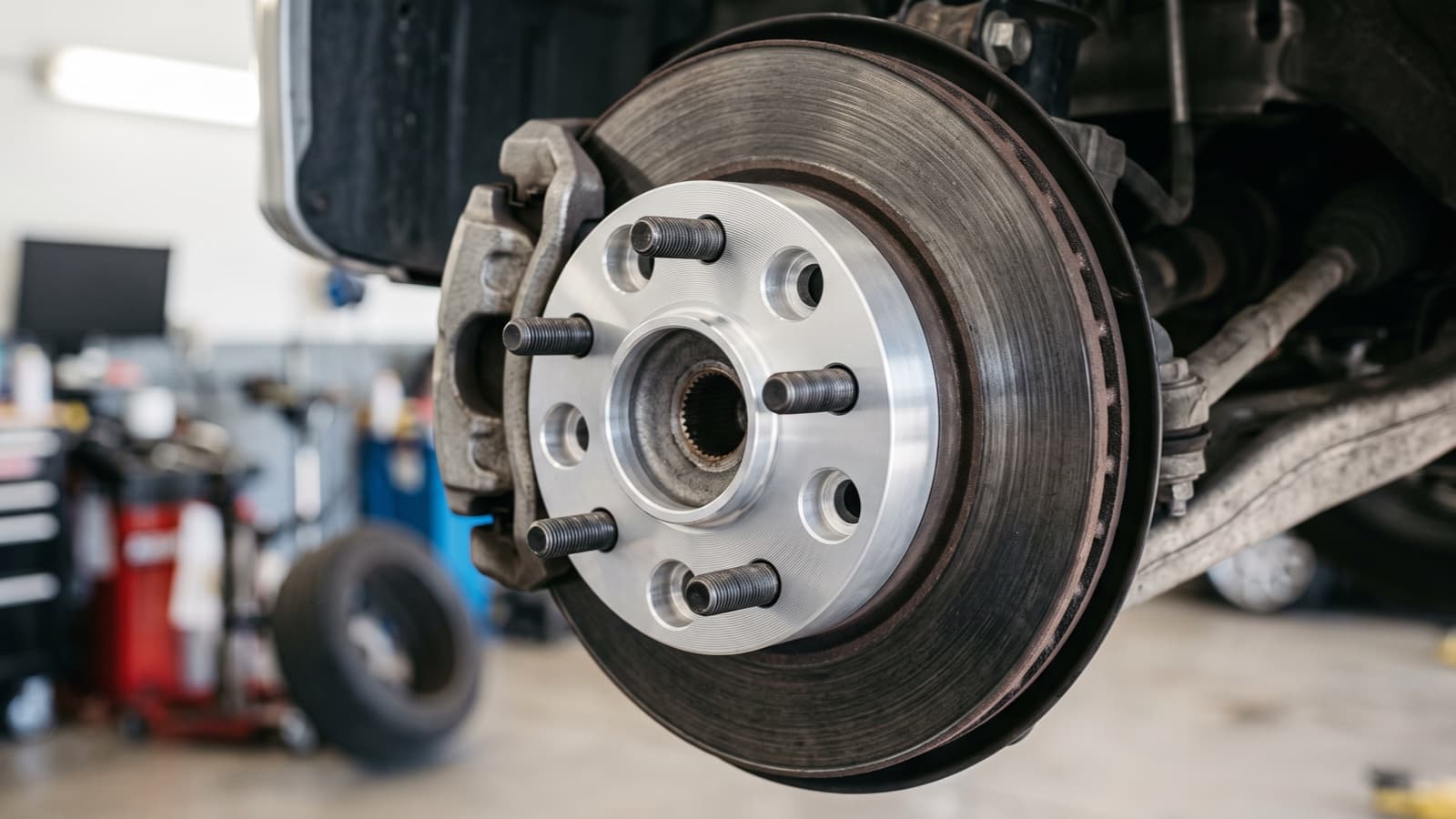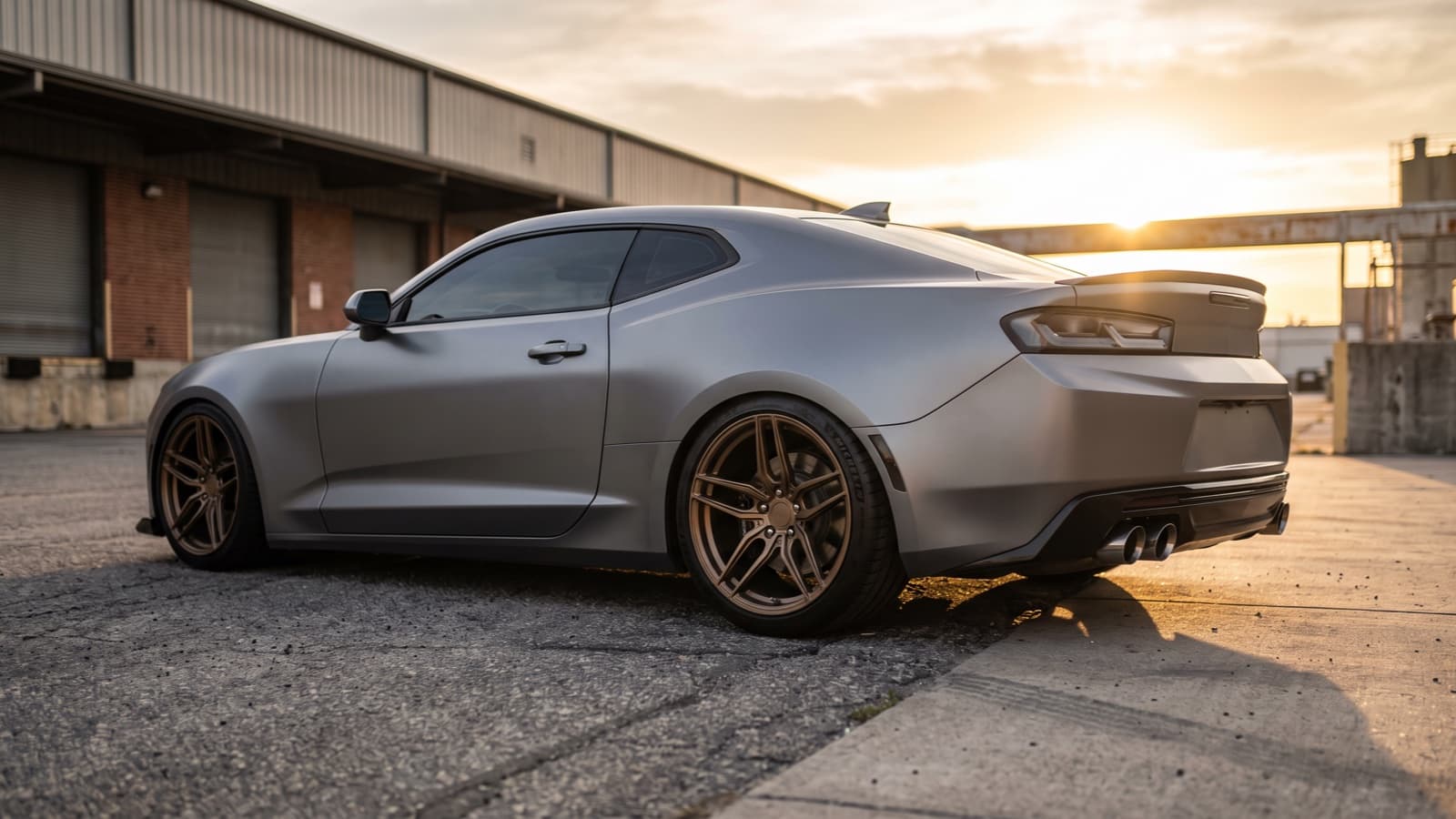
Americans spent $52.92 billion on accessory and performance parts in 2025, per SEMA's 2026 market report - and roughly one in four vehicle owners bought something to personalize their ride. A huge slice of that money goes onto wheels. And whether those wheels look right on the car comes down to one number almost nobody understands at the counter: wheel offset.
Offset decides whether your new wheels tuck shyly into the arches, sit flush with the fenders, or poke past them. It also decides whether they rub, wander, and eat wheel bearings. This guide explains offset and ET in plain English, how backspacing relates, how far you can safely stray from stock, and how to see any fitment on your own car before you buy.
What is wheel offset?
Wheel offset is the distance between the wheel's mounting face and the centerline of the wheel's width, measured in millimeters. The mounting face is the flat pad that bolts against your hub; the centerline is the imaginary plane exactly halfway across the wheel's barrel. German wheel maker Rial defines it as the distance from the centerline to the inner contact surface of the wheel flange - and that little measurement "determines the position of the wheel within the wheel well."
You'll see it stamped on the wheel as ET - short for Einpresstiefe, German for "insertion depth." Rial's example: a wheel marked
8J x 18 H2 ET35 LK 5x120 has an offset of +35 mm. Same size wheel, different ET, completely different car.The rule of thumb runs one way:
- Higher ET (more positive) → mounting face sits closer to the street side → the wheel pulls inward, toward the suspension.
- Lower ET (toward zero and negative) → mounting face moves toward the car → the wheel pushes outward, toward (or past) the fender.
Positive vs. zero vs. negative offset
Most factory wheels are positive; deep-dish and off-road wheels go negative. Per Les Schwab's offset guide, most wheels on front-wheel-drive cars and newer rear-drive vehicles have positive offset, zero offset puts the mounting face exactly on the centerline, and "deep dish" wheels are typically negative. Method Race Wheels - who live at the off-road end of the market - note negative offset is what you run when you want a wider track.
Read the diagram left to right: the red mounting face slides across the barrel, and the whole wheel moves the opposite way on the car. That's all offset is.
How offset changes your car's stance
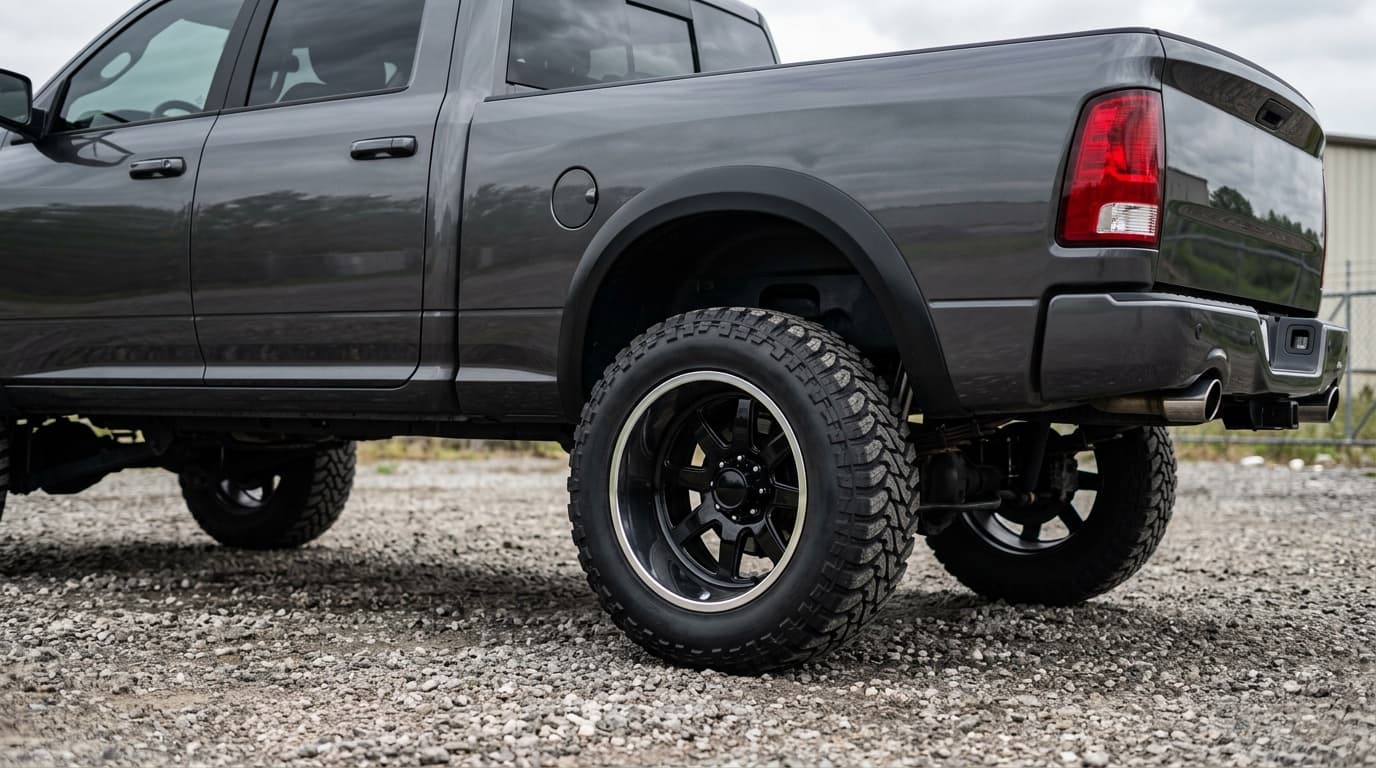
Offset is the number behind every fitment word enthusiasts use. Tire Agent's fitment guide (May 2025) defines the vocabulary: flush means the wheel and tire sit level with the fender, neither hiding inside nor sticking out; poke means the wheel protrudes past the fender so you can see the tire's profile from above; tucked means the wheel hides behind the fender line entirely.
Move to a lower offset and a tucked wheel becomes flush; go lower still and flush becomes poke. Fitment galleries like Fitment Industries and Custom Offsets exist because thousands of people photograph the same wheel at different offsets - proof of how much one number changes the look.
What is backspacing, and how does it relate to offset?
Backspacing is the same idea measured from the other edge - and in inches. Speedway Motors' guide defines it as the distance from the mounting face to the rear lip of the wheel, and gives the conversion: backspace minus wheel centerline equals offset. Because backspacing is quoted in inches and offset in millimeters, multiply by 25.4 at the end.
Their worked example: a wheel whose mounting face sits 0.750 inches behind its centerline has 0.750 × 25.4 = 19.05 mm of positive offset. One caveat when you do this math yourself: a wheel's advertised width is measured between the bead seats, which is about an inch narrower than the full flange-to-flange width a tape measure sees - so measure carefully or work from the stamped ET instead.
Truck and hot-rod shops tend to talk backspacing; import and Euro shops talk ET. They're describing the same wheel.
How far from stock offset can you safely go?
Les Schwab's published rule: stay within 5 millimeters of your original offset. Their guidance is blunt - "with new wheels, you don't want the new offset to be more than 5 millimeters different from the old offset." Beyond that, both directions have documented failure modes:
- Too positive: the wheel moves inboard - Les Schwab warns of expensive damage from the inner edge of the wheel and tire rubbing bodywork or suspension, plus possible brake interference.
- Too negative: the wheel moves outboard - increased steering kick-back and added suspension stress.
The engineering reason is scrub radius - the lever arm between your steering axis and the tire's contact patch. Huibert Mees, a chassis engineer with three decades on the Ford GT and Tesla Model S programs, ran the numbers at The Autopian: push the wheel out 50 mm and a 15 mm scrub radius becomes 65 mm - "almost five times larger." Steering forces can double or quintuple, and the load line moves outside the bearing races, where, as he puts it, "the life of the bearing will be reduced."
That's also the honest answer on spacers: mechanically, a wheel on a 10 mm spacer behaves like the same wheel with 10 mm less offset - the same article models them as exactly equivalent. Spacers deserve their own guide, but the offset math above is the place to start.
How do you read a bolt pattern?
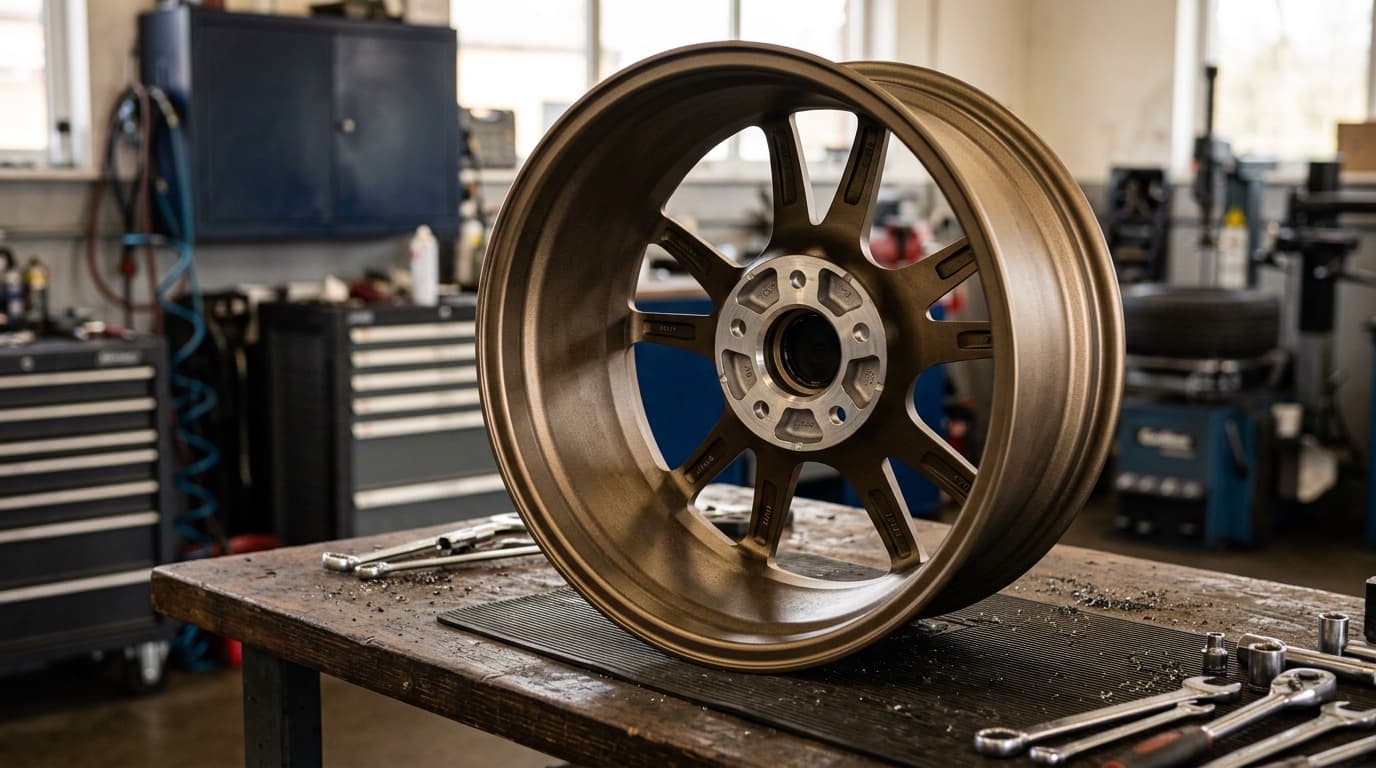
Offset only matters if the wheel bolts up at all - that's the bolt pattern. Written like
5x114.3, the first number is the lug count and the second is the diameter, usually in millimeters, of the circle the lug holes sit on. Les Schwab's wheel size guide explains the measuring quirk per lug count: on 4-lug wheels, measure center-to-center across opposite holes; on 5-lug, from the outside of one hole to the center of the opposite one; on 6- and 8-lug, center-to-center again.Two more fitment details worth knowing before checkout:
- Hub-centric vs. lug-centric. Factory wheels center on the hub bore; many aftermarket wheels center on the lugs instead, and use hub-centric rings - simple plastic or aluminum spacer rings - to get a factory-precise fit.
- Match both numbers. Right bolt pattern with wrong offset rubs; right offset with wrong bolt pattern doesn't bolt on. A wheel listing is only a "fit" when pattern, offset, and width all work together.
See the offset before you buy the wheels
Here's the uncomfortable truth about offset: it's a number on a sticker, and nobody can picture 10 millimeters. The difference between tucked, flush, and poke is the difference between three cars that all technically "fit" - and wheel sets aren't cheap enough to guess.
So don't guess. Upload one photo of your actual car to VizTunr's free demo and see any wheel rendered photorealistically on it in about a minute - your car, your color, your fender lines, not a stock template. It's the same virtual try-on technology wheel and tuning shops use to answer "will it look good on my car?" before the customer commits. Try a tucked look and a flush one, then walk into the shop knowing your number. No account needed.
WheelsWheel OffsetFitmentStance
July 28, 2026 · 9 min readCategory: Wheels
Explore related