Walk behind a Porsche 911 and look down: the rear tires are 295s on 11.5-inch-wide wheels, while the fronts are 235s on 8.5s. That's staggered wheels - wider rubber on the drive axle - and it's factory engineering, not just stance. Here's what a staggered setup buys you, and what it quietly costs.
What are staggered wheels?
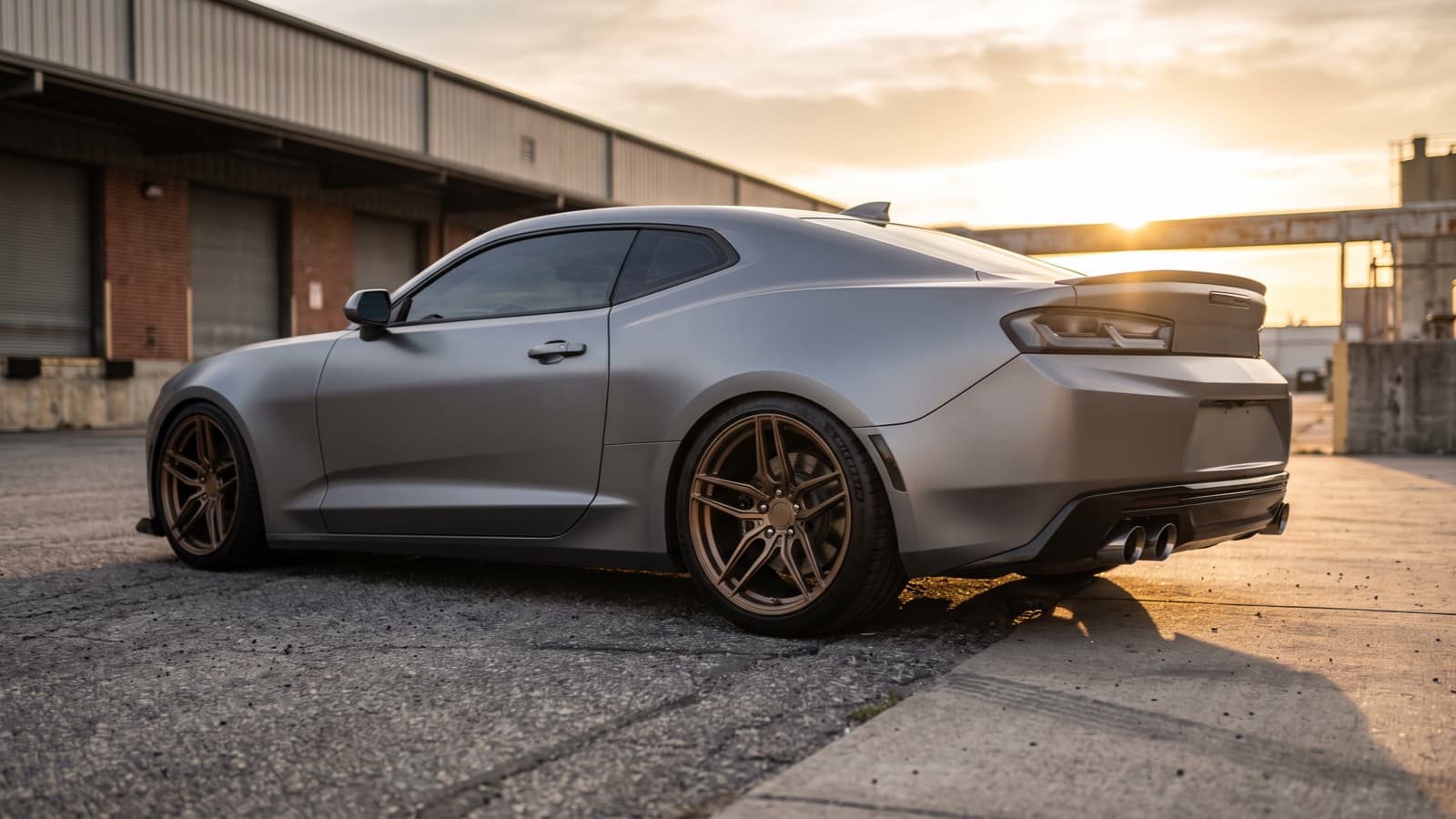
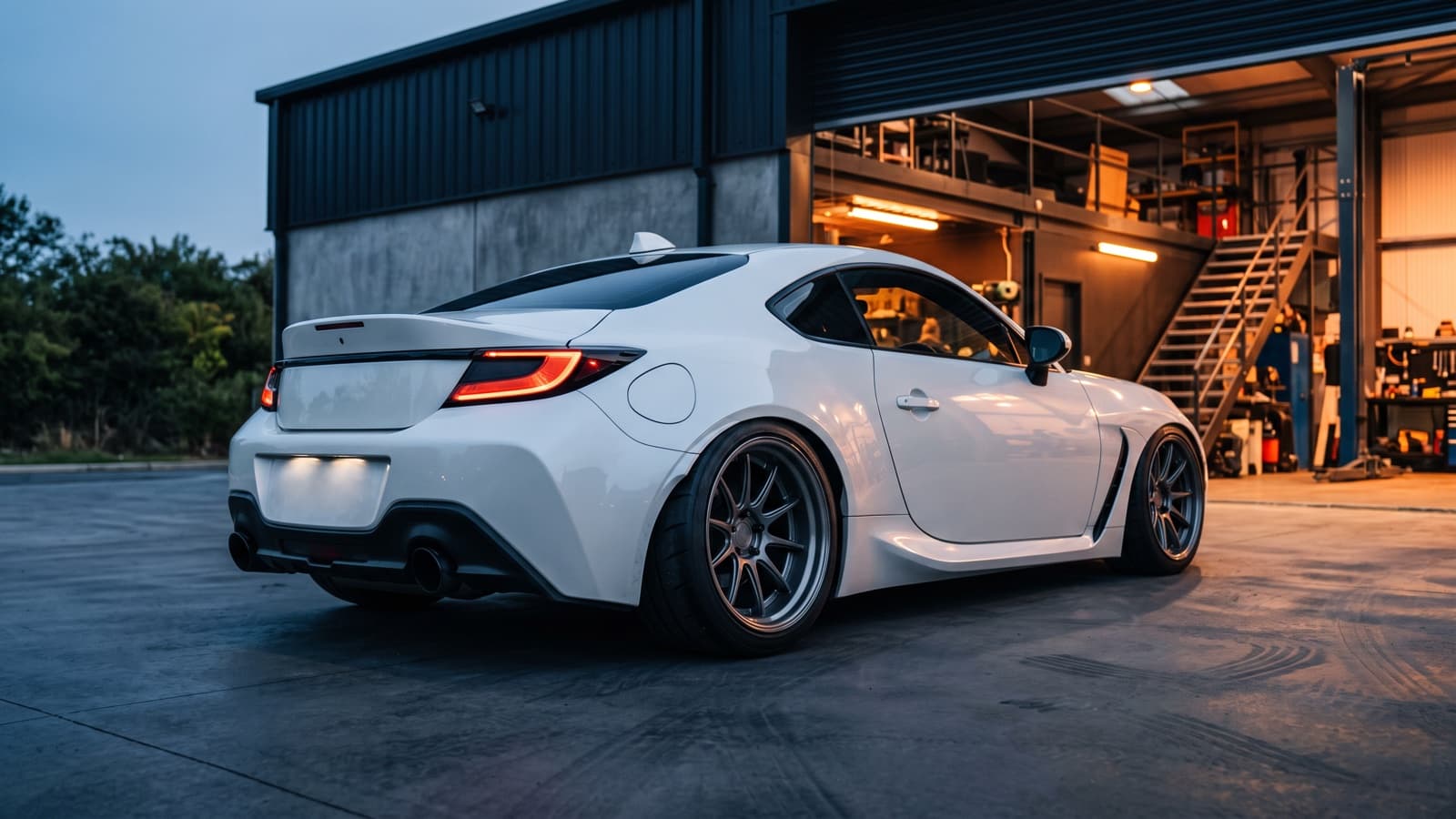
Staggered means the rear wheels and tires are wider than the fronts - and often a size larger in diameter too. Tire Agent's fitment guide (November 2022) defines it as a setup where the rear axle's tires, and usually the wheels, are larger than the front's. The opposite - identical sizes at all four corners - is called a square setup, and almost every economy car runs one.
Width isn't the only variable. Automakers routinely stagger diameter as well - a 19-inch front with a 20-inch rear - while keeping the overall tire diameters nearly equal, which matters more than most people realize (more on that below).
Why put wider tires on the drive axle?
Traction, exactly where the engine sends its torque. A wider tire puts more rubber on the road, and Les Schwab's contact patch explainer (October 2025) notes that a staggered fitment - wider tires in the rear, narrower in front - "can give some performance vehicles a boost." On a rear-wheel-drive car, that bigger rear contact patch is the difference between launching and lighting up the tires.
The second reason is stability. Grip distribution between axles decides how a car breaks away: as Les Schwab explains (August 2024) in its two-new-tires rule, a rear axle with less grip than the front invites oversteer, while stronger rear grip "can help maintain stability during sudden maneuvers." A staggered setup deliberately stacks grip on the rear axle - the sudden-snap-sideways axle - so powerful RWD cars stay planted. The flip side: push a staggered car to its limit in a corner and the balance leans toward understeer, a trade-off we'll come back to.
Which cars come staggered from the factory?
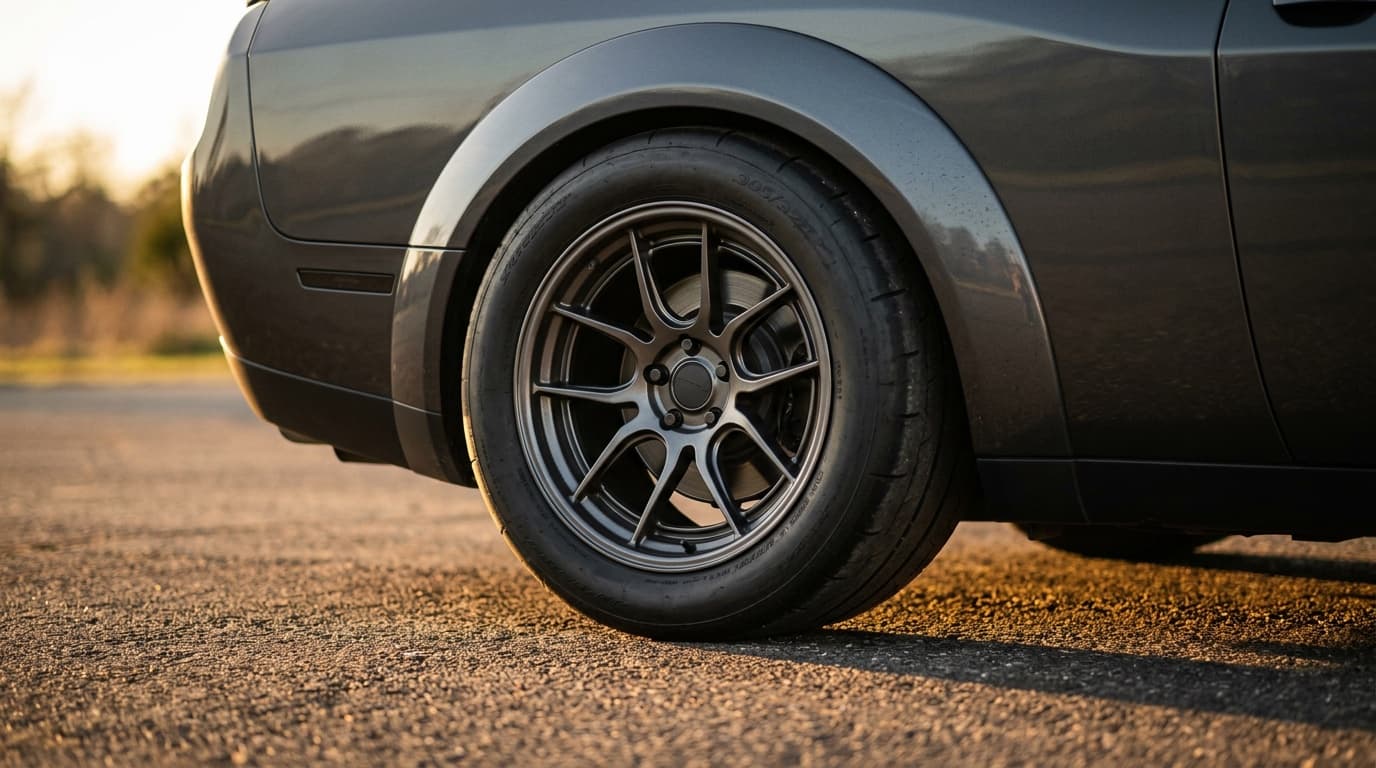
Most serious RWD performance cars - and the numbers are bigger than you'd guess. Two current examples straight from the manufacturers' own documentation:
| Car | Front wheel | Rear wheel | Front tire | Rear tire |
|---|---|---|---|---|
| Porsche 911 Carrera (992.2) | 8.5J × 19" | 11.5J × 20" | 235/40 ZR19 | 295/35 ZR20 |
| BMW M3/M4 Competition xDrive | 9.5 × 19" | 10.5 × 20" | 275/35 ZR19 | 285/30 ZR20 |
Sizes per Porsche's 992.2 technical specifications (December 2024) and BMW's press release. Look at the 911: a full 3 inches of extra wheel width and 60mm of extra tire section at the rear, plus a diameter stagger. The M3 is subtler - one inch of width, 10mm of tire - and it's an AWD car, which tells you staggered and all-wheel drive can coexist when the engineering is done right.
Notice both cars also stagger diameter (19 front, 20 rear) while choosing tire sidewalls that keep the front and rear overall diameters within millimeters of each other. That's not a coincidence; it's the rule that makes everything else work.
The catch: tire rotation and faster rear wear
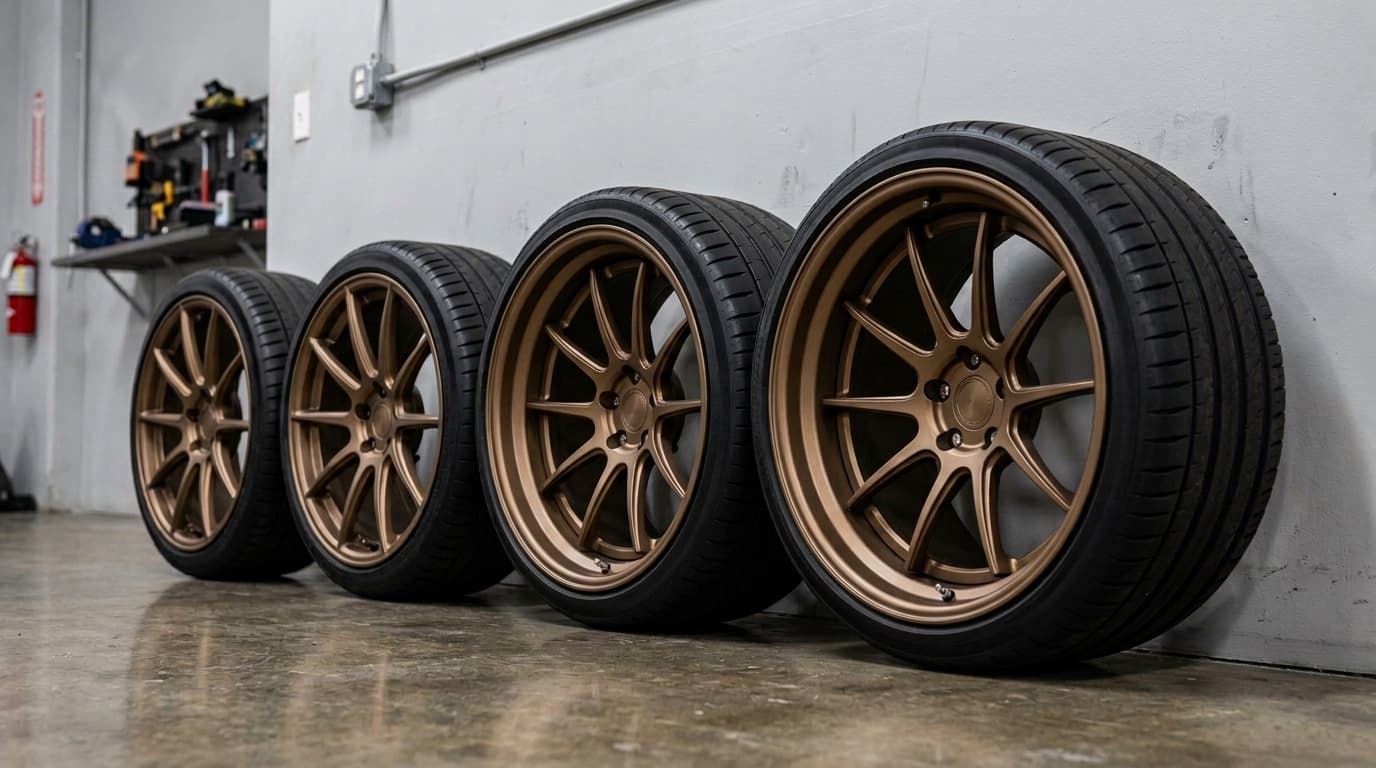
A staggered setup takes normal tire rotation off the table. The Drive's rotation guide (February 2023) spells it out: with different sizes front and rear "you can only swap them between passenger and driver sides across their respective axles" - and if the tires are directional as well as staggered, "you cannot rotate your tires" at all. Les Schwab's rotation guide (May 2024) confirms its shops handle staggered cars the same way: sides swap, axles never.
Why it matters: on a RWD car the rear tires do all the accelerating, and rotation is how that wear normally gets shared around. Take rotation away and the rears simply wear out first - often around the time the fronts are barely half-worn. The industry prices this in writing: Les Schwab's tire warranty states that for staggered fitments "the mileage warranty will be 50% of the standard mileage warranty." Half the warranty, because the retailer knows you'll be buying rears in pairs, sooner.
Can you run staggered wheels on an AWD car?
Only if the front and rear overall diameters stay closely matched. AAA's tire guidance for AWD and 4WD warns that on some vehicles a circumference variation of more than a quarter inch across the four tires "will result in expensive transmission or drivetrain component failure within a short time" - mismatched rolling diameters force drivetrain components to rotate at different speeds and can feed conflicting signals to ABS and stability control.
The same logic applies in milder form to any car. Les Schwab's tire-size guidance (December 2022) puts the acceptable window at about 3 percent of the manufacturer's recommended diameter, and notes wrong diameters can throw off the speedometer, driver-assist sensors, and even transmission shift points - with AWD vehicles at risk of "even more severe transmission issues."
This is why the factory staggered cars above pair a taller sidewall up front with a shorter one in the rear: the M3 Competition xDrive's 275/35R19 front and 285/30R20 rear work out to nearly identical overall diameters, so the AWD system never notices. If you're building a staggered setup yourself, run the diameter math on every candidate pairing first - the width can differ, the rolling circumference shouldn't.
Square vs. staggered: which should you run?
Staggered for street looks and RWD traction; square for track days and tire budgets. The case for square comes down to the same rotation math in reverse. Velgen's square-setup guide (November 2025) makes the pitch: with all four corners matching, "rotation options expand dramatically, offering better wear patterns and longer tire life," fronts that take the steering and braking punishment can cycle to the rear, and moving grip forward improves cornering balance and reduces understeer. That last point is why club racers routinely convert factory-staggered cars to square for circuit use.
| You prioritize | Run |
|---|---|
| Putting down power in a straight line | Staggered |
| The wide-rear, deep-lip look | Staggered |
| Maximum tire life per dollar | Square |
| Rotating one set of track tires evenly | Square |
| Neutral-to-loose balance on circuit | Square |
Neither answer is wrong - they're different tools. The mistake is running staggered by default and being surprised by the rear tire bill.
Making a staggered setup actually fit
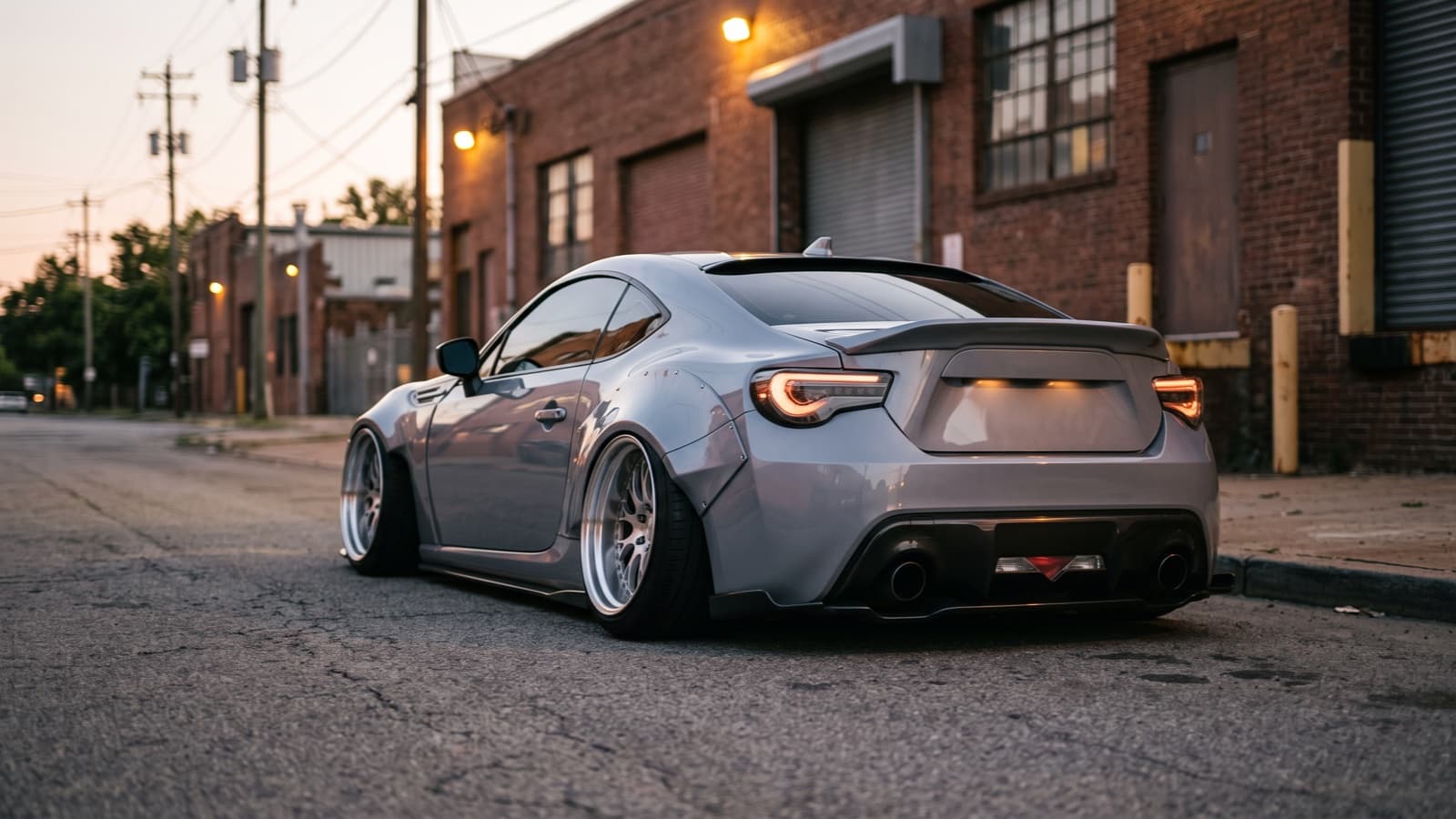
Width is only half the fitment equation - the other half is offset. Adding an inch of wheel width means the extra inch has to go somewhere: toward the suspension, toward the fender, or split between both, and it's the offset number that decides. Our wheel offset guide covers the math; the short version is that a wider rear wheel usually needs a lower offset to clear the suspension, which pushes the face outward toward the fender line.
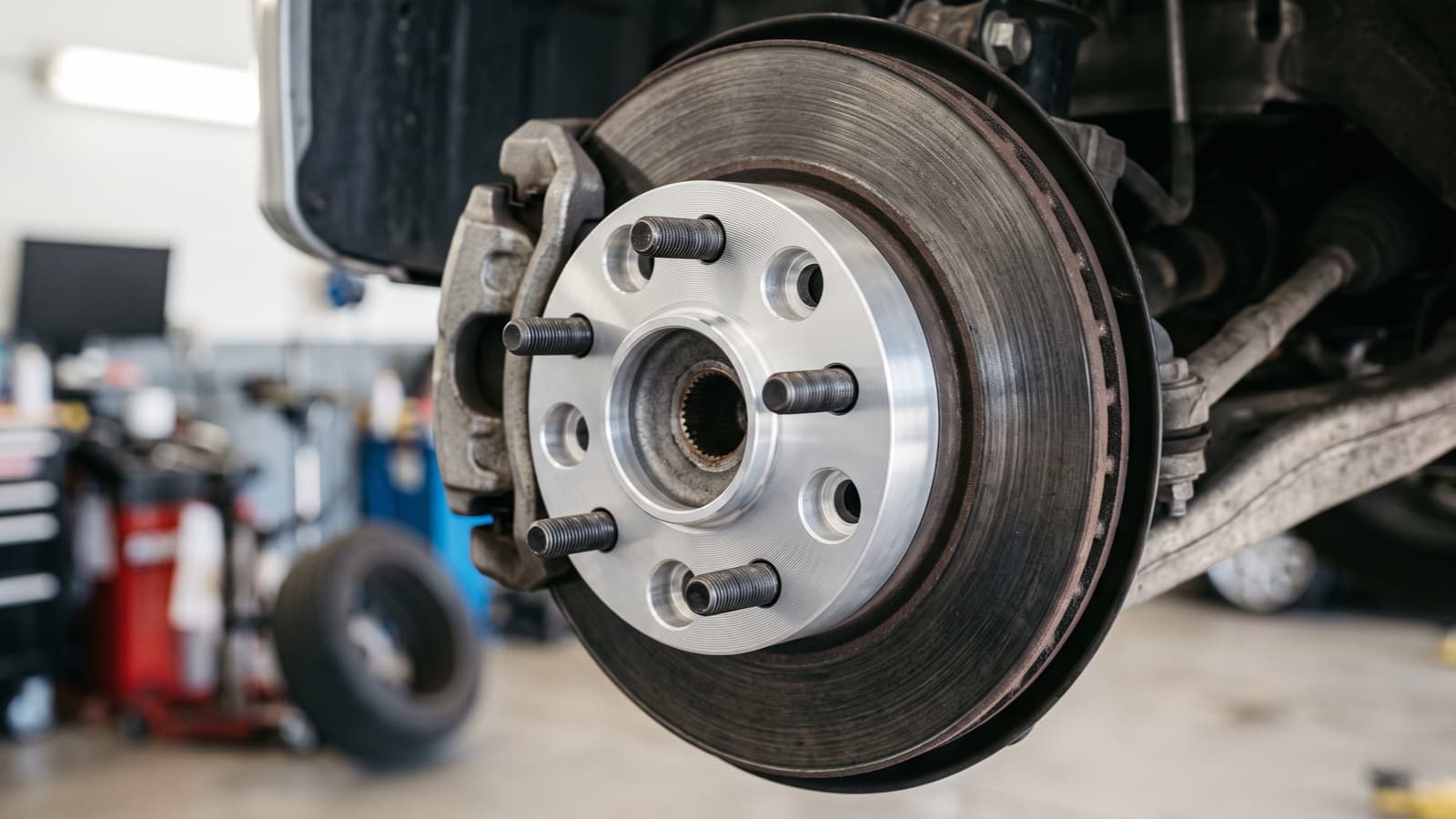
Getting the last few millimeters right is the usual game: a hub-centric spacer can bring a slightly-too-tucked rear flush, and a touch of negative camber can tuck the top of a wide tire under an arch that almost clears. Use the factory setups as calibration: automakers stagger by 1 to 3 inches of width, with the rear tire section 10-60mm wider - and they always keep front and rear rolling diameters matched.
See the staggered look on your car first
A staggered setup is a four-figure commitment you can't rotate your way out of if the look disappoints - deep-lip rears change a car's whole rear view. So preview it: upload a photo of your car to VizTunr's free demo and see wider, deeper rear wheels on your actual car before ordering anything, the same way you'd preview a wheel color before committing to powder coat. Try square, try staggered, try both in different finishes - then spend the money once, on the setup you've already seen. No account needed.
WheelsStaggered WheelsFitmentStance
August 15, 2026 · 10 min readCategory: Wheels
Explore related