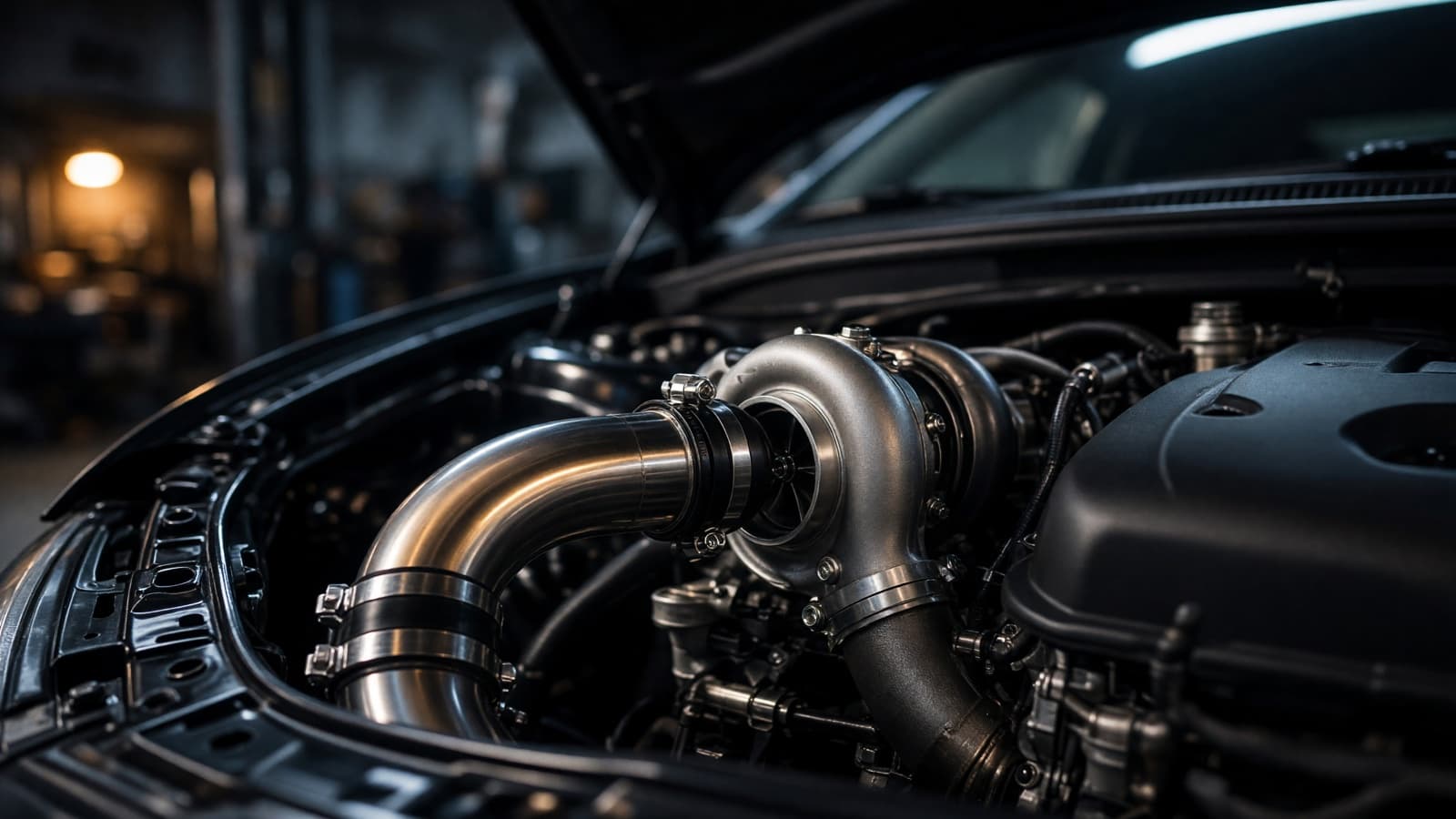
Here's the sentence every tuner's marketing leaves out, courtesy of Haltech's own FAQ: an ECU "is NOT a power adder." A tune doesn't bolt on anything - it rewrites the tables your engine computer already uses, trading the factory's safety and fuel-quality margins for output. That's why a turbo car can gain 90 horsepower from a laptop and a naturally aspirated one gains almost nothing. Same procedure, wildly different ceilings.
This guide covers what an ECU tune actually changes, the three ways to change it (flash, piggyback, standalone) in the makers' own words, what every tier costs in 2026 from a $250 e-tune to a $1,500 pro tune, what a dyno session buys you and why dyno numbers disagree, honest gain expectations for NA versus turbo engines, and the reversibility question dealers care about.
What does an ECU tune actually change?
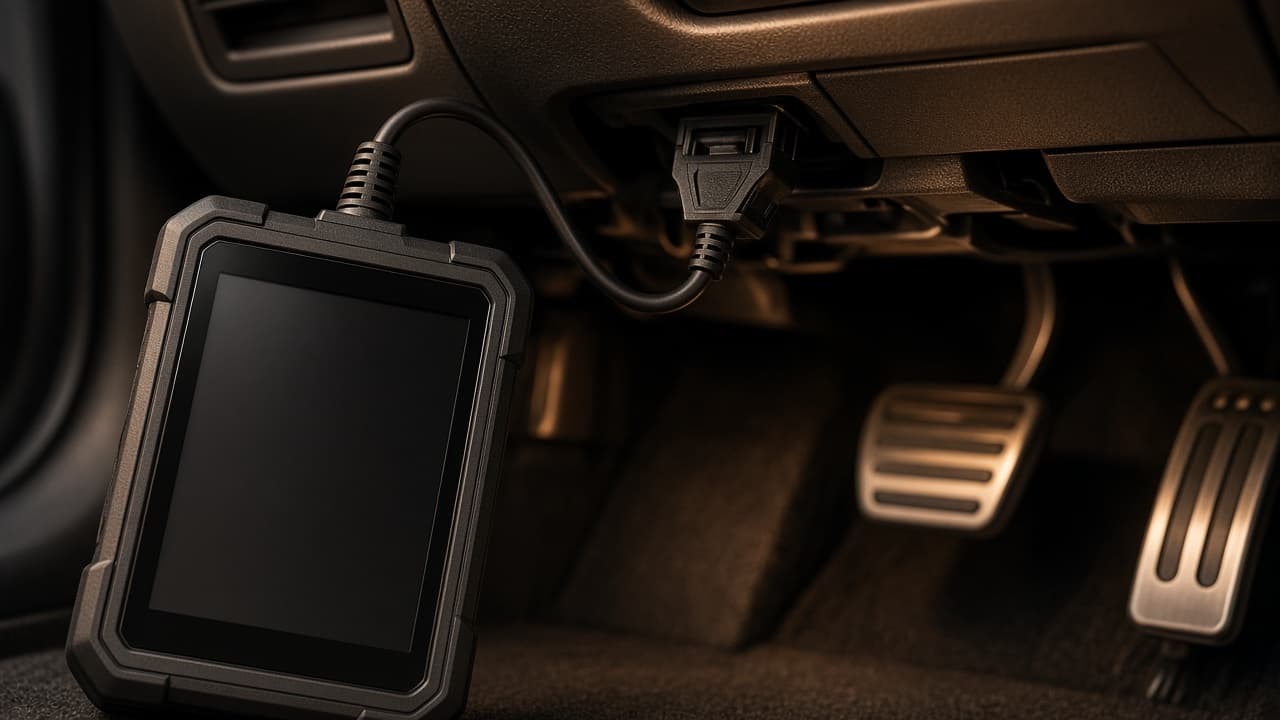
The maps - not the metal. HP Tuners' VCM Suite describes full read-and-write access to "torque strategies, spark tables, fueling, RPM limits, and more," with parameters like boost limits and maximum torque by gear. Hondata's FlashPro lists ignition, fuel, VTEC engagement, rev and launch limiters, boost control, and per-cylinder fuel and ignition trim - all through the OBD-II port. A COBB Protuner's plain-language version of a custom tune: "increased boost, optimized timing, fueling, throttle mapping, and rev limit."
The gains exist because a factory calibration is a compromise built for every fuel grade, climate, and driver on Earth. A tune narrows the audience to one car, one fuel, one owner - and collects the margin.
Flash vs. piggyback vs. standalone
Three interventions at three points in the signal path. In the makers' own words:
- Flash (reflash). EcuTek's ProECU reprograms "the vehicle's original engine management system in situ via the on board diagnostics (OBD) port" - COBB's Accessport and HP Tuners' MPVI4 work the same way. The stock calibration is saved first; COBB's uninstall option "removes the Accessport programming from the vehicle, reverting the ECU to a stock state."
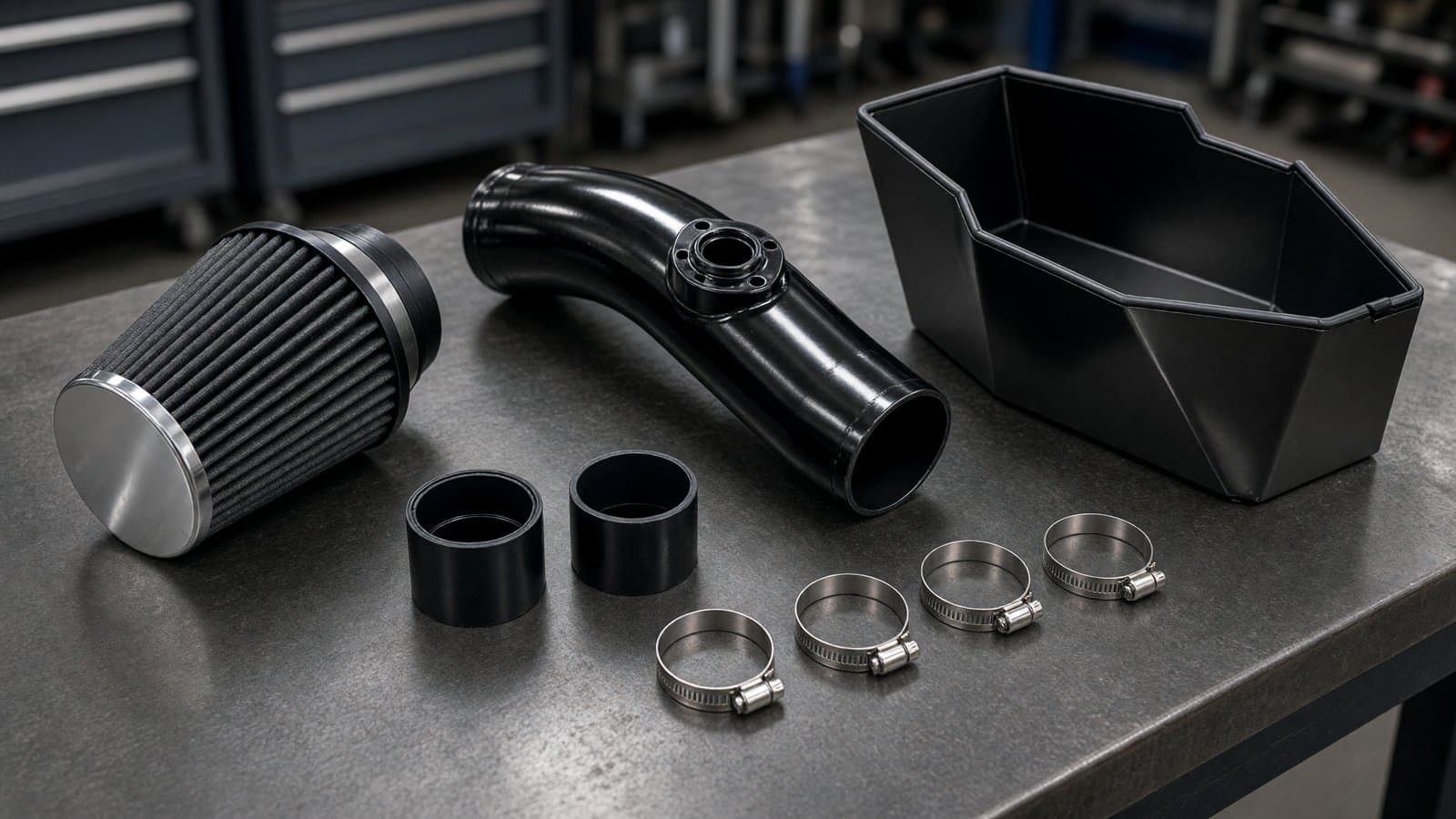
- Piggyback. Burger Motorsports' JB4 is "a programmable computer that attaches between the ECU and vehicle sensors," adjusting what the stock software sees (and tapping the CAN bus for knock, throttle, and timing data). RaceChip modules do the same and, in the company's words, leave "no trace once unplugged." Removable in minutes; working around the ECU rather than with it.
- Standalone. A full replacement computer. Haltech's guidance on when you need one: if you're "modifying an engine significantly beyond its standard specifications" for racing or performance use - once you add a turbo, supercharger, or cams, the factory calibration is "no longer optimized." Standalones also bring configurable engine protection, which Haltech tiers across its lineup.
For most street cars on stock or lightly modified hardware, the flash is the mainstream answer. Piggybacks win on reversibility; standalones win when the factory ECU can't cope.
OTS, e-tune, pro tune: what are you actually buying?
Each tier buys more revisions and more attention to your specific car. Delicious Tuning's own ladder is the clearest published framing: stage map tunes with 3-5 revisions, remote e-tunes "tuning over the internet via email" with 5-10, authorized pro-tuning, and custom dyno tuning with unlimited same-day revisions. What each costs in 2026:
| Tier | Example (live, Sept 2026) | Price |
|---|---|---|
| Off-the-shelf flash | APR stage 1 / COBB Accessport V3 (see our stage tunes guide) | $550-770 |
| DIY software | HP Tuners MPVI4 + credits at $49.99 (2-4 per car) | ~$500-600 |
| Remote e-tune | EcuTek e-tune, GR86 / Moto East | $250-999 |
| Pro tune (COBB Protuner) | Subaru, BCP E-Tuning / Porsche, Flat 6 | $400-1,495 |
One HP Tuners detail that trips up DIY buyers: licenses lock to your car's VIN and ECU and can't be swapped once committed - leftover credits transfer, spent ones don't.
How much does a dyno tune cost, and why do dyno numbers disagree?
Dynojet's own estimate is $400-700 for a typical dyno tuning service, from its dynamometer page. Named shops line up around it: JD Tuning publishes $500-1,050 by ECU platform for 2-4 hour sessions, PCM Tuners charges $180/hour, and Dynotuning and Sound Performance run $225-250/hour rentals, $150-225 baselines, and $900-1,780 standalone or EcuTek packages.
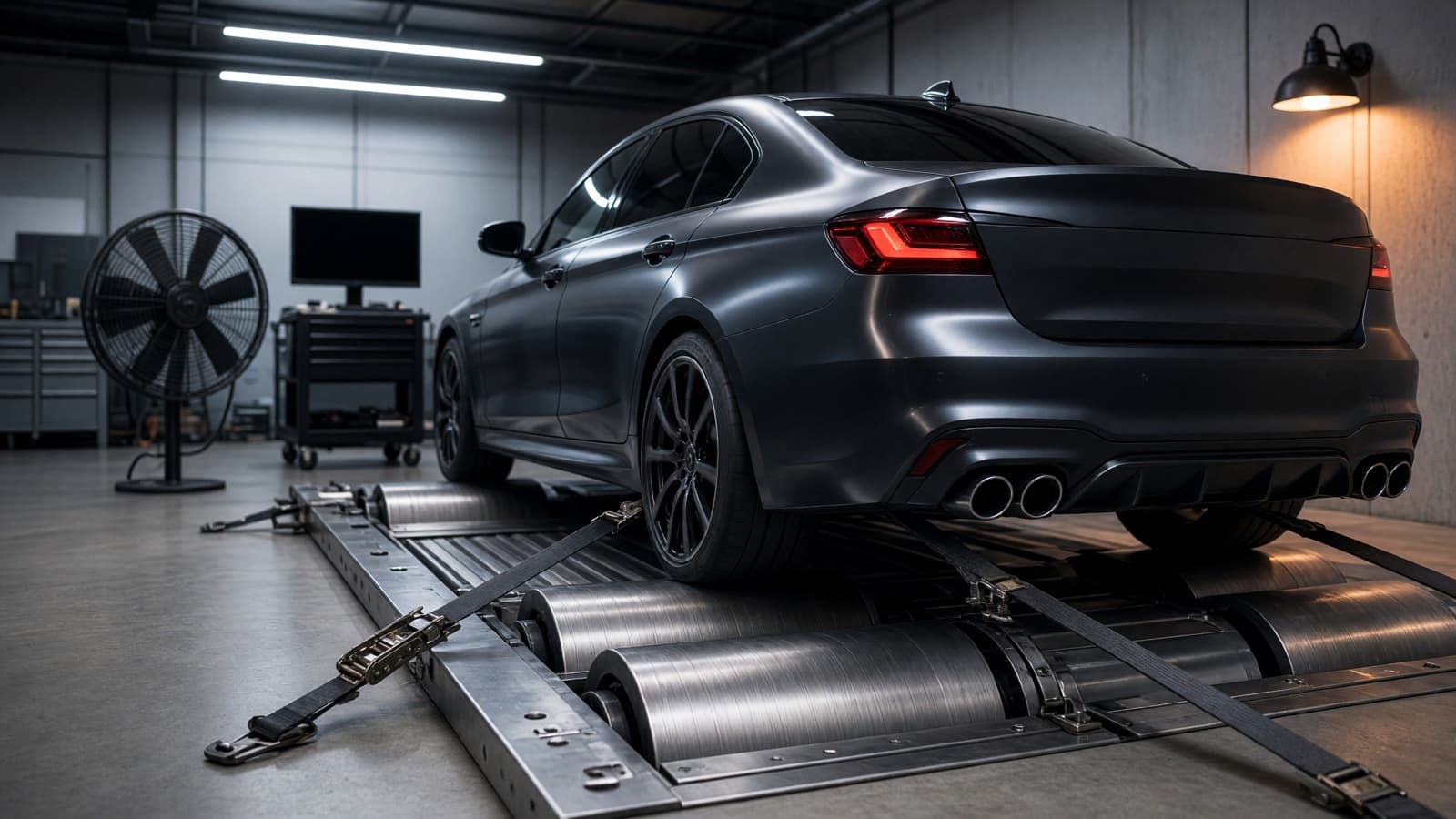
Why the numbers on the printout vary between shops: dynos measure differently. An inertia dyno (Dynojet's classic design) times a heavy drum's acceleration and derives power from F=ma; a load dyno (Mustang Dynamometer, or Dynojet's eddy-current option) applies variable resistance to hold steady states - which is why load dynos can do the slow, held-throttle mapping that inertia dynos can't. DSPORT's summary: "different dynos give different results." COBB reports its gains as percentages for exactly that reason, citing tire pressure, dyno brand, strap-down, and weather as variables. Compare before-and-after on the same dyno, same day; ignore cross-shop bragging.
What gains are realistic? NA vs. turbo
If there's no boost to raise, there's little to gain. COBB's stage 1 page for the NA BRZ/GR86 says it outright: power increases are "minimal," the value is in drivability features. Boosted Performance's published e-tune results for the FA24 reach +20-25 whp only with a header, and +25-35 whp with a header and E85. Innovative Tuning is blunter: its measured gain on a stock FA24 is about 2 hp, with the 20 hp swings in viral dyno sheets explained by heat-soaked driveline fluids reducing frictional losses - not the tune.
Turbocharged engines are a different sport, because a tune controls the one variable with real headroom: boost. On COBB's flex-fuel pages, a 2015-21 WRX goes from 263 whp on 93 octane to 311 whp on E85; Hondata's CANFlex for the 2.0T Civic Type R claims +28 hp on E85 - "more power than any bolt-on" - and +71 hp with its fuel system. The stage-1 figures in our stage tunes guide (+80-95 hp on turbo VWs) tell the same story. Rule of thumb: turbo tunes are power; NA tunes are throttle response, rev limit, and a few horsepower.
Fuel, knock, and why tunes break engines
Knock is the failure mode, and fuel quality is the lever. COBB's knock documentation defines it as "the explosive spontaneous ignition of fuel/air mixture ahead of the normal propagating flame" - and explains that the ECU defends itself by retarding timing (the Subaru DAM, feedback knock correction, and fine knock learning layers) or cutting boost. The guidance follows directly: "Always use the highest-grade pump fuel available," and never run a map calibrated for higher octane on lower octane fuel. Ford's ECU does the same dance through its Octane Adjust Ratio; Hondata's active knock control pre-emptively rewrites advance tables when it hears knock.
That's also why E85 is the tuner's favorite fuel - roughly 100-105 octane per Hondata, which lets a tune run the timing and boost pump gas can't. And it's why the mechanical caveats are real: COBB flagged the FA20DIT's connecting rods as the "long-term weak spot" for modified WRXs and builds fuel-system upgrades into its flex-fuel packages; Hondata recommends a built engine beyond its stock-hardware calibrations. A tune finds the weakest part faster than the factory ever would.
One diesel footnote, since the audience overlaps: piggybacks like Banks' Derringer add a claimed +86 hp / +178 lb-ft to a Duramax with a CARB Executive Order - proof that big diesel gains and emissions compliance coexist. "Delete" tunes that remove DPF and EGR hardware are the opposite end, and the EPA enforcement context we covered last time applies with extra force there.
Is it reversible - and can the dealer tell?
Flashes revert; whether they're invisible is a different question. COBB's uninstall returns the ECU to a stock state, and the company has stated dealers are typically unable to tell - while noting it does nothing to hide the install. On the other side of the service desk, GM's bulletins instruct technicians that a mismatched Calibration Verification Number "is likely" a non-GM calibration, which GM does not warranty; Ford checks PCM file names. Piggyback makers advertise "no trace" after removal - accurate as far as it goes, and coming from companies selling piggybacks. For the legal framework underneath all this - the FTC's warranty rules and the CARB/EPA emissions lane - see our stage tunes guide, where it's covered from the agencies' own pages.
Which tune should you get?
Match the tier to the car and your patience. Stock-hardware turbo car, premium fuel, want it done today: an EO-covered off-the-shelf flash is the best dollars-per-horsepower in modding. Modified hardware or a platform with weak OTS support: an e-tune or pro tune, budgeting $400-1,000 and a couple of weeks of datalogging. Standalone ECU, forced-induction conversion, or E85 on serious power: a dyno session with a named tuner, $500-1,000+ for the day. Naturally aspirated commuter: keep the money for wheels.
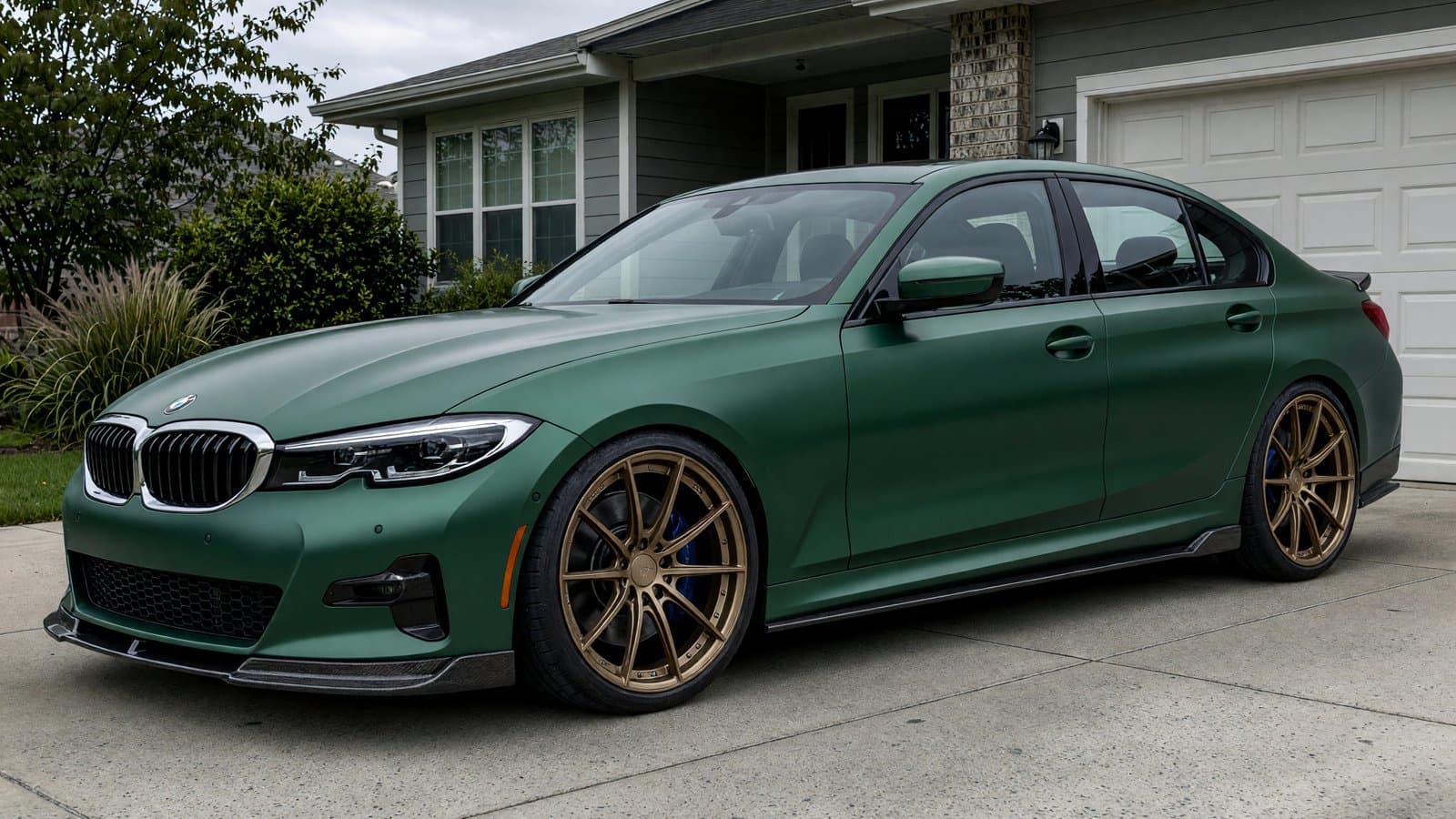
Which is the honest close for a tuning post: the tune is the one modification nobody can see. Tuned cars grow stance, fitment, and color to match the build - and that part you can preview. Upload a photo of your car to VizTunr's free demo and see the wheels, drop, and finish rendered photorealistically on your actual car in about a minute, the same virtual try-on technology tuning shops use to plan the whole build with the customer. Make the dyno sheet visible. No account needed.
TuningECU TuneDyno TunePerformance
September 2, 2026 · 10 min readCategory: Tuning
Explore related