A muffler delete is the cheapest way to make a car loud, and in most states it's also illegal. Most guides stop at "check your local laws." This one doesn't: below are the actual statutes from six states, what the part and the install cost, why deleted cars drone on the highway, and how a muffler delete differs from a straight pipe.
If you run a shop, the legal section matters to you too. New York can pull a shop's inspection license for installing illegal exhausts.
What is a muffler delete?
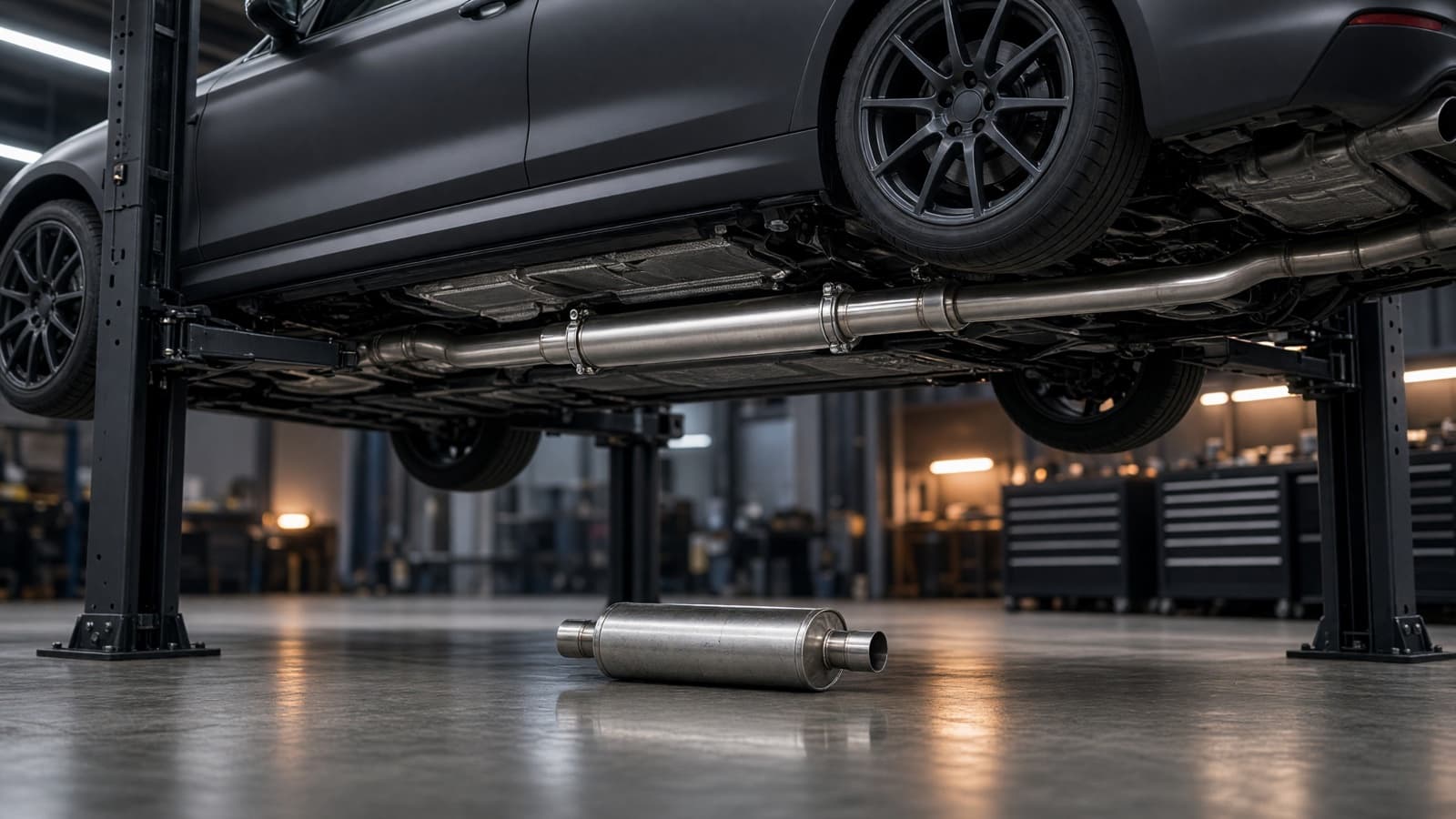
A muffler delete swaps the muffler for a straight length of pipe. Everything else stays. The catalytic converter, the resonator (if your car has one), and the tailpipe all remain. Only the last big silencing can is gone.
That can does real work. MagnaFlow's explainer (April 2020) describes the two main designs. A chambered muffler bounces exhaust through walls and baffles so the sound waves cancel each other. A straight-through muffler wraps a perforated pipe in packing that soaks up sound energy. Burns Stainless, which builds race exhausts, adds a third tool: tuned chambers and Helmholtz resonators that target specific frequencies. Take all of that out and you hear the engine's raw pulses.
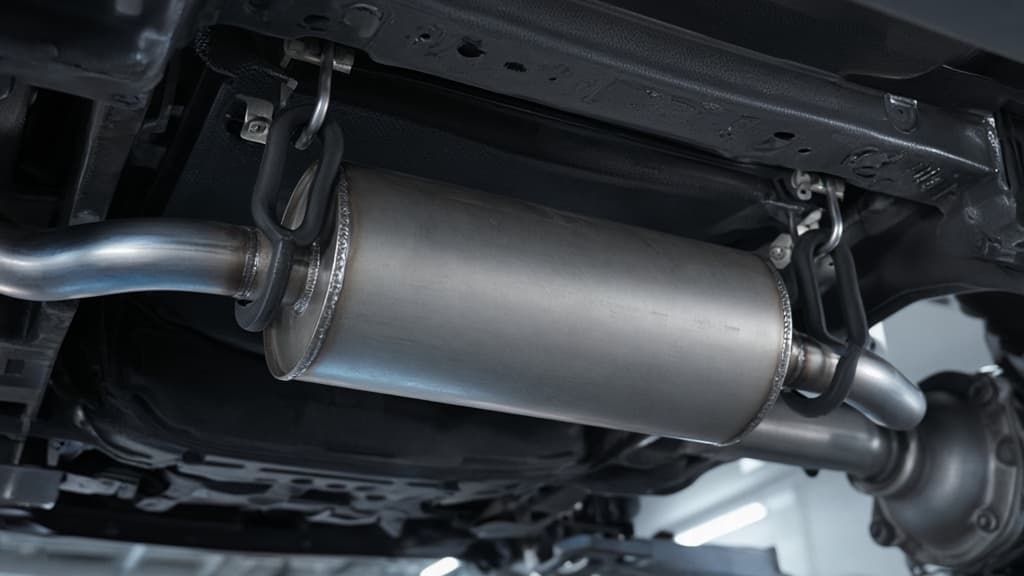
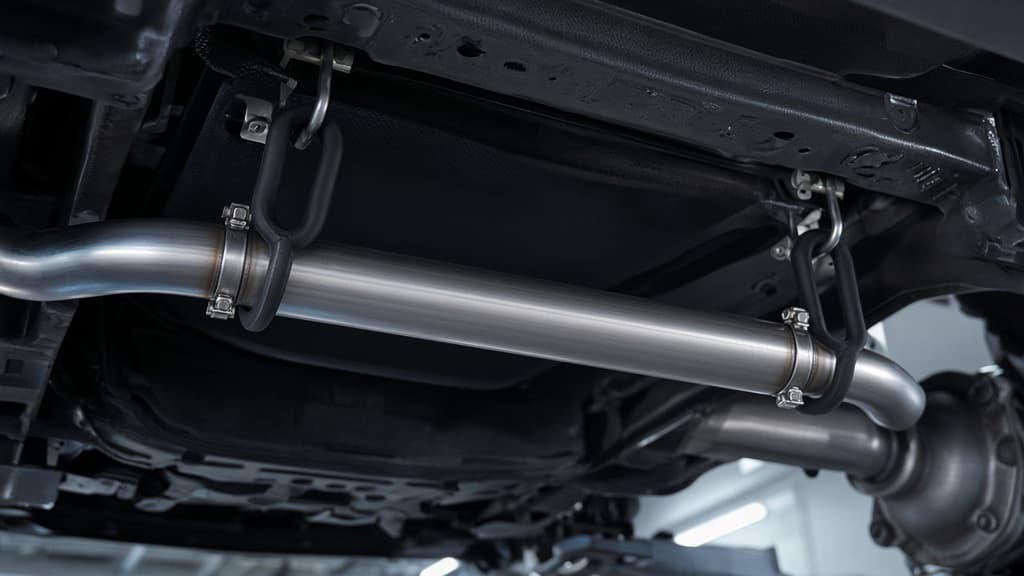
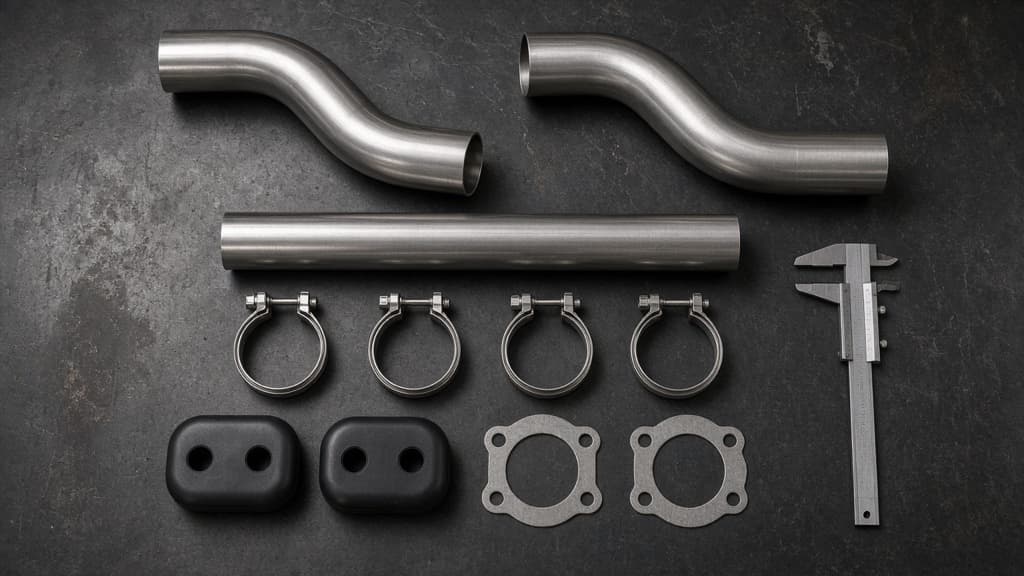
Same truck, same hangers. The only thing that changed is the can between them.
Muffler delete vs. resonator delete vs. straight pipe vs. cat delete
Each delete removes a different part, and only one of them breaks federal law. Here's where each one sits in a typical exhaust:
- Muffler delete: removes the muffler. Louder, raspier, and the resonator can still take the edge off.
- Resonator delete: removes the resonator, keeps the muffler. A milder change, mostly in tone rather than volume.
- Straight pipe: removes every silencing part between the converter and the tailpipe. The loudest of the four, and the one most likely to get noticed.
- Cat delete: removes the catalytic converter. This is a different category of problem, covered below.
The cat delete is where the law changes. The EPA's tampering enforcement (updated December 2025) targets "filters and catalysts installed in the vehicle's engine exhaust system, as well as calibrations" and brought 172 civil cases with $55.5 million in penalties between 2020 and 2023. Mufflers aren't on that list. A muffler delete is a state noise question; a cat delete is a federal emissions violation. In January 2026, DOJ said it would stop criminally prosecuting emissions tampering, but civil penalties still apply and the practice is still illegal.
How much does a muffler delete cost?
The pipe costs about $110 to $125. Installed, expect a few hundred dollars. The part is the cheap bit: aFe's universal stainless delete pipe (model 49-91004, 4-inch, 30 inches long) lists at $112 on sale, $124 regular on CarParts.com in September 2026. Vehicle-specific bolt-in kits add the bends and hangers for your model, and a straight pipe kit replaces more of the system, so it costs more.
For the installed price, the only estimate we could find comes from parts seller SuncentAuto (April 2026): $50 to $200 in parts plus $100 to $300 in labor, $150 to $500 total. It doesn't show where those figures come from, so treat it as a ballpark. What moves the number:
| Cost factor | Cheaper end | Pricier end |
|---|---|---|
| Install method | Clamp-on delete pipe | Cut and welded in |
| Part | Universal pipe | Vehicle-specific kit with bends, hangers |
| Material | Aluminized steel | T304 stainless |
| Scope | Muffler only | Full straight pipe back to the converter |
| Exhaust condition | Clean, newer pipes | Rusted clamps and seized hangers |
One cost almost nobody prices in is going back. If you sell the car, move to a stricter state, or just get tired of the drone, you're buying a muffler and paying for a second install. Keep the factory muffler in the garage. It's the cheapest insurance you can buy for this mod.
What does a muffler delete sound like?
Louder and raspier at every speed, with drone at steady cruise. How much louder depends on the car, and nobody we found publishes a controlled before-and-after decibel test. What we do know is where the legal line sits: California's limit is 95 dBA for vehicles under 6,000 lb, a standard in force since 2003 per SEMA. For scale, CarParts.com's roundup (August 2024) puts a Shelby GT350R at 92 dB and a Hellcat at over 105.
Why deleted cars drone
Drone is the long, booming hum that fills the cabin at one steady speed and disappears when you speed up or slow down. It's resonance: the exhaust pulses hit a frequency that the pipe and the cabin amplify.
The math is simple. A four-stroke engine fires half its cylinders every revolution, so the firing frequency is rpm ÷ 60 × cylinders ÷ 2. A V8 cruising at 2,000 rpm fires about 133 times a second, 133 Hz. Tuner Wilhelm Raceworks measured (July 2019) a 100-125 Hz drone at a 2,500 rpm cruise in its own car and fixed it with a Helmholtz resonator tuned to that band.
That's the practical takeaway: if you want a louder car without the highway hum, keep the resonator and delete only the muffler, or add a tuned resonator back in.
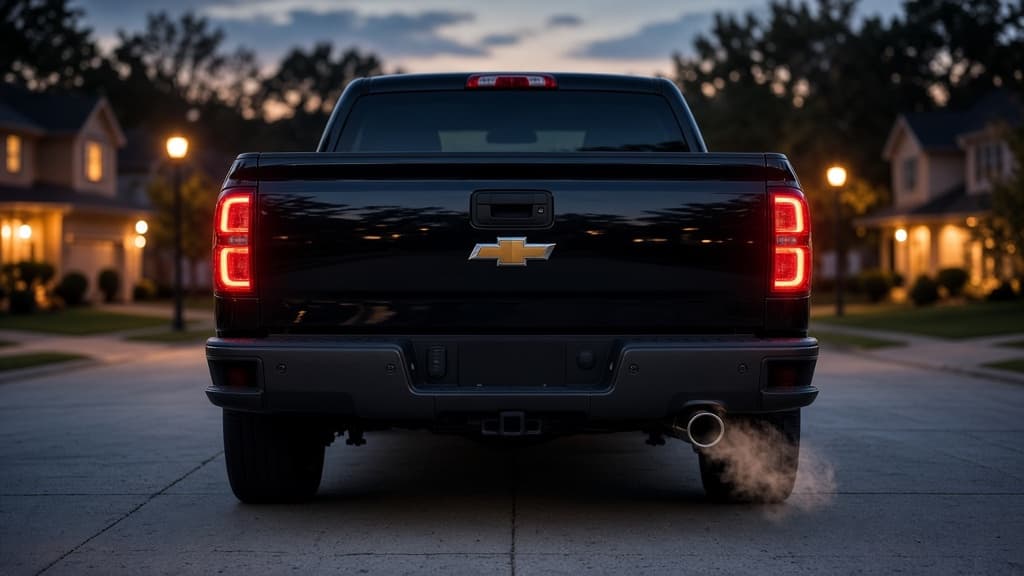
Your neighbors will have opinions about a cold start at 6 a.m. So, increasingly, will noise cameras.
Does a muffler delete add horsepower?
Not measurably, as far as any credible test shows. Vendor blogs quote small gains, but we couldn't find a magazine or independent dyno test that backs them. Burns Stainless makes the counterpoint: a muffler is part of the exhaust's acoustic tuning, and a blown-out muffler usually loses power rather than gaining it.
Real exhaust power comes from flow upstream, at the downpipe and the tune, which is why a stage 2 tune starts there and an ECU tune ties it together. A muffler delete is a sound mod. Buy it for the sound.
Will a muffler delete cause a check engine light?
It shouldn't. The engine computer watches exhaust with two oxygen sensors: one before the catalytic converter and one after it. As this catalyst-monitoring patent describes, if the converter fails or is removed, the rear sensor starts seeing the same swings as the front one, and that normally triggers the light. The muffler sits downstream of both sensors, so removing it changes nothing they measure.
Warranty is the other worry. The FTC is direct about it (April 2024): "Your warranty stays in effect if you use aftermarket or recycled parts," and the manufacturer or dealer "must prove the aftermarket or recycled part caused the damage before they can deny warranty coverage." A muffler delete doesn't void your warranty. The dealer can still refuse to cover damage the delete actually caused.
Is a muffler delete illegal?
In most states, yes, and the statutes say so plainly. Federal law mostly leaves car noise to the states, and the states use nearly identical language: a working muffler in constant operation, and no cutouts or bypasses. Six examples, quoted from the codes:
| State | Statute | Key requirement |
|---|---|---|
| California | Vehicle Code 27150 and 27151 | "An adequate muffler in constant operation," no cutout or bypass; no modification that increases noise; 95 dBA limit under 6,000 lb |
| Texas | Transportation Code 547.604 | "A muffler in good working condition that continually operates"; no cutout, bypass, or similar device |
| Florida | Statute 316.272 | Exhaust "in good working order and in constant operation, including muffler"; no cutouts or bypasses |
| New York | VTL 375(31) | "An adequate muffler and exhaust system in constant operation"; no cutout or bypass; installing one is also banned |
| Pennsylvania | 75 Pa.C.S. 4523 | "A muffler or other effective noise suppressing system in good working order and in constant operation" |
| Illinois | 625 ILCS 5/12-602 | No modification that raises noise "above that emitted by the muffler originally installed on the vehicle" |
Illinois has the strictest wording of the six: its line is the factory muffler itself, not a decibel number. California is the only one here that names a number.
How it actually gets enforced
- Tickets: California made exhaust-noise violations an immediate fine rather than a fix-it ticket in 2019. SEMA put the base fine at $25, or $193 with fees.
- Inspection: Pennsylvania's inspection code, 67 Pa. Code §175.75, fails a car without "a muffler or other effective noise-suppressing system in good working order." New York's equipment rules require an adequate muffler and prohibit cutouts and bypasses.
- Bigger fines, and shops on the hook: New York's SLEEP Act (signed October 2021) raised the maximum fine to $1,000. A shop that willfully installs illegal exhausts three times in 18 months risks losing its inspection and operating certificates.
- Noise cameras: New York City runs sound-triggered cameras. San.com reported (September 2025) 849 summonses in 2024, with fines of $800 to $2,500. California tested the idea too, but the CHP's January 2025 report found only one of three devices produced usable data and advised against using cameras as a standalone enforcement tool.
Enforcement is uneven. Plenty of deleted cars drive for years without a ticket. But "nobody enforces it" is a bet, not a legal status, and in New York the shop that did the install is taking part of that bet.
Quieter alternatives to a full delete
If you want more sound without the drone or the legal exposure, there are middle steps.
- A straight-through performance muffler: MagnaFlow describes these as mellow at idle and aggressive at wide-open throttle. You get a real change in character with a muffler still in place.
- A glasspack: a simpler straight-through design with fiberglass packing. MagnaFlow jokes they come in "two volumes, loud and louder."
- Resonator delete only: keeps the muffler, so the change is milder.
- Keep the resonator, delete the muffler: the common compromise, because the resonator handles the cruise-speed hum.
Whichever way you go, once the car sounds different, most owners want the back of it to look different too. That's where exhaust tips come in.
Planning the whole exhaust build
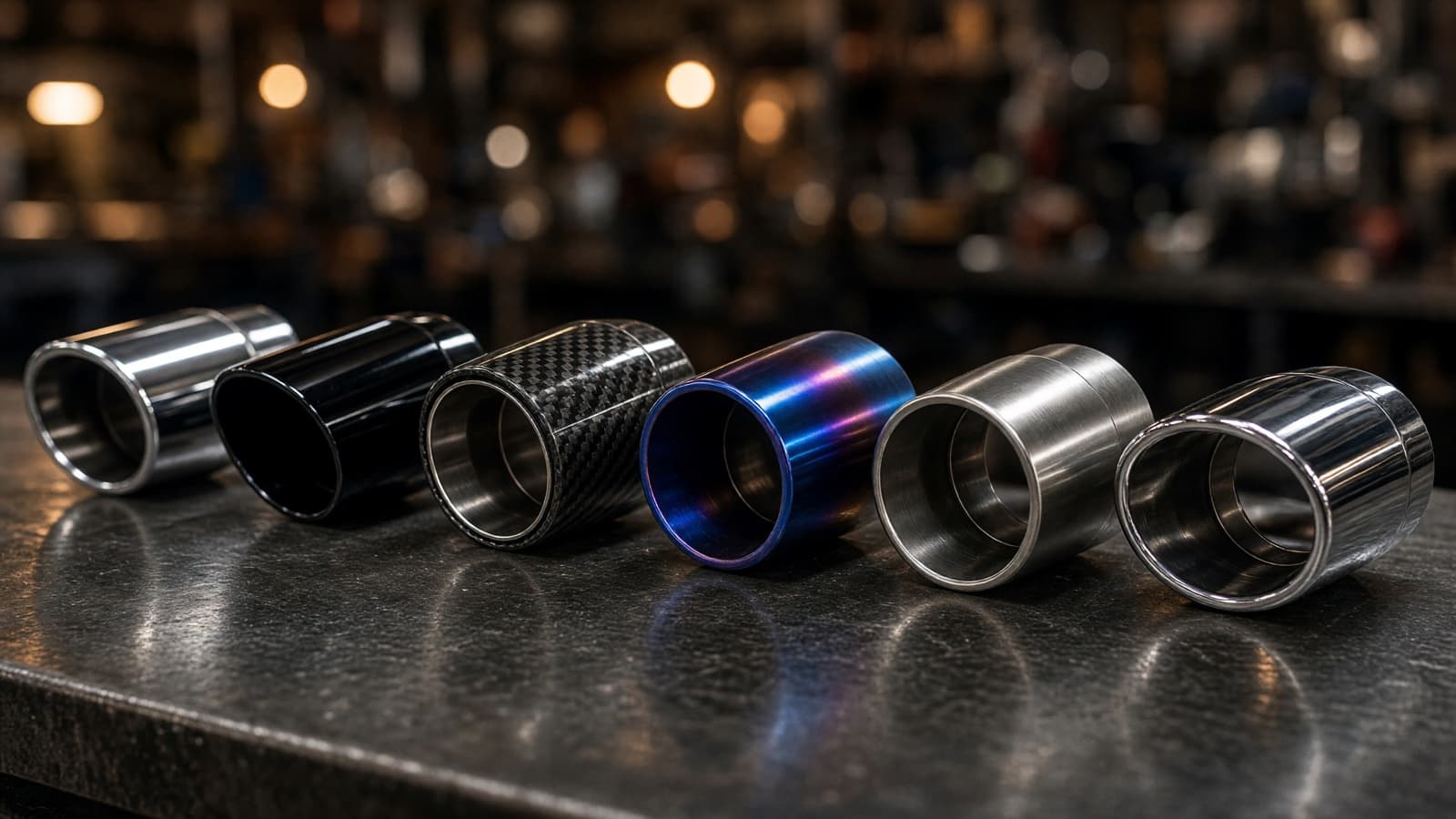
A muffler delete is heard, but the tips are what people see. Most exhaust builds end at the back bumper: a new tip size, a black or burnt finish, maybe dual outlets. That part you can see before anyone cuts a pipe.
Upload one photo of your car to VizTunr's free demo and see exhaust tips, finishes, and the rest of the build rendered on it in about a minute. Shops use the same virtual try-on to sell the visible half of an exhaust job, so the customer approves the look before the lift goes up. No account needed.
ExhaustMuffler DeleteStraight Pipe ExhaustExhaust Laws
September 24, 2026 · 14 min readCategory: Exhaust