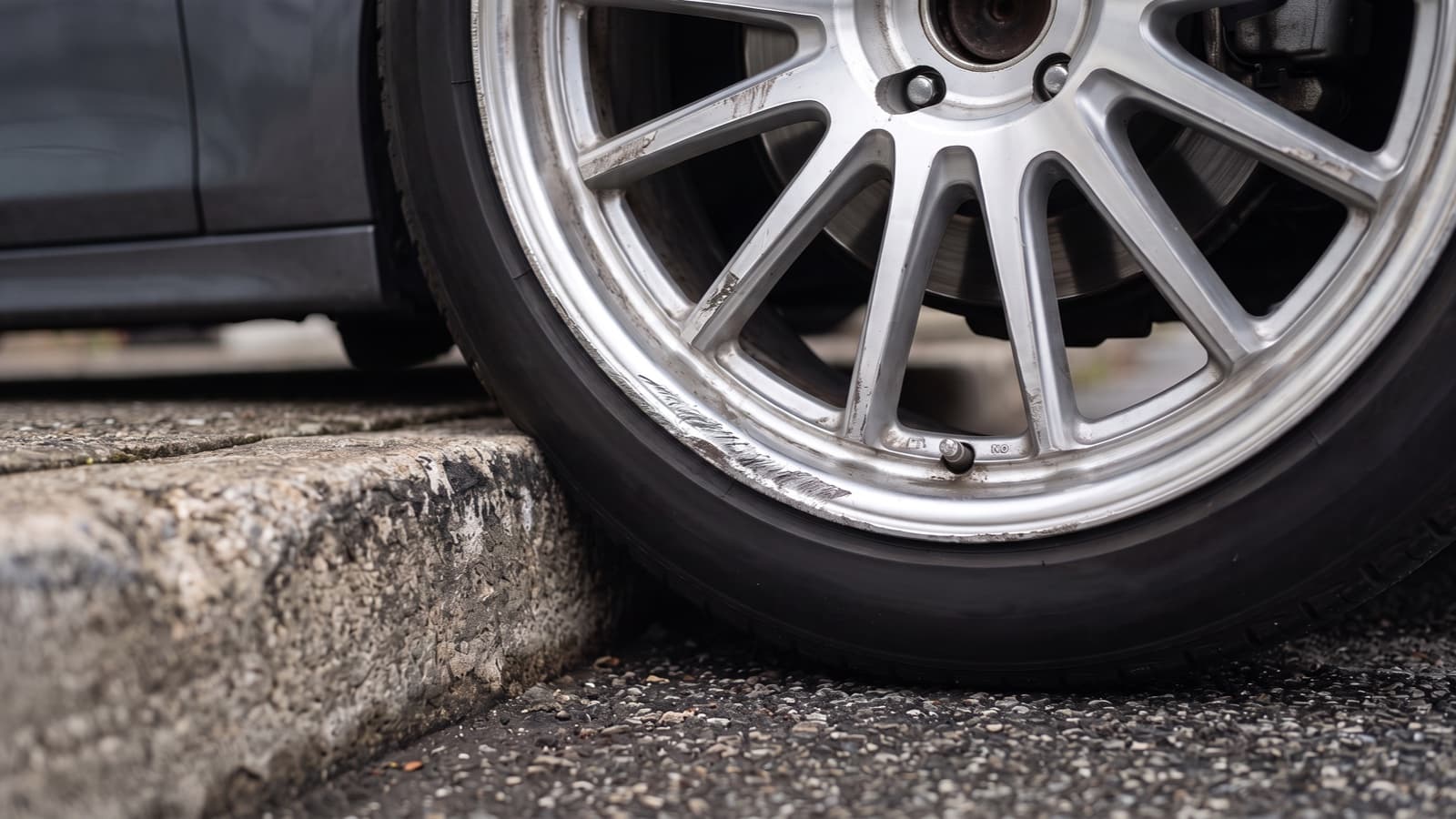
One misjudged parallel park, one grinding sound you felt in your teeth, and now there's a silver scar around your wheel lip. You're in large company: AAA measured $26.5 billion in pothole-related vehicle damage in a single year, with wheels and rims leading the casualty list - and that's before counting the curbs.
The good news: curb rash is one of the cheapest, fastest cosmetic fixes in car ownership - when it's actually cosmetic. This guide covers real published repair prices, what DIY can and can't fix, the automaker safety line on when a wheel must be replaced instead, and the lease-return math that makes a $100 repair one of the best trades in the game.
How bad is your curb rash?
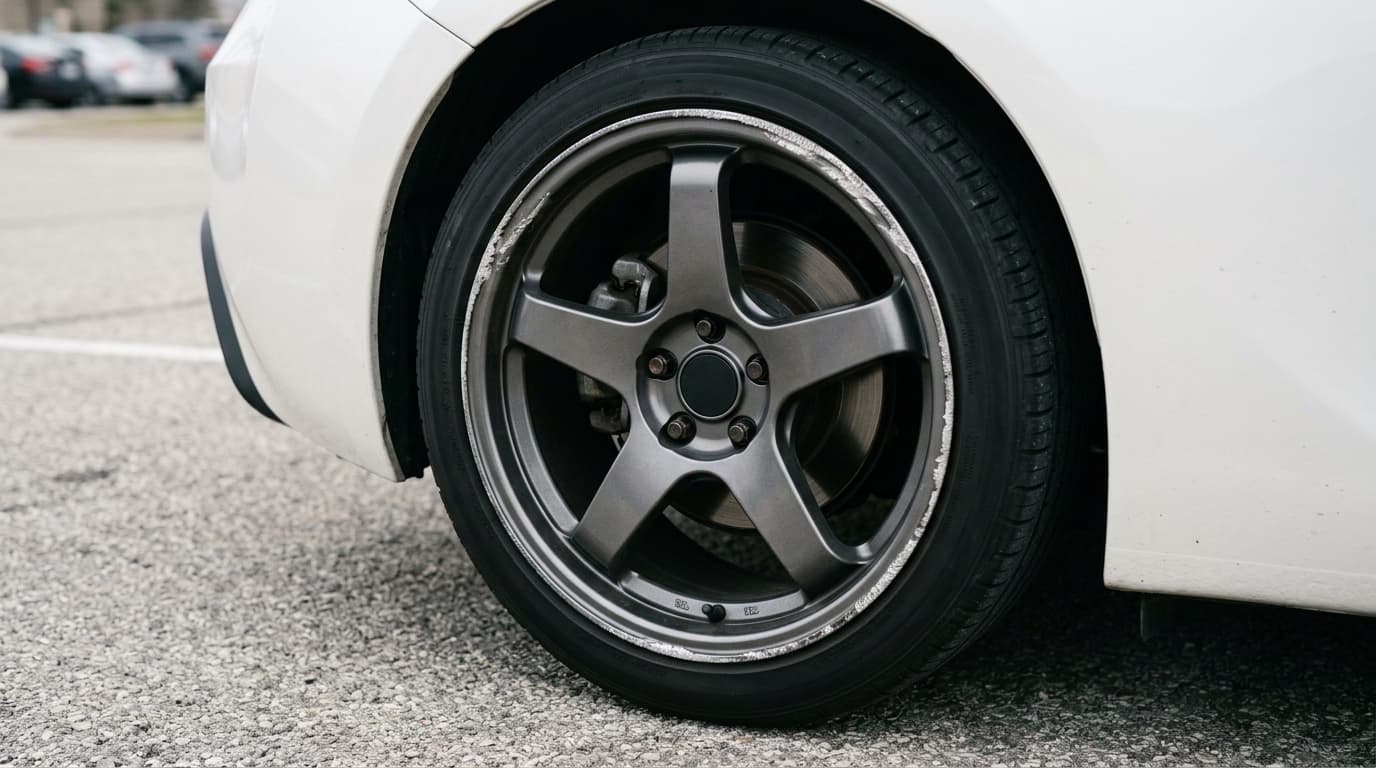
Damage severity decides everything downstream, so triage first. Alloy Wheel Repair Specialists - the biggest repair franchise in the US - draws the core line: curb rash "is usually a cosmetic issue," while a crack is a different class of problem entirely. The practical ladder, per Performance Plus Tire's April 2026 guide:
- Clear-coat scuffs - shallow scratches under ~1/16", the finish took the hit, the metal didn't.
- Through to bare metal - the scrape you can feel with a fingernail, 1/16"-1/8" deep.
- Gouges that deform the lip - deeper than 1/8", missing material, the rim edge no longer true.
- Structural damage - cracks, bends, chunks. Not a cosmetic problem anymore (more below).
Levels 1-3 are repairable. Level 4 is a safety decision, not a cosmetic one.
How much does curb rash repair cost?
$85 to $225 per wheel at shops that publish their prices. Most of the internet's "$50-150" ranges are uncited; these are named shops with public price lists:
| Repair | Published price | Source |
|---|---|---|
| Cosmetic curb rash, bends, cracks | $85-$225/wheel, "most $85" | RimSpec price list |
| Curb rash with warranty, same day | $85-$125/wheel | Wheel Guys |
| By severity (scuff → deep gouge) | $75-$300/wheel | Performance Plus Tire (Apr 2026) |
| Full refinish (powder coat, by size) | $105-$175/wheel | STP Performance Coating (Mar 2025) - see our rim colors guide |
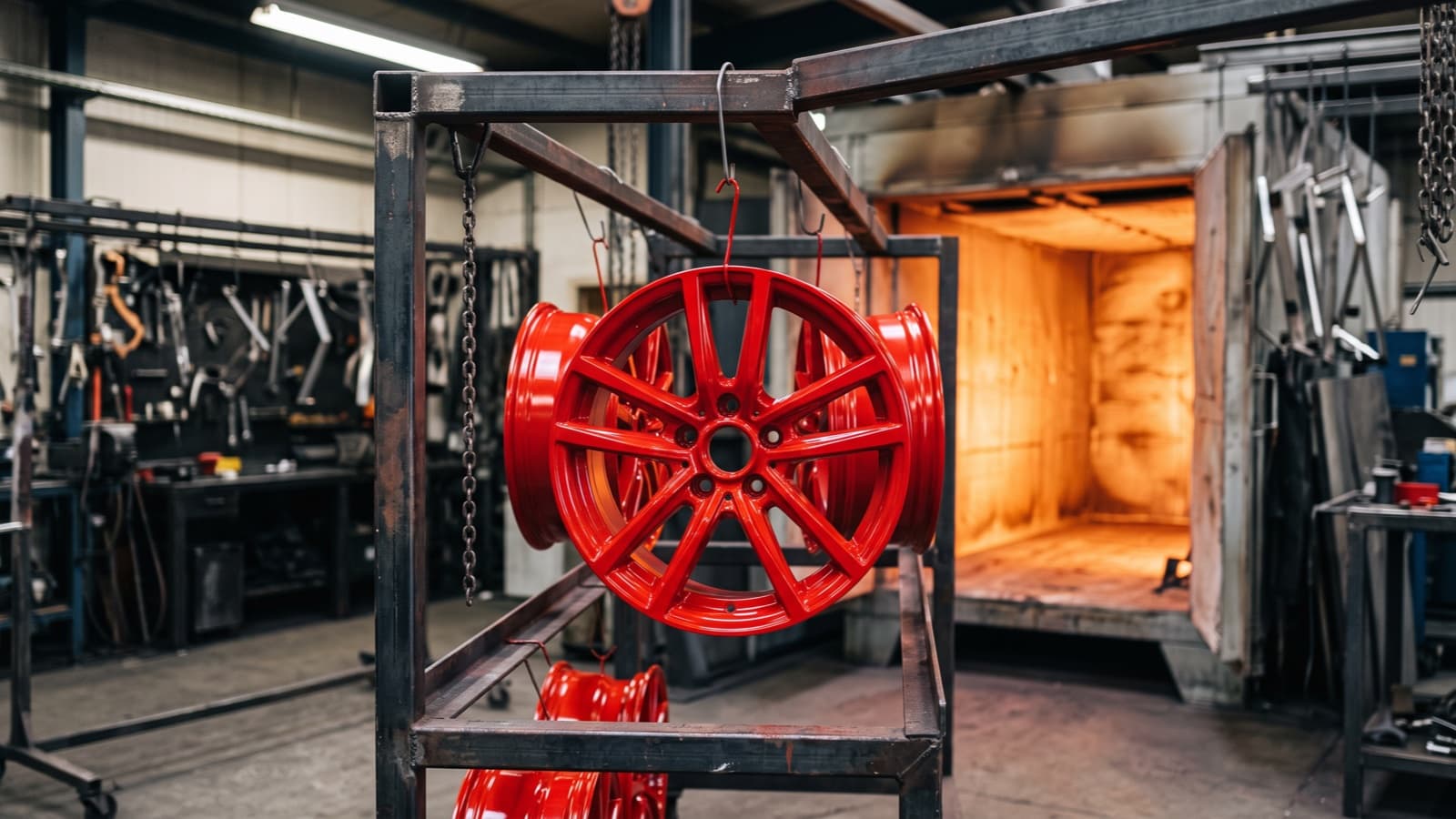
Three variables move the number: market (urban shops run 30-50% higher than rural, per Performance Plus), venue (mobile services typically charge 20-30% less than in-shop work with its spray booths and curing ovens), and finish. That last one matters most - a machined or diamond-cut face can't be spot-repaired with paint; it needs re-cutting on a specialist lathe, and as we covered in the rim colors guide, a diamond-cut wheel only has one or two re-cuts in it, ever. AAA's own benchmark for rim damage, for calibration: about $200 per rim.
Speed is the pleasant surprise: AWRS advertises 24-hour turnaround across 120+ locations, local shops advertise same-day, and Dent Wizard works in days at worst.
Is DIY curb rash repair worth it?
On a painted, single-color wheel: yes, if your standards survive a close look. Kits run from $6 basic filler-and-paint sets at Walmart through $25-80 mid-range kits to $100-150 premium versions, and Performance Plus Tire budgets 2-6 hours per wheel for a careful job, putting well-executed DIY at "70-85% of professional quality."
The honest limits:
- Machined and diamond-cut faces are out. The bright bare-metal look comes off a lathe; sandpaper and a rattle can will make it worse. Specialist job, full stop.
- Metallic and factory-matched colors are hard. Silver metallics - the most common wheel finish on earth - are exactly the paints that show every blend line.
- Structural damage is not a DIY category. Filler in a crack is cosmetics over a safety problem.
The math: a $30 kit and an afternoon versus $85-125 same-day with a warranty. If the wheel is a dark solid color and the rash is Level 1-2, DIY is defensible. Everything else, the shop premium buys a finish you won't wince at.
When repair is the wrong answer
Automakers draw a hard line: cosmetic refinishing only - never structural repair. Lincoln's collision position statement (2022) is explicit: the company "does not approve the remanufacturing/refinishing of steel or aluminum wheels when it involves re-machining, re-plating, welding, bending, straightening, reforming or adding new material other than cosmetic coatings, as this can compromise the structural integrity of the wheel." Wheels with cracks must be discarded; approved refinishing is limited to cosmetic work "that removes no metal." VW and Chrysler hold the same position in their own statements, and GM tightened its language further in July 2026.
The repair industry sits in visible tension with that. AWRS does weld cracked wheels - while itself acknowledging a cracked rim's integrity "will be compromised," listing rapid air loss and crack expansion among the risks, and gating the work behind its own safety protocols. Both positions are citable; only one of them is conservative. A wheel failure is a steering event, so our advice follows the OEMs: scrapes and gouges, repair freely; cracks and bends, replace.
Replacement isn't always the horror it sounds like: standard-vehicle alloys run roughly $150-400 each, with luxury and performance wheels at $800-2,500+ (Performance Plus, April 2026). For anything rarer, a single OEM wheel is also the moment many owners decide the whole set is due for an upgrade instead.
The lease turn-in math (and who pays)
If you lease, curb rash has a printed price. Toyota Financial Services' wear-and-use standard counts "wheel gouges, scratches, dents or cracks greater than the size of a credit card" as chargeable excess wear. Hold a credit card against your curb rash - it's almost certainly bigger. That makes the trade explicit: an $85-125 repair before inspection versus a lease-end charge, on every affected wheel. (TFS's own excess-wear protection product covers events up to $1,000 and $5,000 total, and newer leases waive the first $500 - numbers that tell you what lessors expect these charges to run.)
Insurance rarely rescues you here. Progressive's guidance is that collision coverage can pay for curb-damaged rims - but pays nothing when the repair costs less than your deductible. With repairs at $85-225 and deductibles typically $500+, curb rash is an out-of-pocket line item for almost everyone. Which is fine, because it's one of the cheapest fixes your car will ever need.
Fix the rash - then decide what the wheel should look like
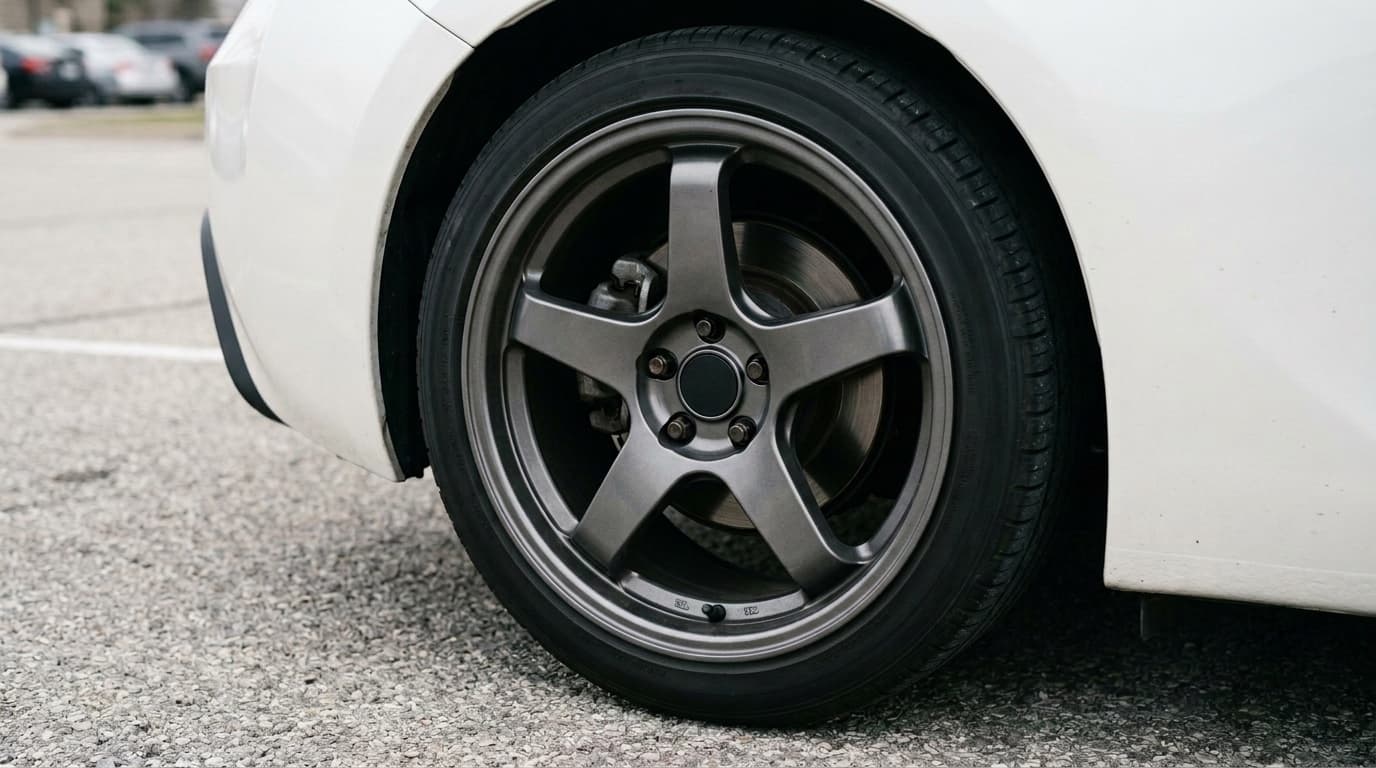
Here's what wheel shops know: the repair appointment is when owners actually look at their wheels for the first time in years. And once the lip is getting refinished anyway, the next question writes itself - same silver again, or the gunmetal, bronze, or gloss black you've been noticing on other cars? A repair is the one moment a color change costs almost nothing extra.
Answer it with your eyes instead of a color chip. Upload a photo of your car to VizTunr's free demo and preview any wheel color or finish on it photorealistically in about a minute - and while you're there, check the fitment and stance too. It's the same virtual try-on technology repair and wheel shops use to turn a $100 curb rash fix into a full refinish the customer is excited about. Repair the scar, preview the upgrade, then decide. No account needed.
WheelsCurb RashWheel RepairRim Repair
August 9, 2026 · 8 min readCategory: Wheels
Explore related