Every wheel refinishing conversation ends at the same fork: powder coat it properly, paint it cheaply, or Plasti Dip it reversibly. The market has already voted - powder coating is the dominant coating type in the wheel aftermarket, per Straits Research's February 2025 industry report - but dominant doesn't mean right for every wheel, every budget, or every attention span.
Here's the full comparison with the manufacturers' own numbers: what each process actually is, real published prices, how long each lasts, and the one honest engineering caveat about powder coating that deserves more airtime than it gets.
What is powder coating, and why do wheels love it?
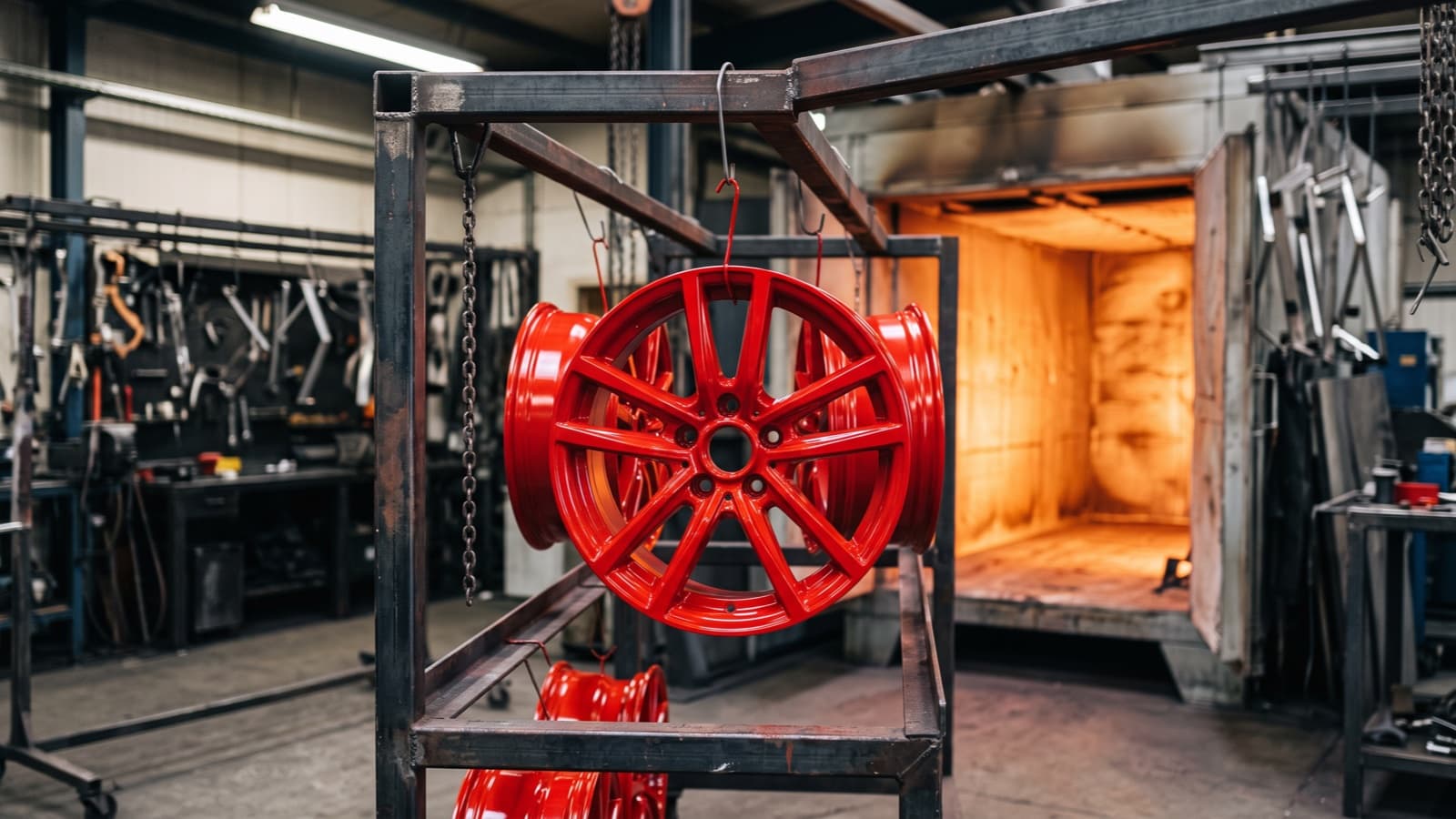
Dry paint, applied with static electricity, baked into a shell. The powder - a polyester resin - is given an electrostatic charge and drawn onto the grounded wheel, then cured in an oven. Prismatic Powders' own application spec puts real numbers on it: about 12 minutes at 400°F for a standard cure, with the clock starting only "when the substrate reaches temperature" - the wheel itself gets fully hot. The result is a cross-linked coating at 2.5-3.0 mils thick, roughly double a typical 1-2 mil coat of liquid paint (a comparison named coaters like Sundial make, and the film-thickness specs support).
Durability is why shops put their names on it: wheel maker ESR backs its powder coating with a 7-year warranty, and Denver coater ColorWerks offers a lifetime adhesion warranty against peeling and flaking. Nobody warranties a rattle-can job.
How much does powder coating rims cost?
$105-175 per wheel at shops with published price lists, $650-1,000 for a finished set. The named numbers:
| Shop / program | Published price | Notes |
|---|---|---|
| STP Performance Coating (Phoenix) | $105 (14-15") to $175 (24-26") per wheel | +$25/wheel for primer or clear (Mar 2025) |
| Westchester Wheel Repair (NY) | $175/wheel, $650/set | +$50/stage, machined-face add-on $55-65 |
| ColorWerks (Denver) | Sets from $800 (loose) / $1,000 (vehicle drop-off) | Same-day: "drop off at 9 AM, drive home by 5" |
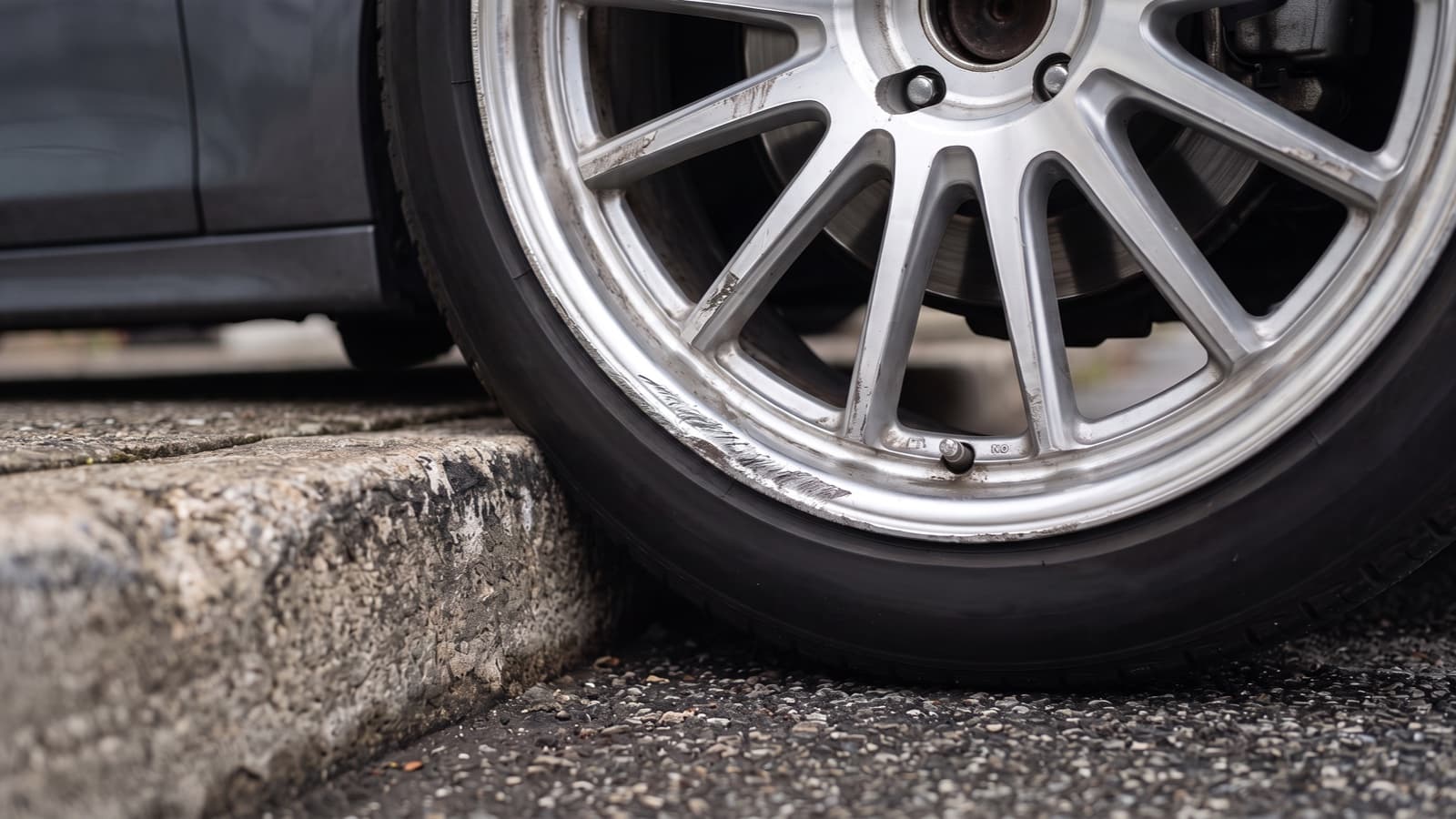
Turnaround runs from that same-day service through 1-2 business days for loose wheels at local coaters, out to 10-20 business days for a wheel manufacturer's custom program like ESR's. Budget for tire dismount and remount on top, and remember the finish interacts with repairs down the road: a powder-coated wheel can be stripped and re-coated after curb rash indefinitely - a diamond-cut face cannot.
The honest caveat: ovens and aluminum temper
Powder coating's one real engineering question is heat. Your alloy wheel is heat-treated aluminum - commonly 6061-T6, whose temper is set by aging at around 350°F. A powder cure puts the entire wheel at 355-400°F. That margin is why Nick Liberto, P.E., wrote in Products Finishing's trade column that "some powder coating ovens running above 400°F have been known to reduce the temper on such aluminum alloys" - and why wheel manufacturers, he notes, often advise against the process precautionarily, since they can't control any individual coater's oven. A peer-reviewed coatings study reached the same direction: high-temperature cures negatively affected heat-sensitive alloys.
The practical read, not the panic read: for ordinary cast wheels this is a theoretical footnote. For expensive forged or flow-formed wheels - the ones bought for their engineering - ask your coater what temperature they cure at and whether they document it, or keep the factory finish and change color another way. It's also the caveat that makes low-temperature options like dip and film interesting for high-end wheels.
Plasti Dip: the reversible experiment
Plasti Dip is the finish you're allowed to regret. The manufacturer's own positioning is "peelable and removable off of most surfaces" - a flexible rubber coating rated for -30°F to 200°F. The DIY math from official figures: an 11 oz spray can runs $17.63 and covers about 6 square feet at 5 mils, so a four-wheel job takes 4-5 cans - call it $70-90 in materials plus a weekend afternoon.
Two honest notes. Plasti Dip publishes no longevity claim for wheels - the "lasts three years" figure circulating online is reseller marketing, not the manufacturer. And it's soft rubber, not armor: it will scuff at the car wash and tear at the curb. That's the deal - zero commitment, zero durability pretensions. As a way to test whether you're a matte-black-wheels person before paying a coater, it's unbeatable.
Painting rims: where brushes and cans still win
Paint survives in two niches: color matching and budget. A professional paint-match - blending a repaired wheel back to its exact factory color - runs about $60 per wheel at Westchester, and it's the standard finishing move after cosmetic repair. At the other end, DIY kits from $6 will recolor a solid-dark wheel acceptably at driveway distance. Between those niches, paint's 1-2 mil film and lack of any warranty story make powder the better spend for a full recolor.
Diamond cut and PVD: the machine-shop finishes
Two finishes you can't do in a driveway. A diamond-cut face is machined to bright bare metal on a lathe and sealed under lacquer - covered in detail in our rim colors guide, with the two caveats that matter: breached lacquer lets corrosion creep underneath, and each re-cut removes metal, so a wheel supports only one or two before it's done.
PVD is the chrome successor. In Wheel Craft's description of the process, metal is sputtered onto the wheel atom by atom in a vacuum chamber, bonding a finish that's harder and more corrosion-resistant than electroplated chrome - and, unlike chrome, repairable. The timing isn't optional either: with California banning new decorative hexavalent-chromium plating from 2027, PVD is where the mirror finish is headed.
Same wheel, three finishes: see the difference
The comparison nobody's driveway can run - one identical wheel, refinished three ways:
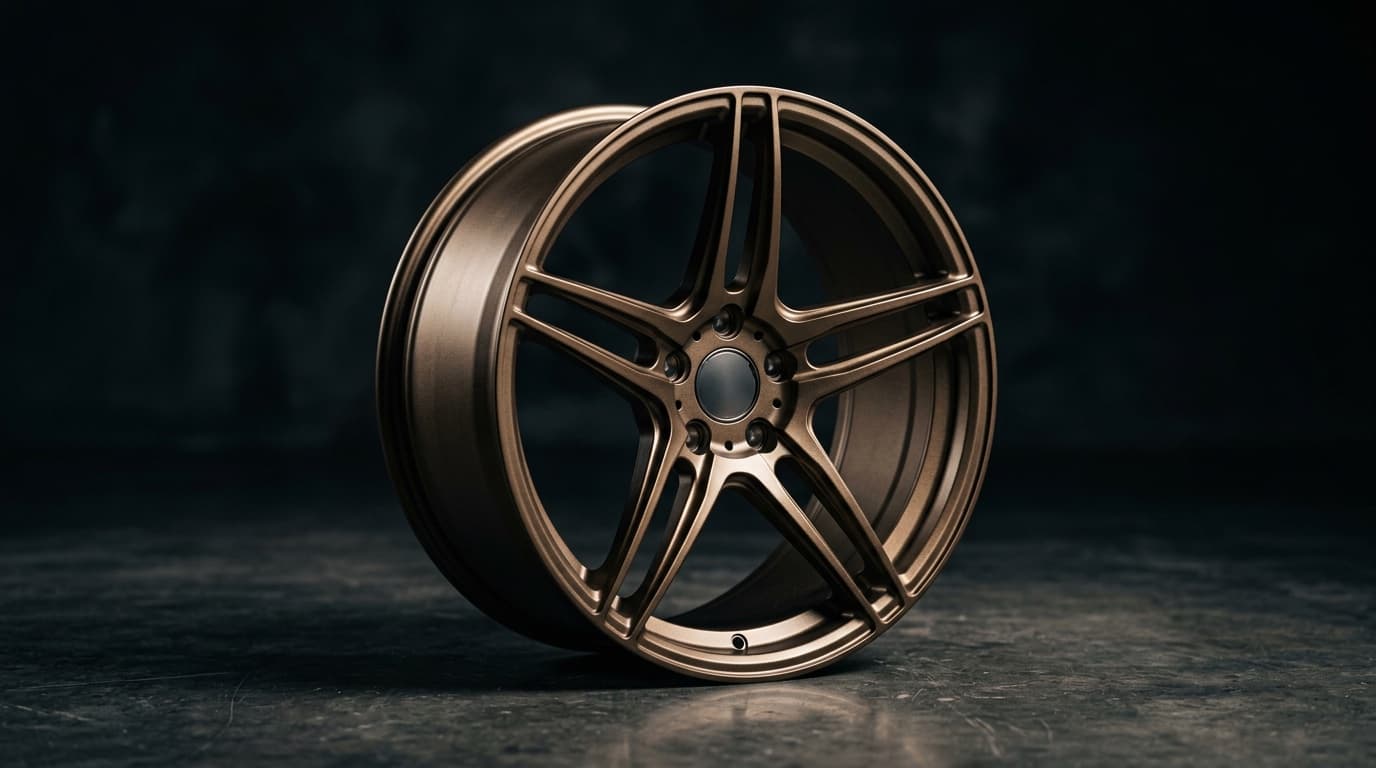
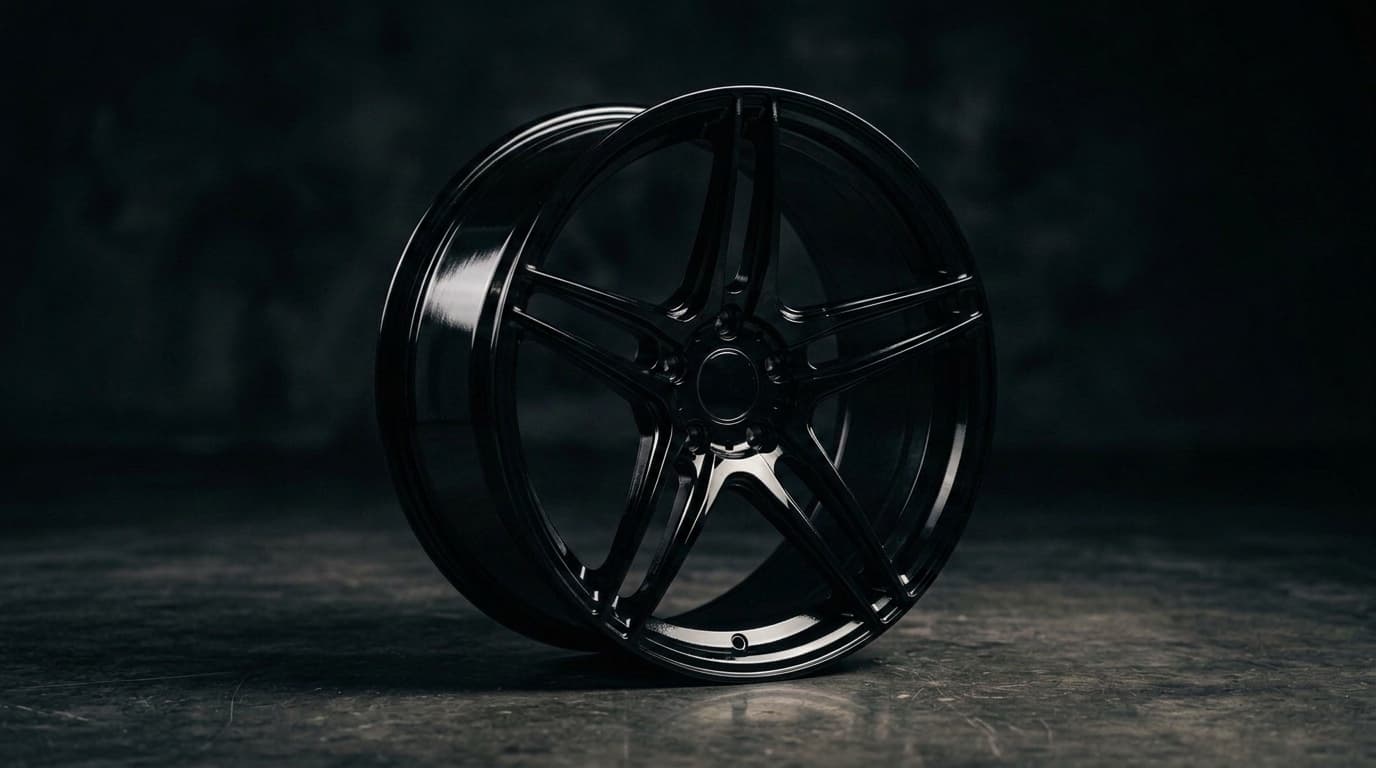
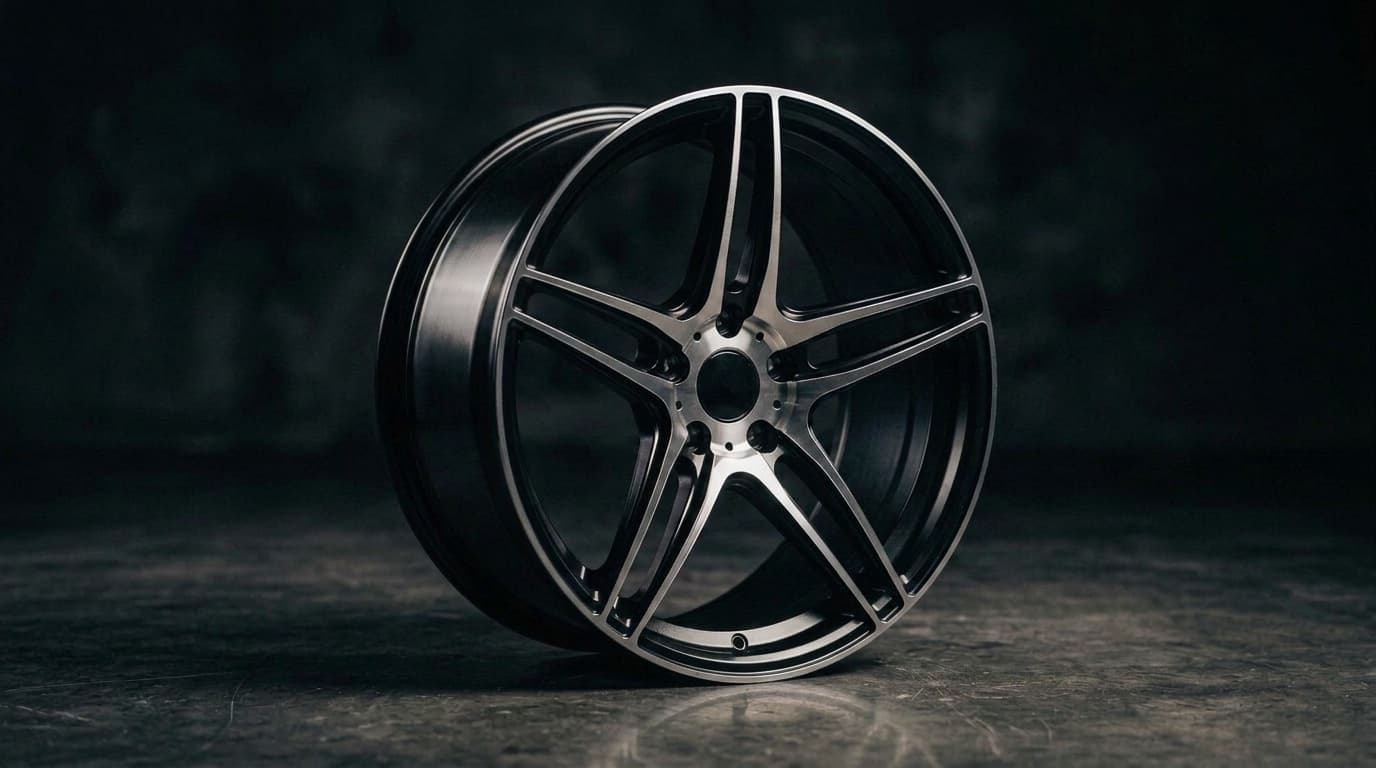
Same wheel, three personalities. Which brings up the real question - which one belongs on your car?
Pick the finish with your eyes, not a swatch
The decision tree is short: powder for a durable recolor you'll keep (warrantied, $650-1,000 a set), dip to audition a look for pocket money, paint for exact matches and budget fixes, diamond-cut or PVD when only machined brightness will do. What the tree can't tell you is whether bronze actually works against your paint, or whether gloss black disappears on your dark-gray car - that's a color decision, and swatches lie.
Upload one photo of your car to VizTunr's free demo and preview any wheel finish on it photorealistically in about a minute - gloss, satin, machined, dipped-matte, on your actual body color and in your actual light. It's the same virtual try-on technology wheel shops and coaters use to sell a finish the customer has already fallen for. Try three finishes over coffee, then book the coater once. No account needed.
WheelsPowder CoatingRim FinishesPlasti Dip
August 11, 2026 · 7 min readCategory: Wheels
Explore related