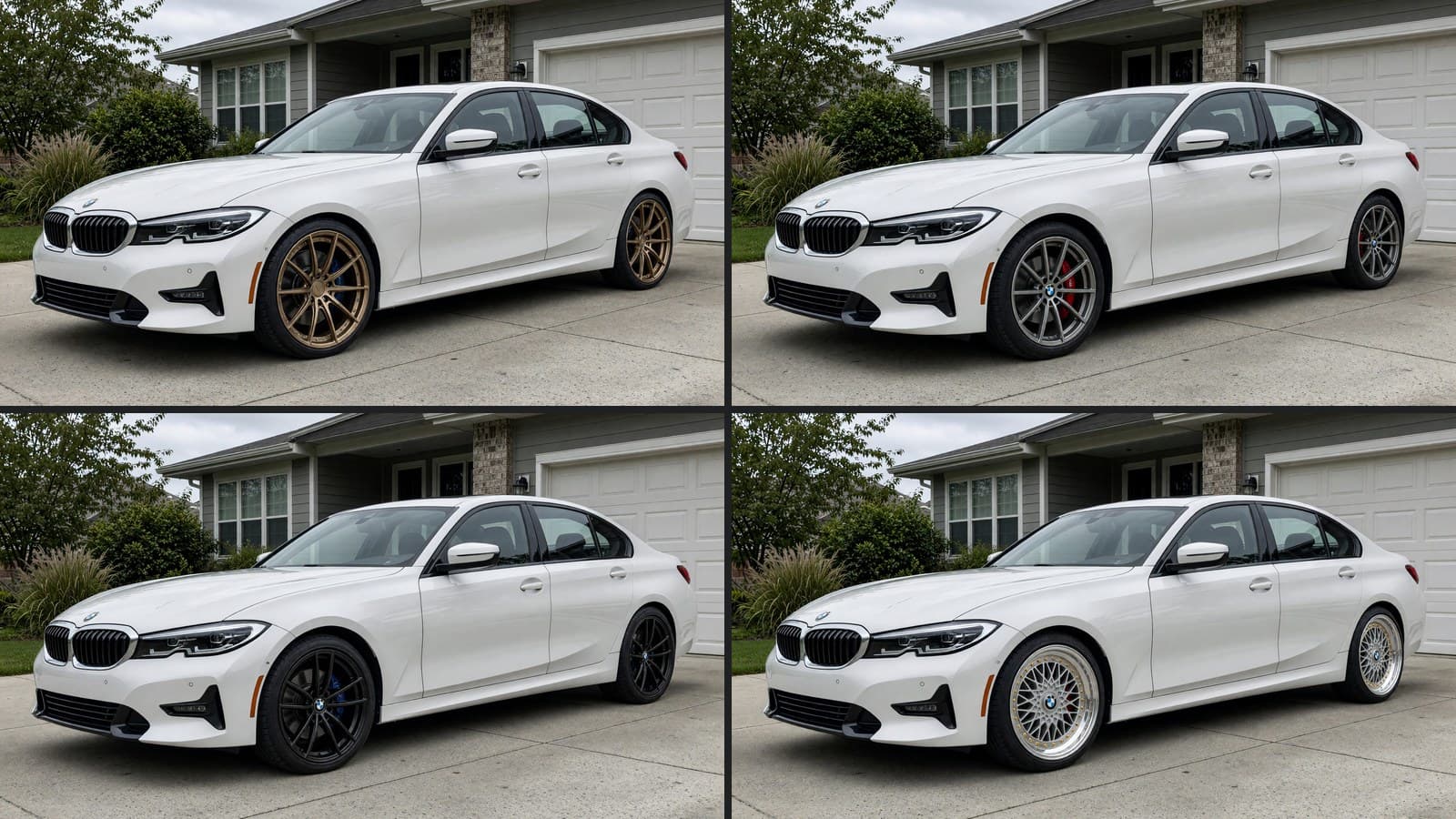
Most lists of automotive aftermarket trends say "AI will transform the industry" and stop there. That tells a shop owner nothing. The useful question is narrower: which jobs in selling parts will AI take over first, and how soon?
Here are seven predictions for 2027 to 2030. Each one comes with the evidence we have today, from industry sources and from the try-ons running on VizTunr storefronts, plus what would prove us wrong. They are our predictions, not facts. We sell AI try-on to wheel and tuning shops, so read them with that in mind.
The market these trends sit in
The aftermarket isn't shrinking, but it isn't booming either. SEMA's 2026 Market Report puts US accessory and performance parts sales at a record $52.92 billion in 2025 (SEMA, June 30, 2026), about 1% up on the year before. Pickups and SUVs account for 43% of that, and more than half of buyers are under 40.
The wider auto care market is growing faster. The Auto Care Association expects it to grow 5.4% in 2026 and reach $676.5 billion in 2029 (June 11, 2026), helped by a record average vehicle age of 12.9 years.
The money mostly isn't new. What changes is how a buyer picks the part. In SEMA's 2025 report, enthusiasts split their spending equally between online and offline. Kahn Media's 2026 buyer survey found that more than one in four used AI tools while researching (THE SHOP, October 28, 2026; an opt-in survey, not a national sample). The predictions below are about that choosing step.
1. A try-on button on every wheel product page
Prediction: by 2028, most online wheel stores will show a "see it on your car" button, the way clothing stores show a size chart. Shoppers will expect it on every wheel, not on a few hero products.
Why we think so. The technology already works well enough. In our AI wheel render accuracy test, 91.4% of 2,359 first renders showed the right wheel design, and the misses were caught by an automatic check before anyone saw them. A render takes about a minute. Shoppers who get the button use it, and they compare: in 1,053 shopper sessions, 59% tried two or more setups. On VizTunr shop storefronts, shoppers ran 394 try-ons in August 2026 and 2,377 in October.
Those are our numbers, and they're small next to the whole market. Growth also isn't a straight line: the first half of November is running behind October. What they show is that shoppers use the button when a shop adds it.
What would prove us wrong. If shops that add try-on can't see more quote requests or sales from it, the button stays a novelty on a few premium stores. Today we can show quote requests, not finished installs. In the first two weeks of our quote form, about 3% of try-on sessions left an email.
What a shop can do now. Adding the button is one link per product page template. Our guide on adding a wheel try-on button has copy-paste code for Shopify and WooCommerce.
2. Quotes that start from the customer's own car photo
Prediction: by 2028, the first message in most wheel and tuning quotes will include a photo of the customer's car with the part already on it. Today that conversation is "what car is it, what color, what ride height?" over three days of DMs.
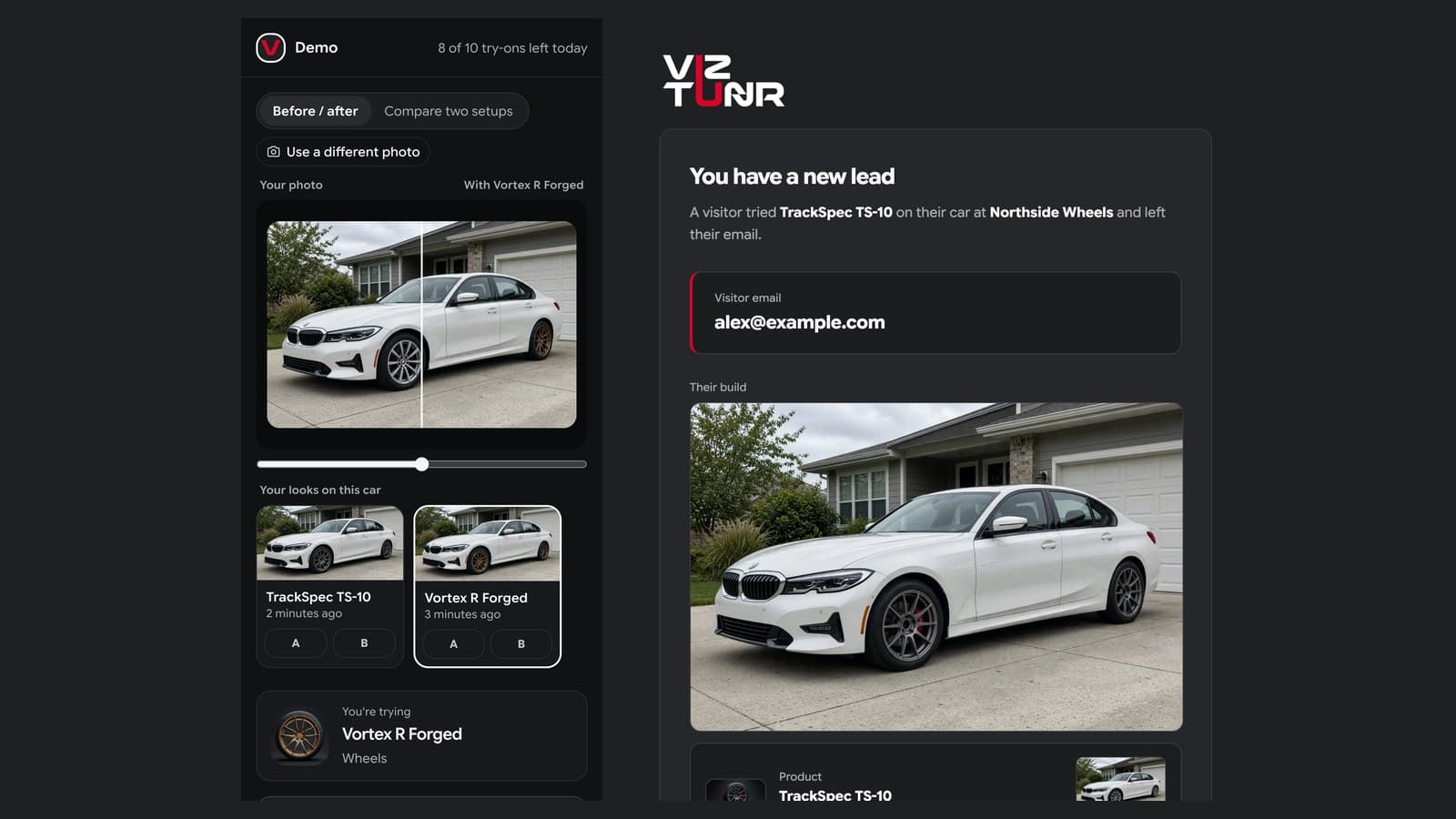
Why we think so. Shoppers already send photos. Every wheel shop gets "how would these look on my car?" with a picture attached, and Kahn Media found that creator content helped 35.1% of buyers understand performance, fitment or installation. A try-on turns that photo into the quote itself. When a VizTunr shopper asks for a quote, the shop gets an email with the shopper's address and the render they chose, so the reply can start with a price instead of questions.
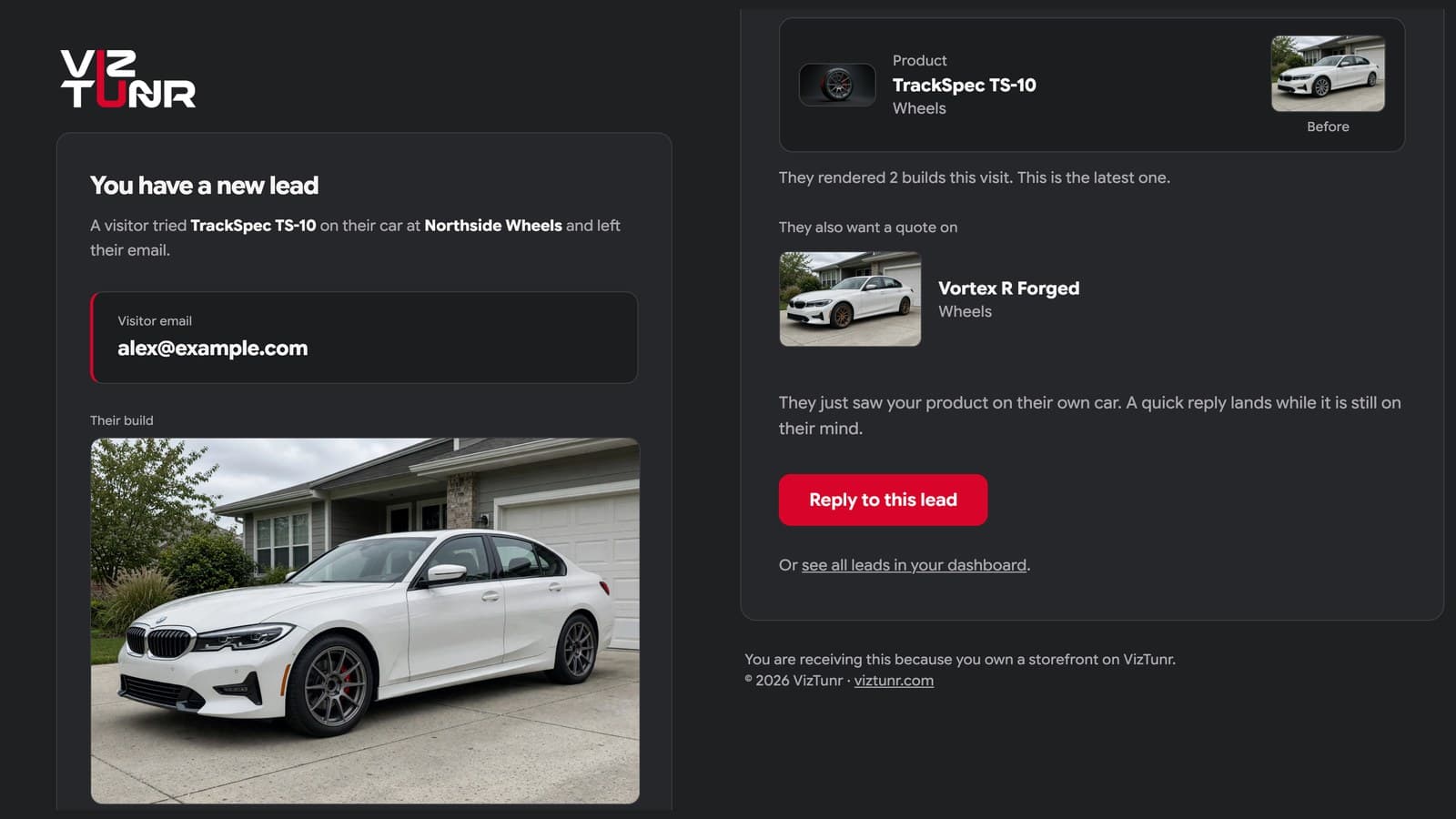
The quote request email a VizTunr shop receives, shown with demo data: the render arrives with the request.
What would prove us wrong. If shoppers prefer to keep the conversation in Instagram DMs or WhatsApp and won't fill a form, photo-first quotes stay manual. That's why a try-on link also works in a DM reply.
What a shop can do now. Answer the next "how would it look" message with a try-on link for that wheel instead of a stock photo. We walked through the full flow in how wheel shops use AI renders.
3. Renders and fitment data on the same page
Prediction: by 2029, the leading wheel stores will answer "how does it look?" and "will it fit?" on one screen, from the shopper's own photo plus the vehicle's fitment data.
Why we think so. The two halves already exist separately. Fitment is a solved data problem: the Auto Care Association's ACES standard covers "product fitment data", and version 5.0 shipped on April 2, 2026. Commercial fitment APIs like Wheel-Size.com cover 250+ makes. Visualizers built on vehicle photo libraries, like RideStyler, already pair pictures with fitment (our comparison). Photo-based renders show the real car, with its color and stance, but they don't check fit.
Joining them is mostly integration work. We released a headless API on November 14, 2026 for that reason, so a shop can render inside its own configurator, next to its own fitment lookup.
What would prove us wrong. If buyers keep treating the look and the fit as separate steps, with fitment at the counter, nobody will pay to merge them.
What a shop can do now. Never let a render stand in for a fitment check. Say so next to the button, and confirm offset and bolt pattern before you take a deposit.
4. AI shopping agents do the first shortlist
Prediction: by 2029, a large share of wheel buyers will see their first shortlist from an AI assistant, not from a search results page. The assistant will compare a few wheels for the buyer's car and send them to a shop's page to finish.
Why we think so. The platforms are building for it. Google launched the Universal Commerce Protocol on January 11, 2026, for checkout in AI Mode and the Gemini app. Perplexity made its shopping assistant free for US users in November 2025, and Amazon tests a Buy for Me agent that buys from other stores' sites. Adobe measured traffic from generative AI to US retail sites up 693% in the 2025 holiday season, from a small base.
The road isn't straight. OpenAI launched in-chat checkout in September 2025, then shifted ChatGPT toward product discovery with checkout on the merchant's site (Retail TouchPoints, March 24, 2026). For wheels that's the likely pattern: the agent shortlists, and the buyer finishes where the fitment and the shop are.
What would prove us wrong. If agents keep recommending the wrong size or a wheel that doesn't fit, buyers will stop trusting them for fitment-sensitive parts and go back to search and forums.
What a shop can do now. Write product pages an assistant can read: bolt pattern, offset, sizes, weight and finish in plain text, not only in images or a dropdown. Agents can't use what they can't read.
5. Fewer "it looked different" returns, if renders are checked
Prediction: shops that show a checked render before the sale will see fewer returns of wheels that "looked different on the car". This is our least proven prediction.
Why we think so. Returns are expensive and the reason is often expectations, not defects. Blue Yonder's 2026 survey found 20% of US returns were "different than described", rising to 36% for purchases an AI recommended (DC Velocity, October 29, 2026). A try-on attacks exactly that reason.
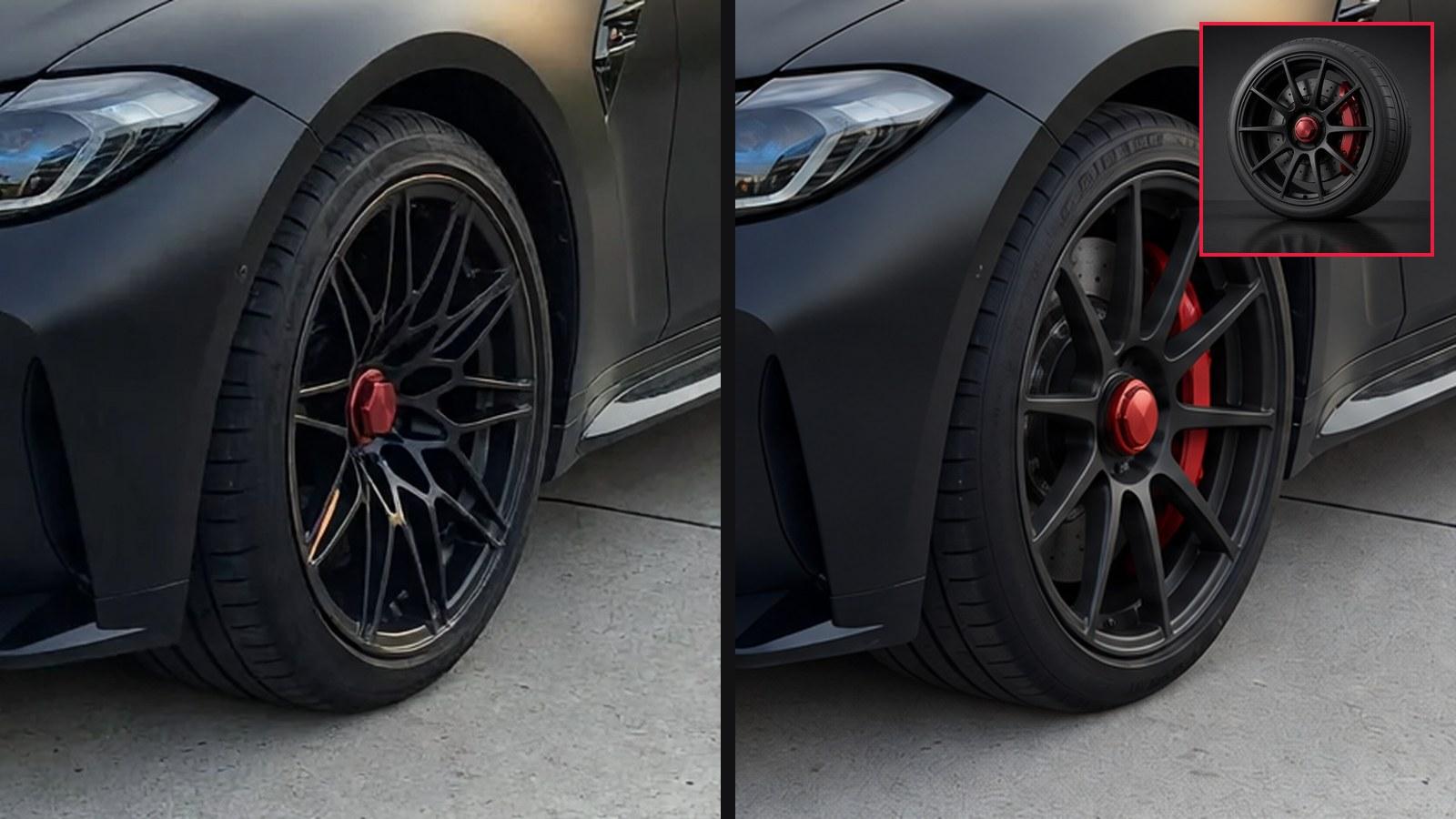
Why we might be wrong. The research cuts both ways. A paper presented at EMAC 2025 found that AR reduces returns when it shows the product accurately and can increase them when it raises expectations it doesn't meet. A render that shows twin spokes on a split-spoke wheel sells the wrong wheel.
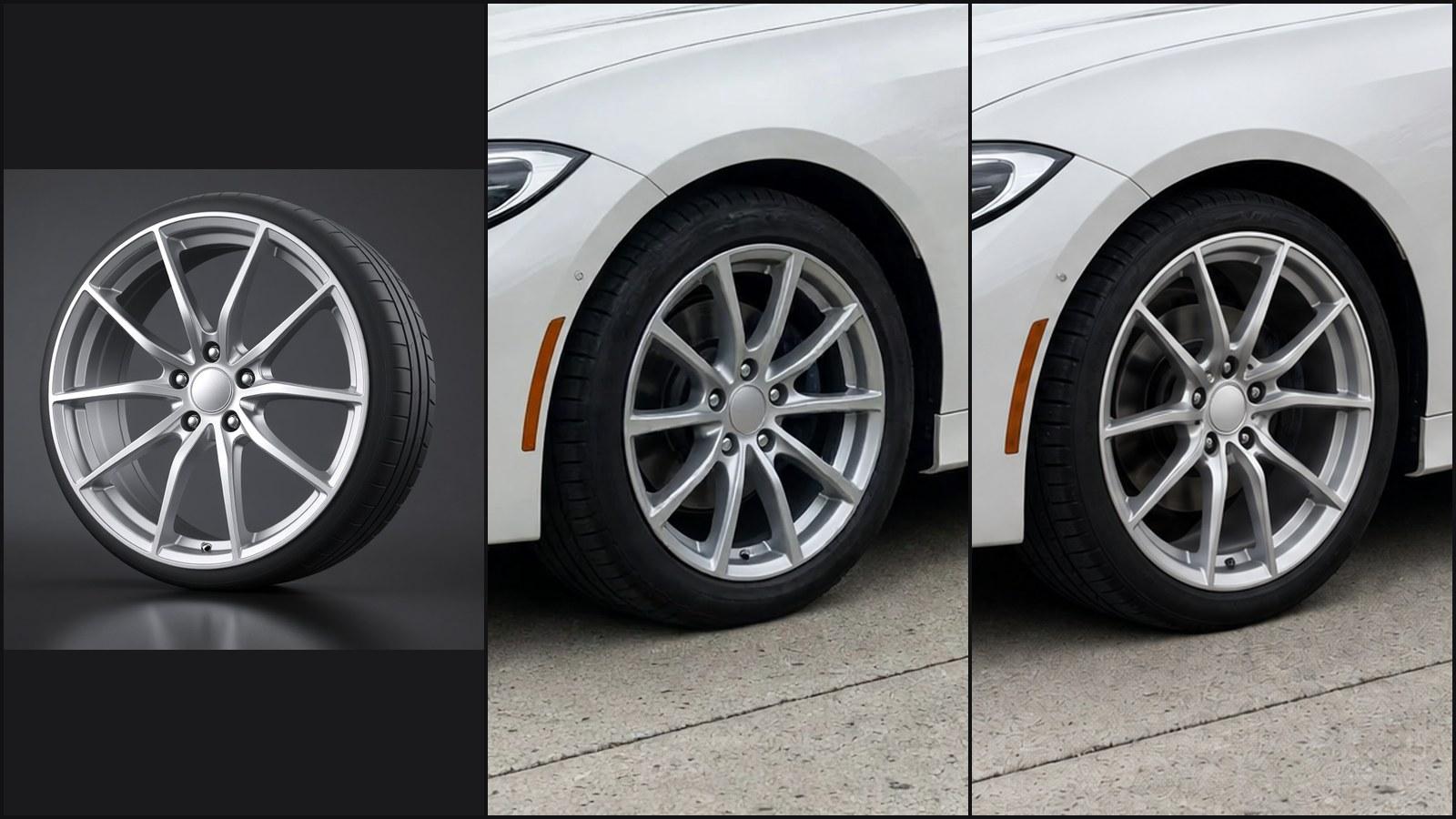
A wrong first render caught by our check, and the corrected one. A render that skipped the check would have shown the shopper the wrong wheel.
What a shop can do now. Check renders before customers see them, or at least compare spoke count, spoke grouping, center and lip with the product photo. We don't have return data from our own shops yet, and won't claim a number until we do.
6. Build walkarounds rendered from one photo
Prediction: by 2029, a shop will be able to send a short video of a customer's car with the planned wheels and wrap, made from a single photo. Still images come first, video follows.
Why we think so. The cost of AI video is falling fast. Google cut the per-second price of its fast video model from $0.40 to $0.15 in September 2025, and a model it released in November 2026 costs $0.07 a second at 720p and accepts product images as guidance. Those are different models, so it isn't a like-for-like price curve, but the direction is clear.
Why we might be wrong. Price isn't the hard part. The Stanford AI Index 2026 still lists coherent, realistic video as a weak area. Wheels are a harsh test: a spoke pattern has to stay identical while the car moves and the light changes. Until it does, a video walkaround shows the wrong wheel more often than a still does.
What a shop can do now. Nothing yet. Stills sell the wheel today.
7. Daily build content, labeled as rendered
Prediction: by 2028, active shops will post concept builds every day from renders, and "rendered, not built" labels will become normal.
Why we think so. Discovery is spread thin. In Kahn Media's 2026 survey, no single channel was where more than 10% of buyers first found a product: social feeds 9.5%, search 9.3%, YouTube 7.8% and AI tools 7.2%. Shops that show up everywhere need more pictures than they have finished cars. A render of a customer's car with a wheel the shop stocks costs less than a photo shoot, and it's specific to what the shop sells.
What would prove us wrong. If audiences punish rendered builds as fake, or platforms bury them, shops will go back to posting only real installs. That's why we expect clear labels: a concept build is honest when it says it's a concept.
What a shop can do now. Ask customers who tried a wheel on your storefront if you can post the render, and label it as a concept until the install is done.
What won't change
- Fitment. No render tells you whether a wheel clears your brakes. Data and the shop's experience do.
- The install. AI can sell the look. Mounting, balancing and alignment still happen in a bay.
- Trust in the shop. A render gets a shopper to ask for a quote. Whether they book depends on the answer they get, and how fast.
The seven predictions at a glance
| Prediction | By | Our confidence | Signal to watch |
|---|---|---|---|
| Try-on button on every wheel product page | 2028 | High | Big wheel retailers adding try-on to every product |
| Quotes start from the customer's photo | 2028 | High | Quote forms that ask for a car photo first |
| Render and fitment on one page | 2029 | Medium | Fitment providers adding photo renders, or the reverse |
| AI agents shortlist wheels | 2029 | Medium | Assistants asking for your car before suggesting wheels |
| Fewer "looked different" returns | 2030 | Low to medium | Return data from shops that show checked renders |
| Video walkarounds from one photo | 2029 | Medium | A video model that keeps a spoke pattern stable |
| Daily concept builds, labeled | 2028 | Medium | "Concept" or "rendered" labels on shop posts |
We'll revisit this list each year and mark what we got wrong. For the shop-side overview of how try-on works today, see virtual try-on for tuning shops, and for how it compares with other tools, VizTunr alternatives.
See prediction 1 working today
The first prediction is already running on the demo shop: pick a wheel, upload a photo of any car, and see it rendered in about a minute. It's one of the automotive aftermarket trends you can try right now, on your own car.
Automotive Aftermarket TrendsAI Car RenderingVirtual Try-OnWheel ShopTuning Shop
November 16, 2026 · 13 min readCategory: Try-It-On
Explore related