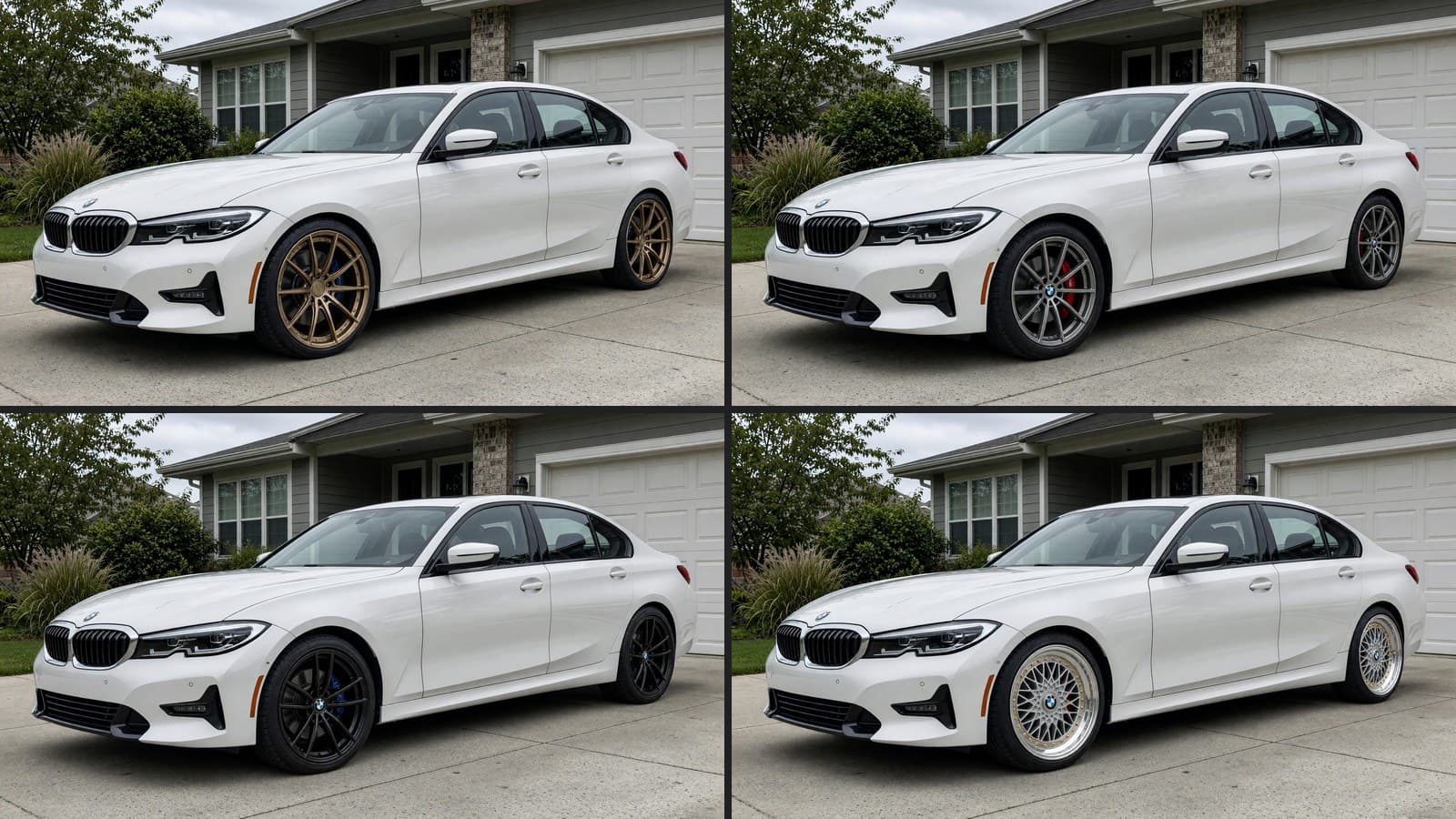
Give shoppers a "try on your car" button and most of them don't try one wheel. They try two, three, sometimes ten. Across 1,053 shopper sessions on 10 VizTunr storefronts, 59% rendered more than one setup on their car, and the typical comparison took a few minutes, not a weekend.
This post is the data behind that: how many setups shoppers try, whether they compare products or re-roll the same one, how long it takes, how often they come back and how many ask for a quote. Then what it means if you run a wheel shop.
The data, and what we left out
Ten live storefronts, July 9 to October 26, 2026, with internal and owner traffic removed. Nine are wheel and tuning shops and one is a wrap studio. We don't name them here. A session is one shopper's browser (our storefront keeps a session cookie, so a shopper who returns days later is the same session). A try-on is one render a shopper started.
We started with 1,105 sessions and dropped 52 before counting anything:
- Our own traffic: any session from a network that rendered on two or more different shops' storefronts. Real shoppers don't do that; we do, when we set shops up.
- Prospects and owners testing: sessions from a network that also used our public demo shop, which is where shop owners try VizTunr before they sign up, and sessions from the network behind each shop's very first render, which is the owner checking their own setup.
- Probable staff: the 5 sessions with more than 20 try-ons. Several spanned weeks with dozens of products, which looks like someone at the counter, not a shopper.
That leaves 1,053 sessions and 2,889 try-ons. Wheels were 97% of try-ons; wraps the rest. A few shop staff sessions probably remain, and some shoppers on two devices count twice, so treat every number below as a good estimate rather than a census.
Most shoppers compare
59% of shoppers tried two or more setups. The median shopper rendered 2, the average 2.7.
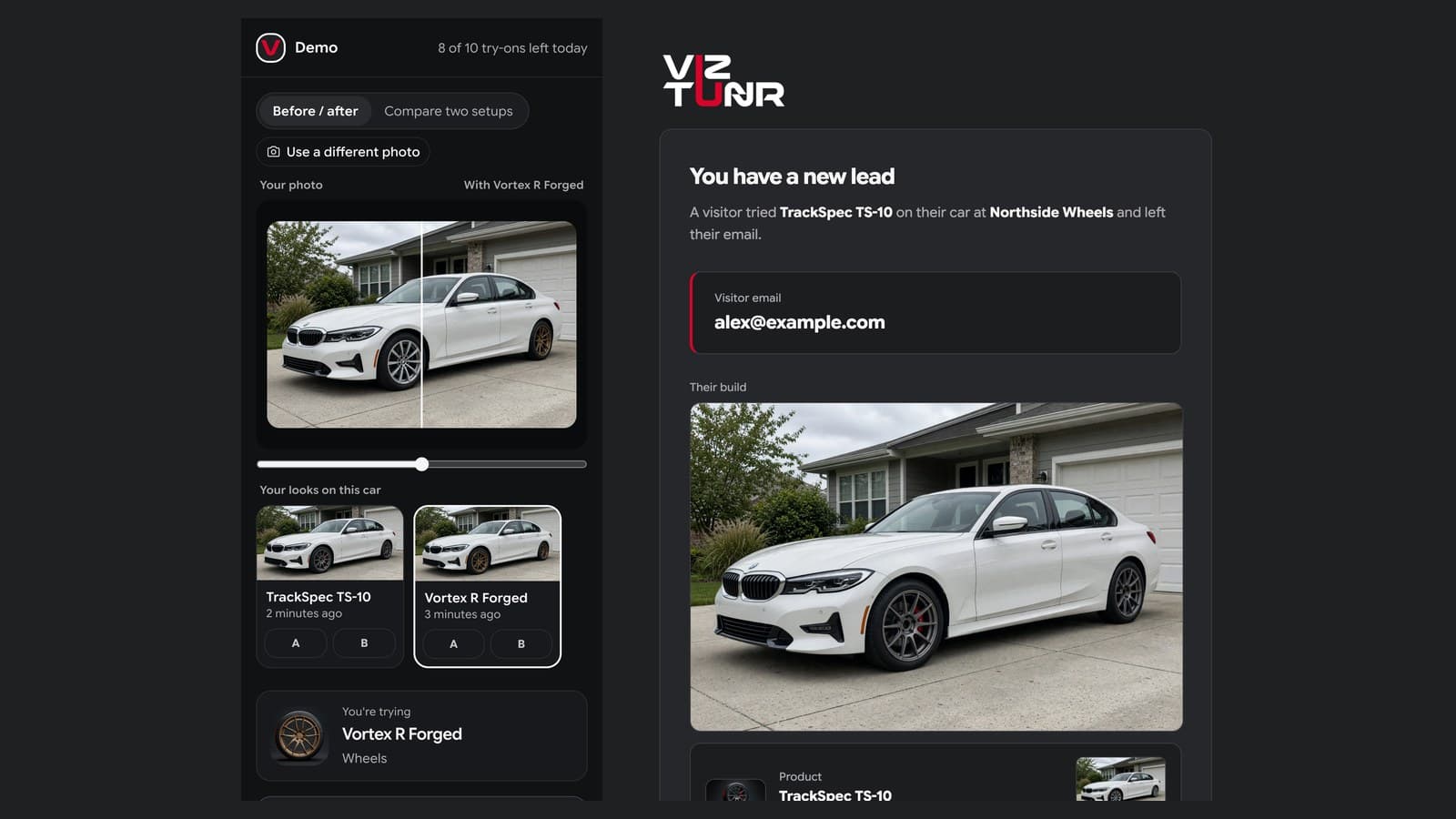
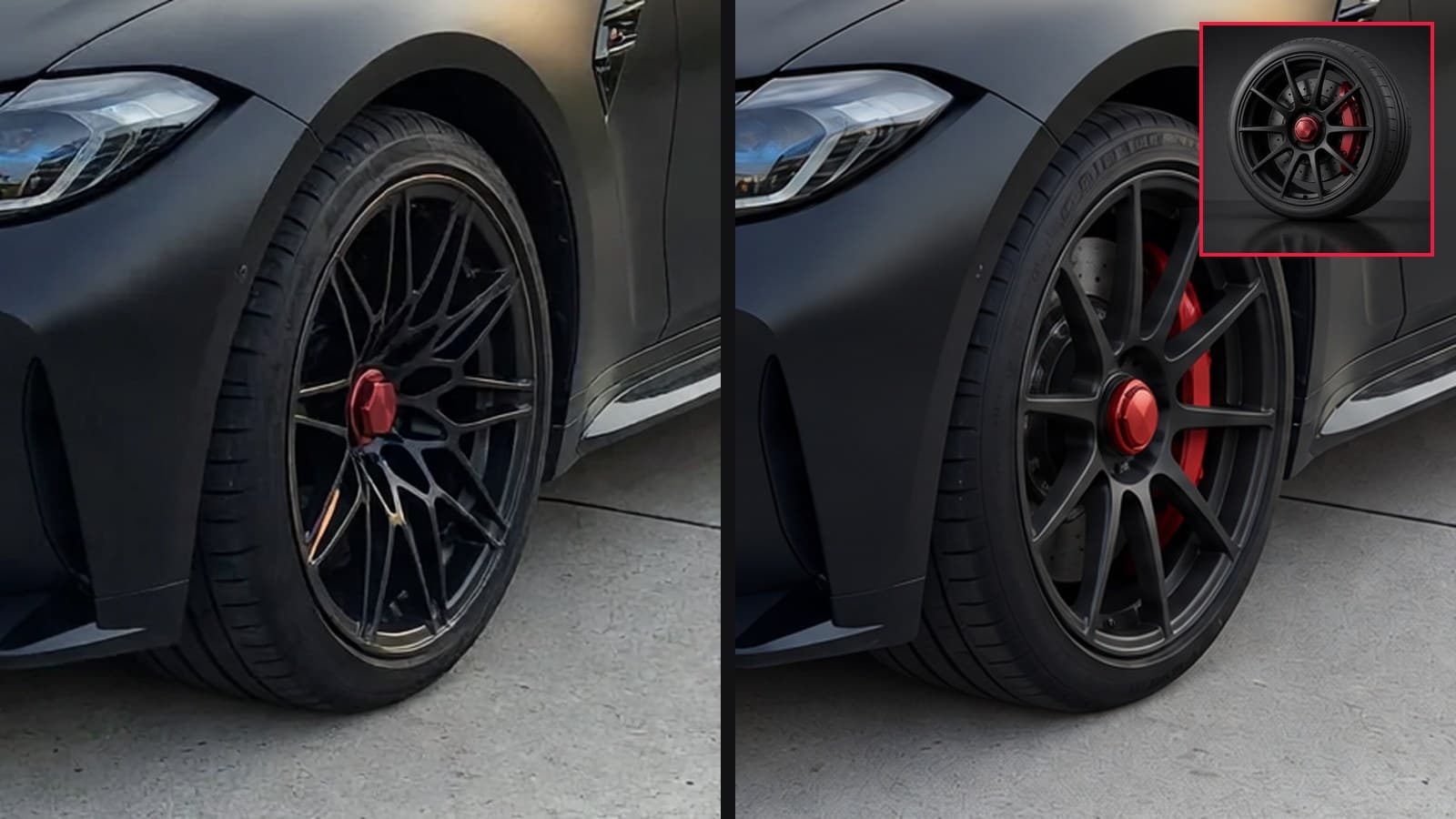
That matches what wheel shops hear at the counter. Almost nobody walks in sure of one wheel. They have two or three in mind and want to see them side by side, which is why our storefront keeps every look in a strip under the car and lets the shopper compare two in close-up.
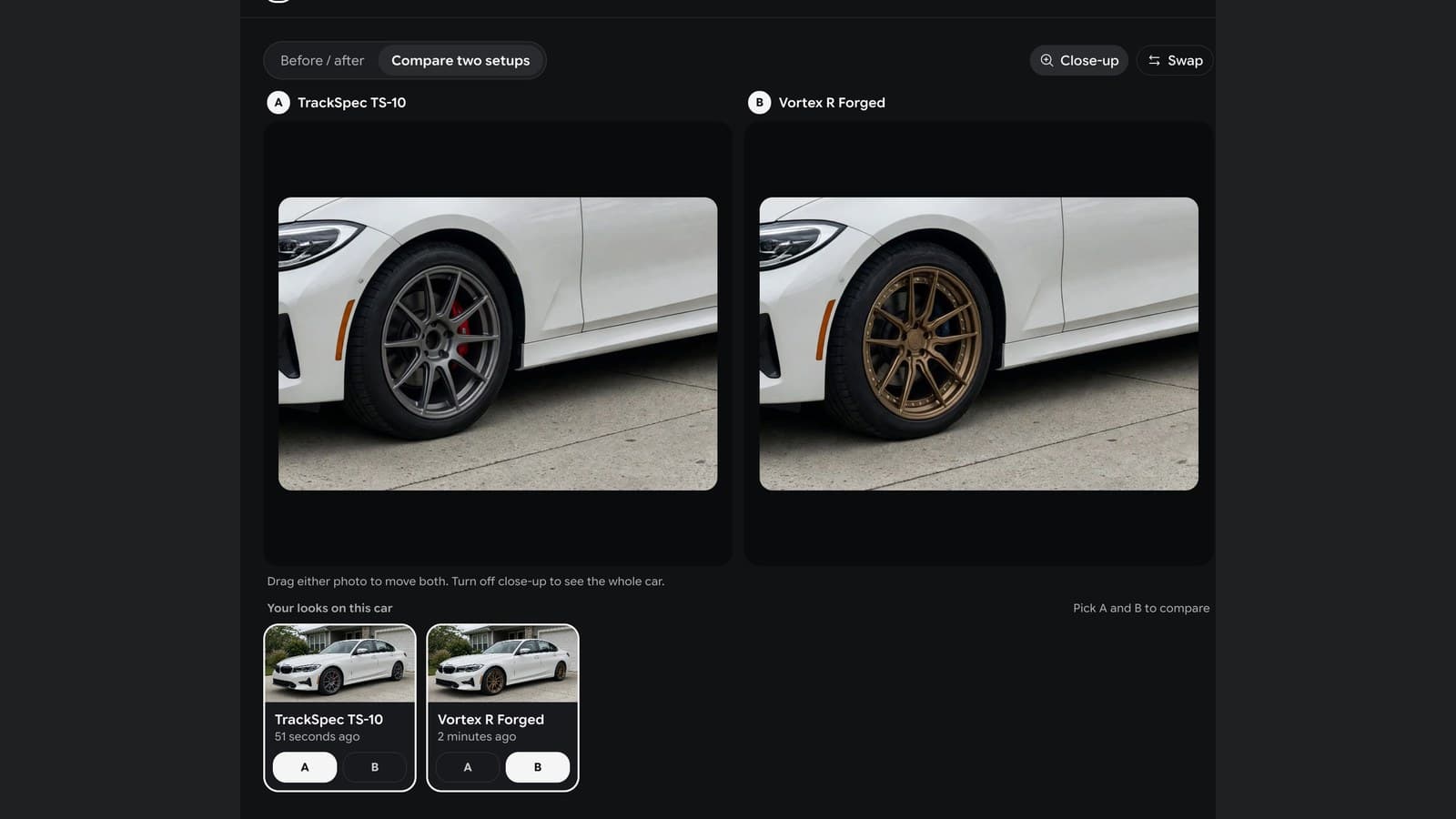
It isn't one shop
Every storefront with 30 or more sessions landed between 56% and 73%. The shops sell different wheels to different markets on different continents, and the share of shoppers who compare barely moves.
The three smallest storefronts (fewer than 10 sessions each) are left out of this chart but included in every other number.
They compare products, not just re-roll
47% of all shoppers tried two or more different products. Among shoppers who rendered more than once, the average was 3.0 different products. So the second render is usually a different wheel, not a second attempt at the first.
Re-renders happen too. About 28% of follow-up renders repeated the product the shopper had just tried, and 21% of sessions used two or more photos. Our reading: shoppers try a second photo when the first one doesn't show the car the way they see it, from a better angle or in better light. That's a hint for shops, below.
They decide in minutes
The median multi-render session took 6.4 minutes from first to last render. That's for shoppers who rendered two or more setups on the same day. Each render takes about a minute, so a typical comparison is a few renders and a few looks, then done.
The speed works both ways. A shopper who is that engaged for six minutes is as warm as a lead gets, and they've moved on within the hour. We covered why the first hour matters in how wheel shops use AI renders to close sales.
Some come back
About 1 in 10 shoppers (9.9%) returned on a different day to try more. The storefront keeps their car photo, so the next product is one tap: "Welcome back. We kept your car photo, so you can try the next product in one tap."
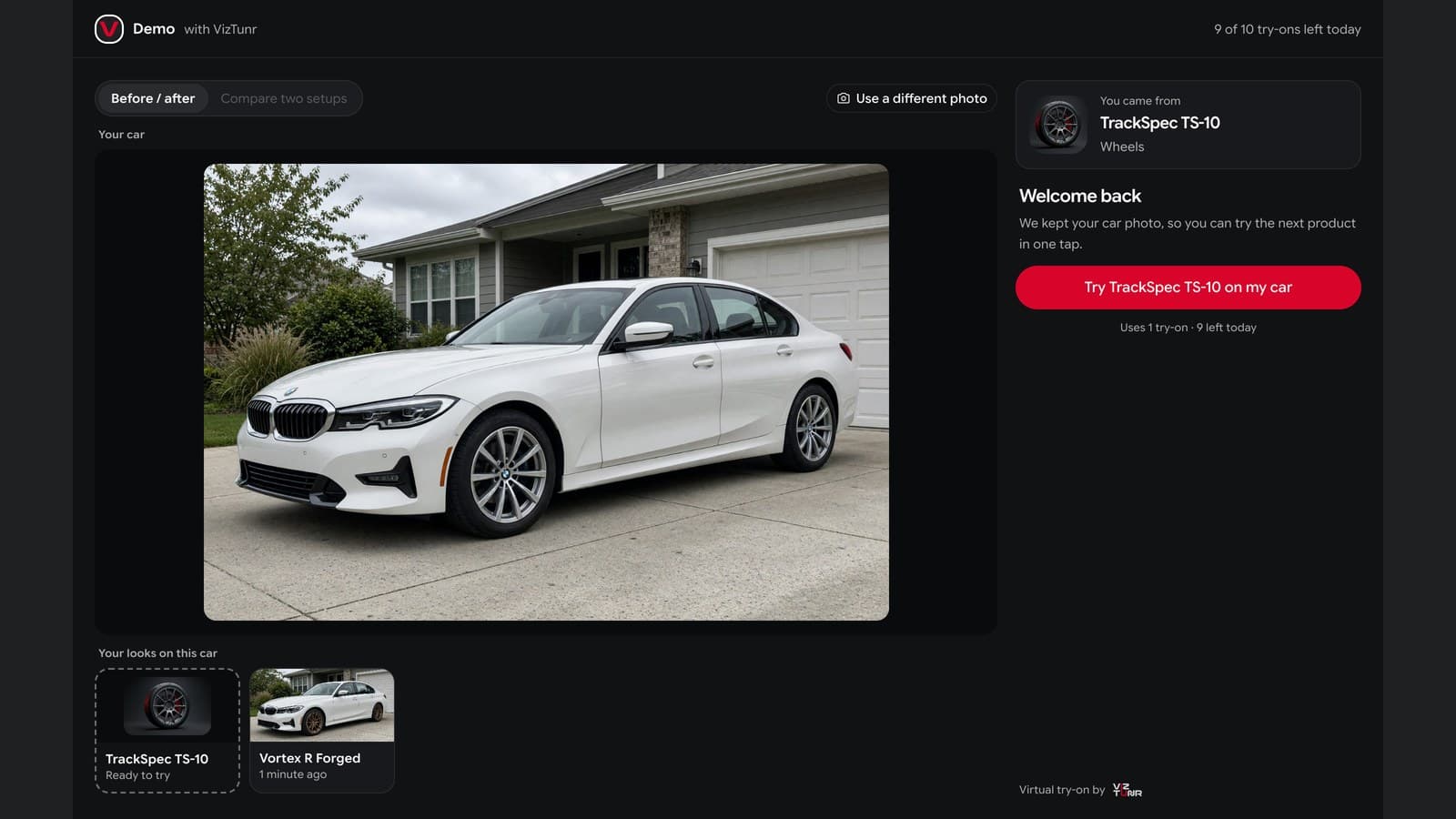
That only works if the next wheel they look at has the same button. A shopper who returns through a product page without it can't continue.
Almost nobody hits the limit
Only 1.8% of shoppers reached 10 try-ons within 24 hours. Ten is VizTunr's default daily limit per visitor, and shops can raise or lower it. The data says the default is about right: it covers 98% of shoppers and stops the rare visitor who would happily render your whole catalog. Shoppers who do reach it see a quote form instead of a dead end.
Thursday to Saturday is busiest
Sessions peak at the end of the week. By the day a session started (UTC): Friday 183, Thursday 182, Saturday 168, Wednesday and Sunday 142 each, Monday 121, Tuesday 115. Friday and Saturday together are about a third of all sessions. If quote requests land on Saturday afternoon, someone should be able to reply before Monday.
Early numbers on quote requests
About 3 in 100 sessions left an email in the first two weeks of the quote form. Our storefront asks "Like it? Get a quote" after a render, with one field: email. Between October 13, when it shipped, and October 26, 16 of 511 sessions used it. Shoppers who tried two or more setups did so at 3.8%, shoppers who tried one at 2.2%.
Sixteen leads is too few to draw a firm line, and we'll update this when there are a few hundred. But the direction fits everything above: the shoppers who compare are the ones closest to buying.
What this means for a wheel shop
- Put the button on every wheel, not one hero product. Most shoppers compare, and they compare your products against each other. A button on one page gets one render.
- Expect three products per serious shopper. When a lead arrives, the dashboard shows every setup they tried. Quote the one they asked about and mention the runner-up.
- Reply the same day, weekends included. The decision takes minutes and the busiest days are Thursday to Saturday.
- Keep the default limit. Ten a day covered 98% of shoppers.
- Tell shoppers what photo works. One in five tried a second photo. A line next to your button, "side or three-quarter view, whole car in frame, wheels visible", saves them the retry.
What this data can't tell you yet
- How many sessions became installs. We see quote requests, not bookings. If you run VizTunr and track which leads booked, we'd like to compare notes.
- Phone or desktop. We don't record devices.
- Accuracy. That's a separate question with its own data: how accurate AI wheel renders are.
Be the shopper
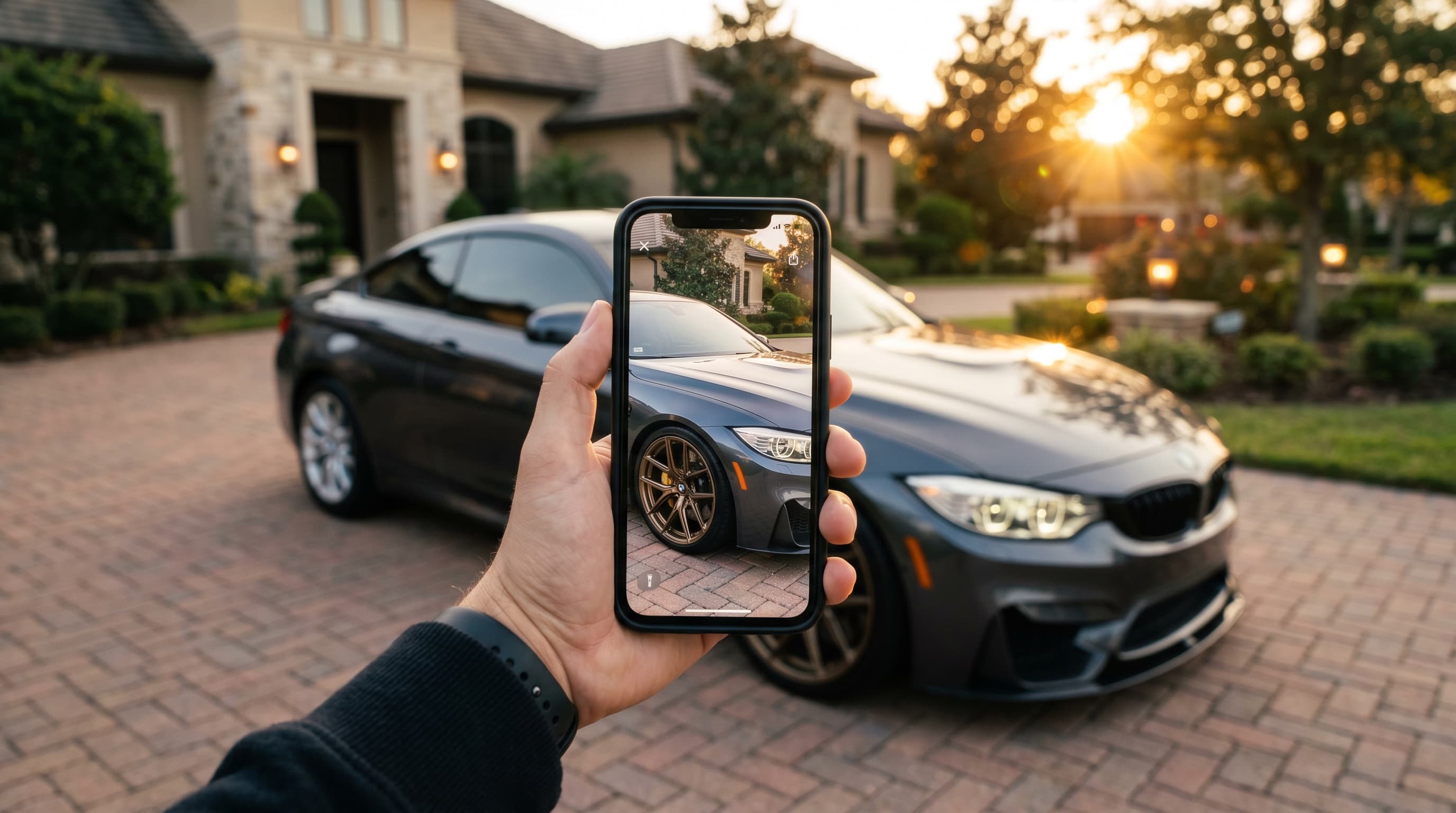
The quickest way to understand these numbers is to be one of them. Open the demo shop, add a photo of your car and try three wheels. Most people do.
Virtual Try-OnAI Wheel VisualizerWheel ShopTuning ShopShopper Data
October 26, 2026 · 9 min readCategory: Try-It-On
Explore related