Type "wheel spacers" into any forum and you'll get two religions: they're harmless, or they'll kill you. Here's the fact that settles the argument: Porsche sells a factory 5mm wheel spacer kit - genuine part 991-044-500-00, four spacers with matching extended bolts, listed in its own Tequipment accessory catalog for the 911, Boxster, and Cayman. Automakers do not sell accessories they consider dangerous.
So the honest question was never whether spacers can be safe - it's what separates an engineered install from a hazard. The answer comes down to three things: what the spacer is made of and how it centers, how much thread your bolts actually grab, and whether you torque like the instructions say. This guide covers all three, with the numbers from H&R's and Eibach's own documentation.
Are wheel spacers safe?
Yes - quality hub-centric spacers, installed to spec, are safe. That's also where automotive journalism lands: Jalopnik's 2025 explainer concludes spacers "are generally safe to use, as long as they're quality parts that are installed and used properly." Every documented failure mode is a violation of one of those conditions: cheap cast spacers, lug-centric centering, too-little thread engagement, or wheels that never saw a torque wrench.
The manufacturers back the engineering in writing. H&R machines its TRAK+ spacers from a proprietary aluminum-magnesium alloy it states is stronger than 6061-T6 billet, made in Germany under ISO 9001 - and in its home market sells them with German part approval (ABE), the national type-approval regime built on TÜV testing. Eibach's Pro-Spacers are aircraft-grade aluminum, salt-spray tested to DIN 50021, fatigue tested, and carry a five-year warranty. This is not gray-market hardware; it's certified automotive engineering.
What do wheel spacers actually do to your car?
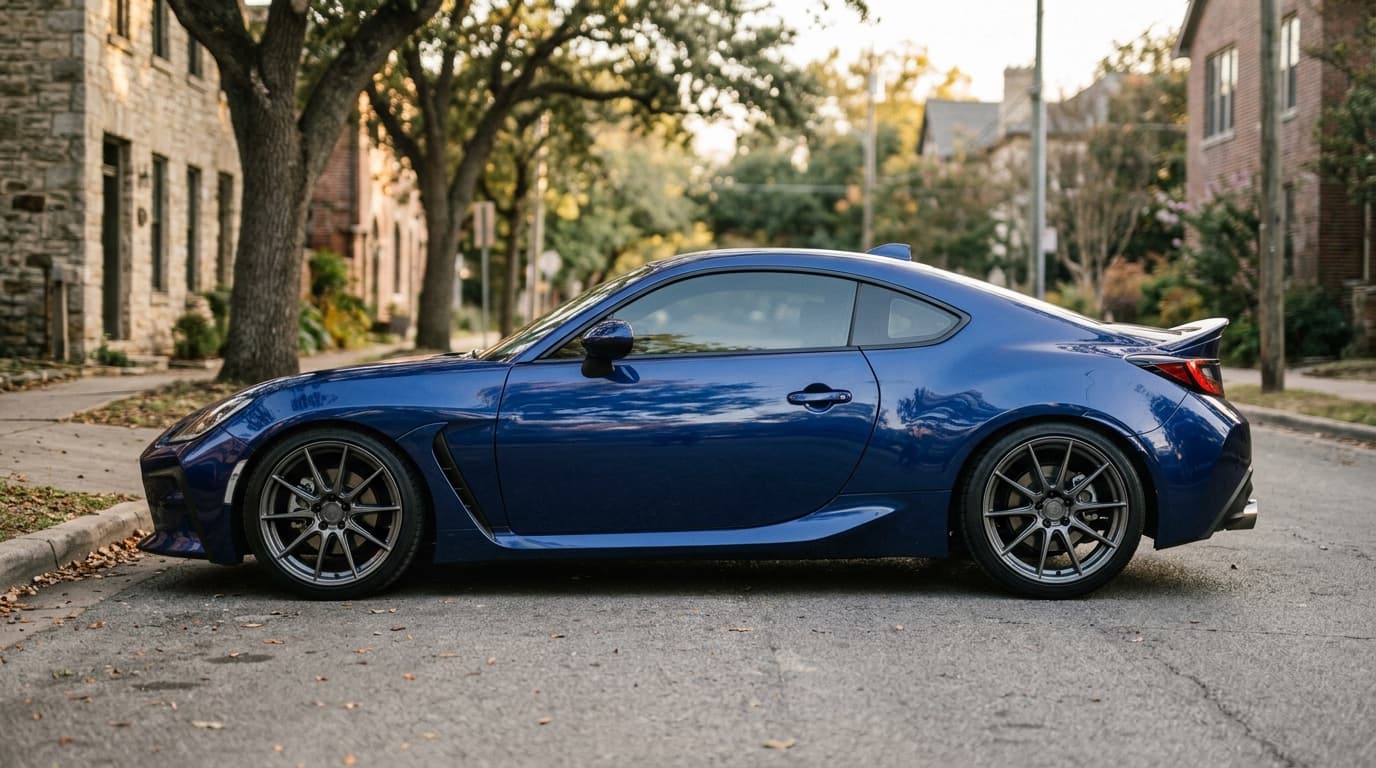
Mechanically, a spacer is negative offset you bolt on. A 10mm spacer behaves exactly like the same wheel with 10mm less offset - pushing it 10mm toward the fender. Everything in our wheel offset guide applies: track widens, stance fills out, and the suspension geometry shifts with it.
That geometry shift is the honest caveat. Chassis engineer Huibert Mees ran the numbers at The Autopian: an extreme 50mm spacer can turn a 15mm scrub radius into 65mm, multiplying steering forces and loading wheel bearings in ways they weren't designed for. The dose makes the poison - a 5-15mm spacer that brings a tucked wheel flush is a different animal from a 50mm one that redesigns your suspension. Change as little as the look requires.
Slip-on vs. bolt-on spacers: which type for which thickness?
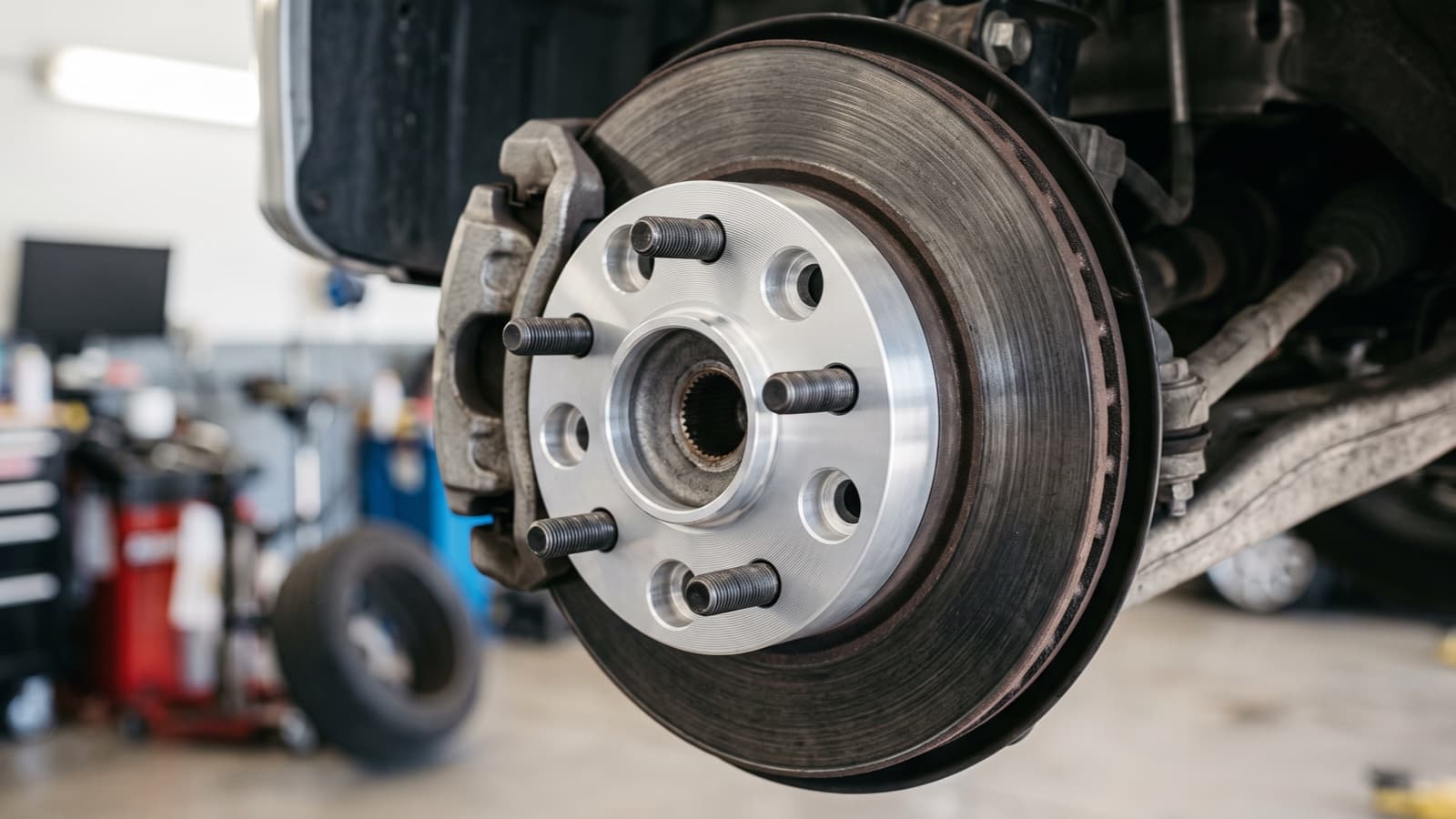
Thin spacers slip over the existing studs; thick ones bring their own. Both major manufacturers split their lines the same way:
| Spacer type | Thickness range | How it mounts |
|---|---|---|
| Slip-on (H&R DR / Eibach) | 3-25mm | Sits between wheel and hub; needs longer wheel bolts or studs |
| Slip-on with stud swap (H&R DRS) | 5-20mm | Existing studs replaced with longer ones |
| Bolt-on (H&R DRA) | 20-45mm | Bolts to the hub, provides its own fresh threads for the wheel |
| Bolt-on over studs (H&R DRM) | 15-65mm | Mounts on existing studs with its own nuts, wheel bolts to the spacer |
Ranges per H&R's TRAK+ line and Eibach's Pro-Spacer system. The logic is thread engagement: past a few millimeters, stock-length hardware can't grab enough thread through a slip-on spacer, so either the studs get longer or the spacer becomes a bolt-on with its own.
Why hub-centric is the word that matters
On a properly fitted wheel, the hub carries the car - the studs only clamp. Wheel maker Konig explains it bluntly: the protruding hub is load-bearing, and "all the studs or bolts do therefore is hold the wheel onto the hub." A hub-centric spacer replicates that interface - H&R's are machined with a full contact hub "just like the factory hub" for even load distribution.
A cheap lug-centric spacer breaks that chain: the wheel centers on the studs instead, which invites vibration and puts shear loads on fasteners that were engineered to clamp, not carry. When people say "spacers are dangerous," this is usually the part that actually was.
The two numbers that keep spacers safe
Number one: thread engagement. Eibach's installation instructions publish exact minimums by thread size - the table nobody reads and everybody should:
| Thread size | Minimum turns | ≈ engaged thread |
|---|---|---|
| M12 x 1.25 | 8.0 | 10mm |
| M12 x 1.5 | 6.5 | 10mm |
| M12 x 1.75 | 6.5 | 12mm |
| M14 x 1.5 | 7.5 | 11mm |
The trade rule of thumb points the same way - Modern Tire Dealer's wheel-fastening guide puts minimum engagement at no less than the fastener's own diameter, and on torque is absolute: only a torque wrench assures correct clamping loads - "there are no exceptions."
Number two: torque, on a schedule. H&R's install guide says star pattern, torque wrench, wheel maker's spec, spacer fully seated on a clean hub. Eibach's instructions add the schedule: re-check every fastener at about 25 miles, and again at 500 miles. And one more line from that same Eibach document that ends a popular forum debate: stacking two or more spacers "is not safe and should never be done."
What about wheel adapters?
An adapter is a spacer with a second job. Per H&R's lineup, wheel adapters change the bolt pattern so wheels from a different fitment can mount (15-50mm thick, built like bolt-on spacers with their own studs), while hub adapters convert the center bore for same-pattern wheels. Because an adapter is always a thick bolt-on device, every rule above applies with less margin for corner-cutting: hub-centric machining, full engagement on both sets of hardware, torque on schedule. Quality adapters are legitimate hardware; $40 no-name eBay adapters are how the horror stories start.
What do quality spacers cost?
Less than one wheel repair. Current anchors: an H&R DRS 5mm pair runs about $108, and a 20mm Eibach bolt-on pair with all hardware is $190 (both August 2026 prices). Off-road builds have their own benchmark in Spidertrax: billet 6061-T6, double anodized, pressed-in studs exceeding Grade 8, made in the USA.
Against a no-name $35 set with no material spec, no load testing, and no centering ring, the brand-name premium is the cheapest insurance in car modding. You're paying for the boring paperwork - alloy certs, fatigue tests, the ABE approval file - and the boring paperwork is the safety.
See the stance before you buy the hardware
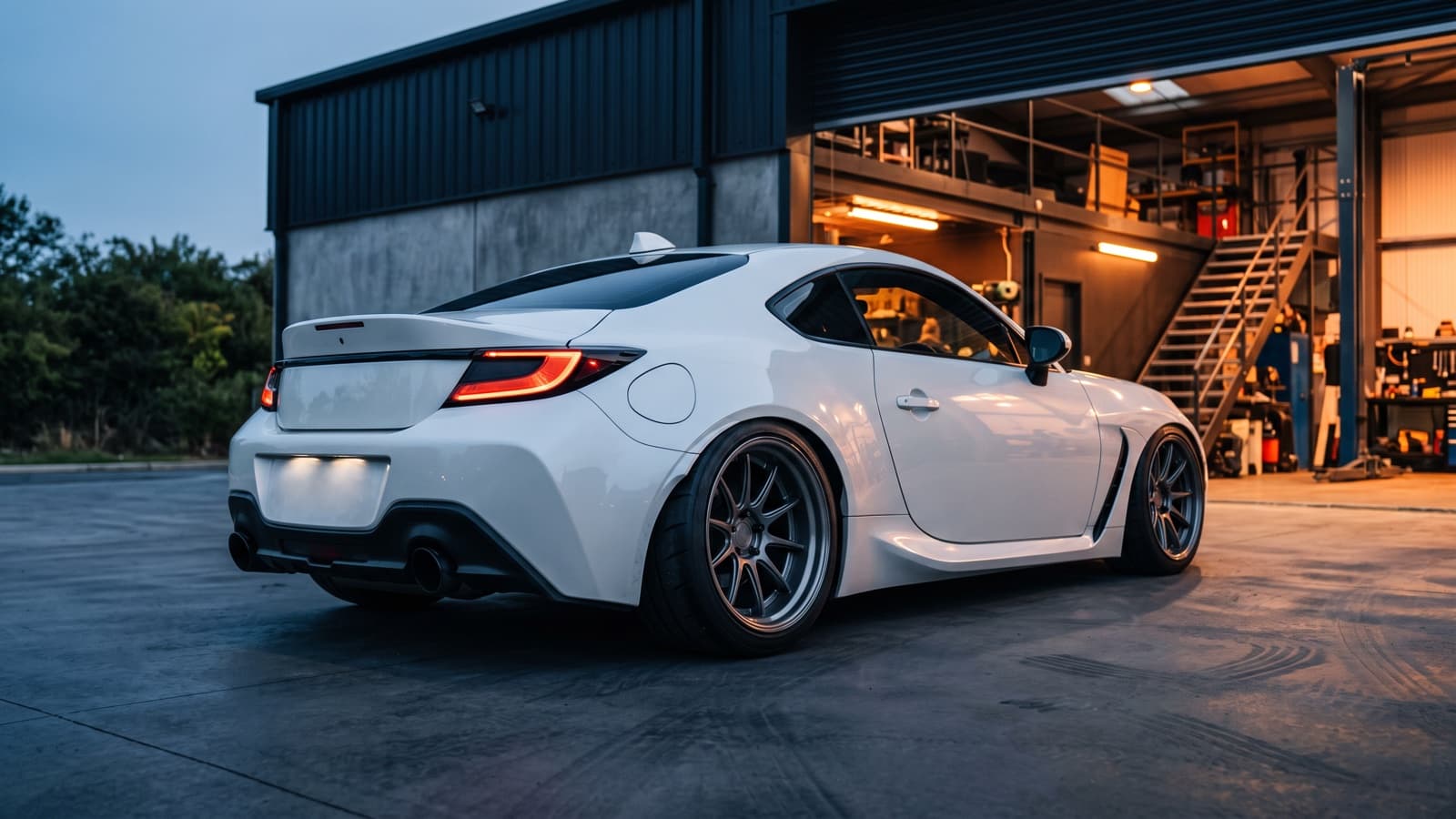
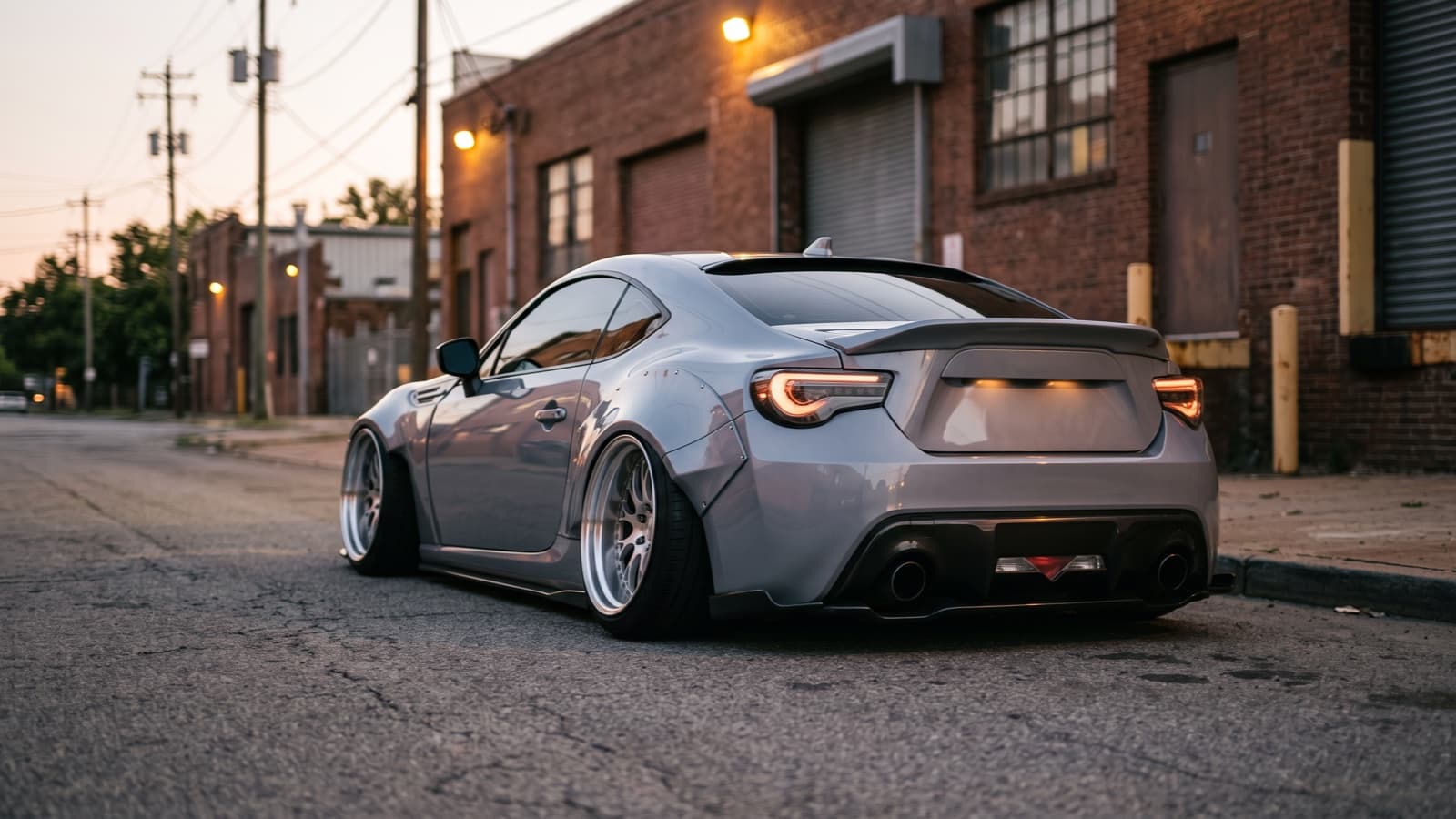
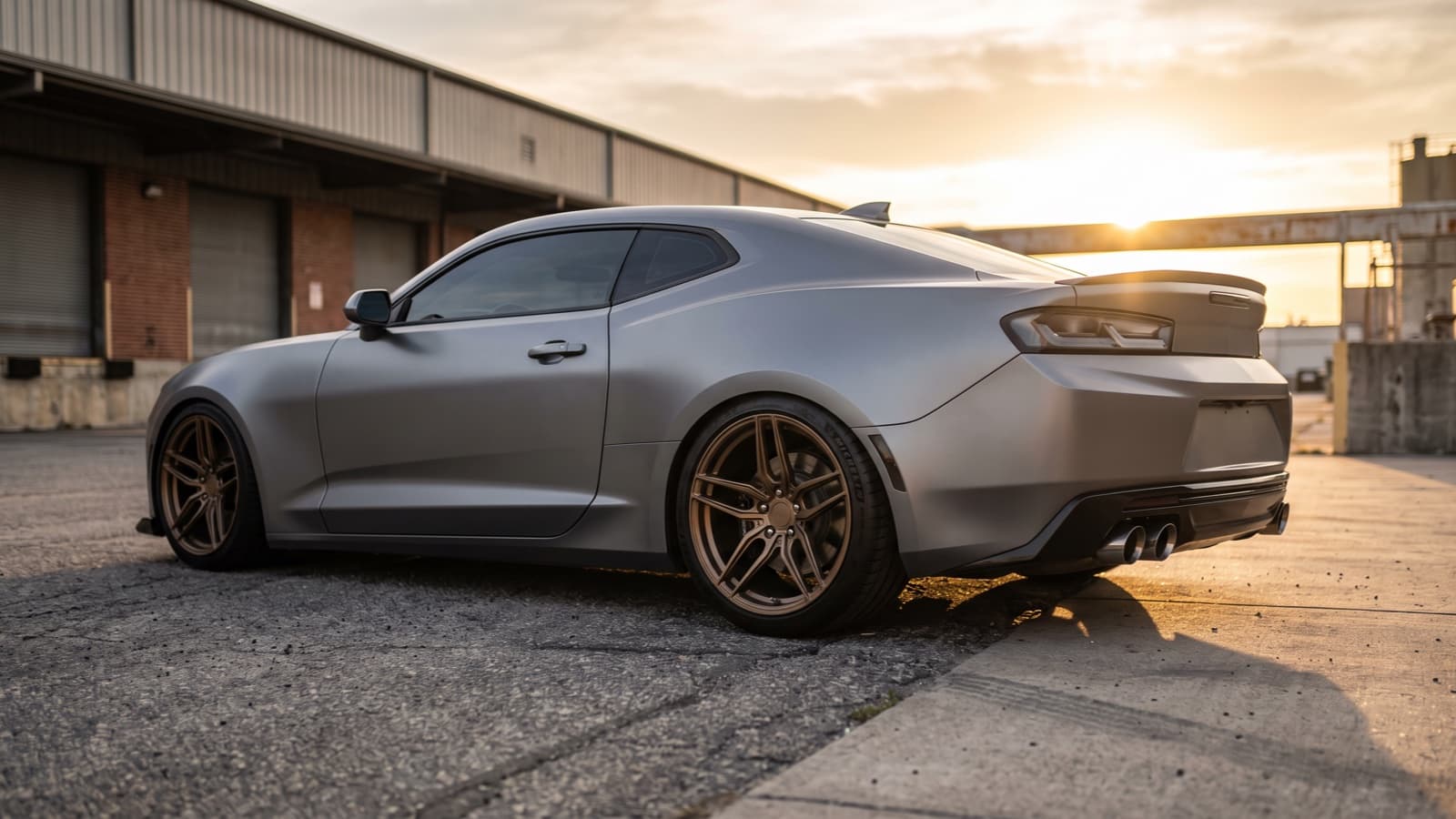
Nobody buys spacers for the engineering - you buy them for that last 10mm that makes the wheel sit flush with the fender. Which means the real question isn't only "are they safe?" but "will 12mm actually look right on my car, or do I need 15?"
Millimeters are hard to imagine and easy to render. Upload a photo of your car to VizTunr's free demo and preview the stance - see the wheel filling the arch before you order hardware, the same way you'd preview a wheel color before powder coating. It's the virtual try-on technology tuning shops use to close exactly these "how will it sit?" conversations. Try the look, pick your thickness with your eyes open, then buy the good hardware and a torque wrench. No account needed.
WheelsWheel SpacersFitmentStance
August 3, 2026 · 8 min readCategory: Wheels
Explore related