Wrapping a car costs somewhere between $300 and $12,000. That's the honest answer, and it's useless — the number depends entirely on what's being wrapped, in what film, by whom.
So here's the useful version: what you'll actually pay in 2026 for a full wrap, a partial wrap, or a DIY roll, what moves the price up or down, and the one step worth taking before you hand any shop a deposit — seeing the wrap on your own car first.
How much does it cost to wrap a car?
A professionally installed full wrap on a standard car costs $2,000–$5,000 in 2026. Kelley Blue Book puts the total realistic range at roughly $2,000 to $10,000+ once large vehicles and specialty films enter the picture. Wrapmate's May 2026 pricing guide breaks the middle of the market down by finish: gloss full wraps run $1,500–$5,000 depending on vehicle size, matte typically $2,500–$5,000, and carbon fiber $4,500–$6,500. Partial wraps — a hood, roof, or single panel — start around $300–$500, and most land under $1,500. DIY film for a full car costs $300–$800 before you factor in your weekend, your patience, and the panels you'll redo. The spread isn't shops making numbers up: it's surface area, film quality, and installer skill, in that order.
| Wrap type | Typical 2026 price |
|---|---|
| Partial wrap (hood, roof, single panel) | $300–$1,500 |
| Full wrap, gloss vinyl | $1,500–$5,000 |
| Full wrap, matte or satin | $2,500–$5,000 |
| Full wrap, carbon fiber | $4,500–$6,500 |
| Full wrap, chrome or color-shift | $6,000–$12,000+ |
| DIY full wrap (film + tools) | $300–$800 |
What actually determines the price?
Four things, and they're not weighted the way most people assume:
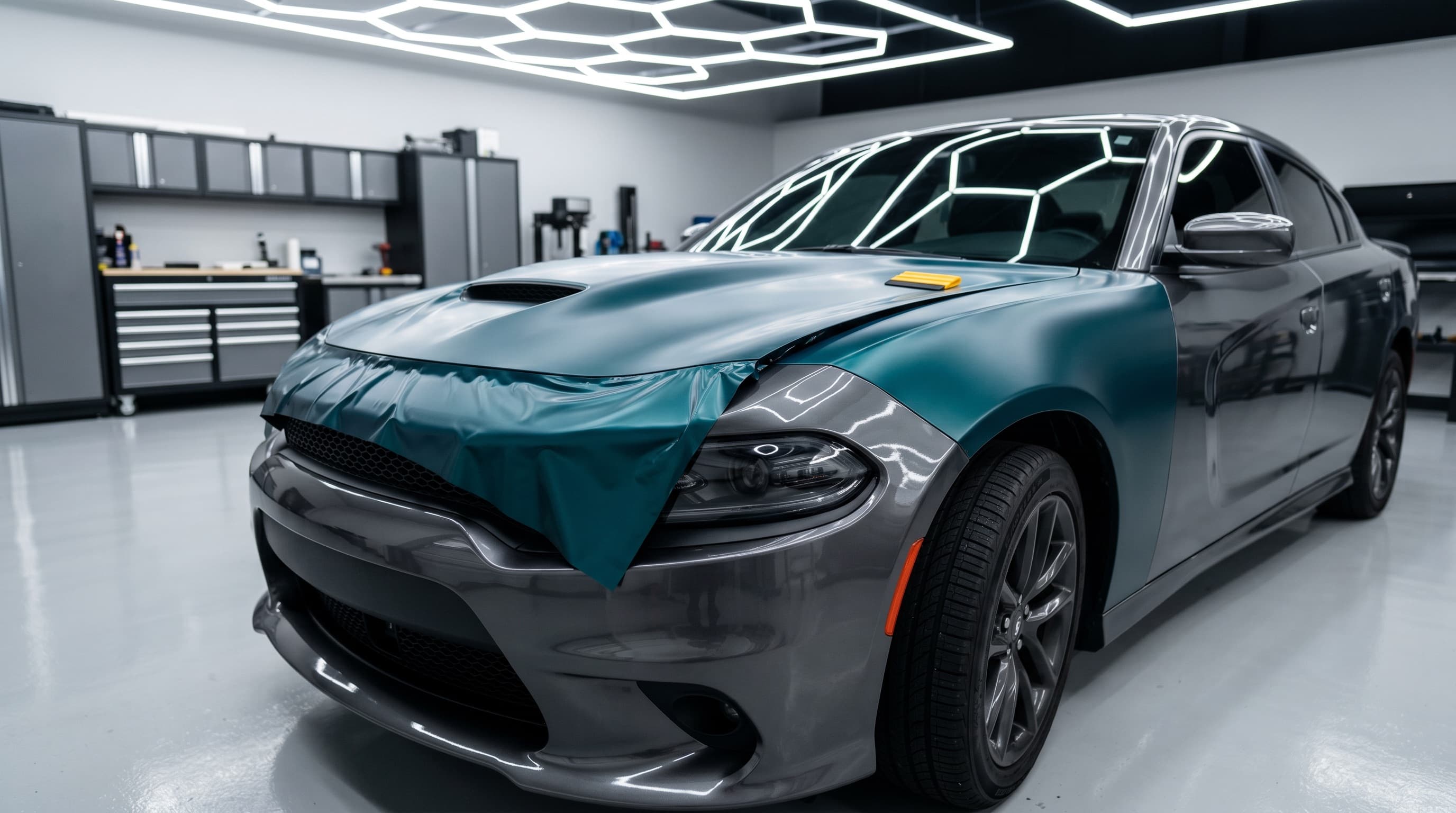
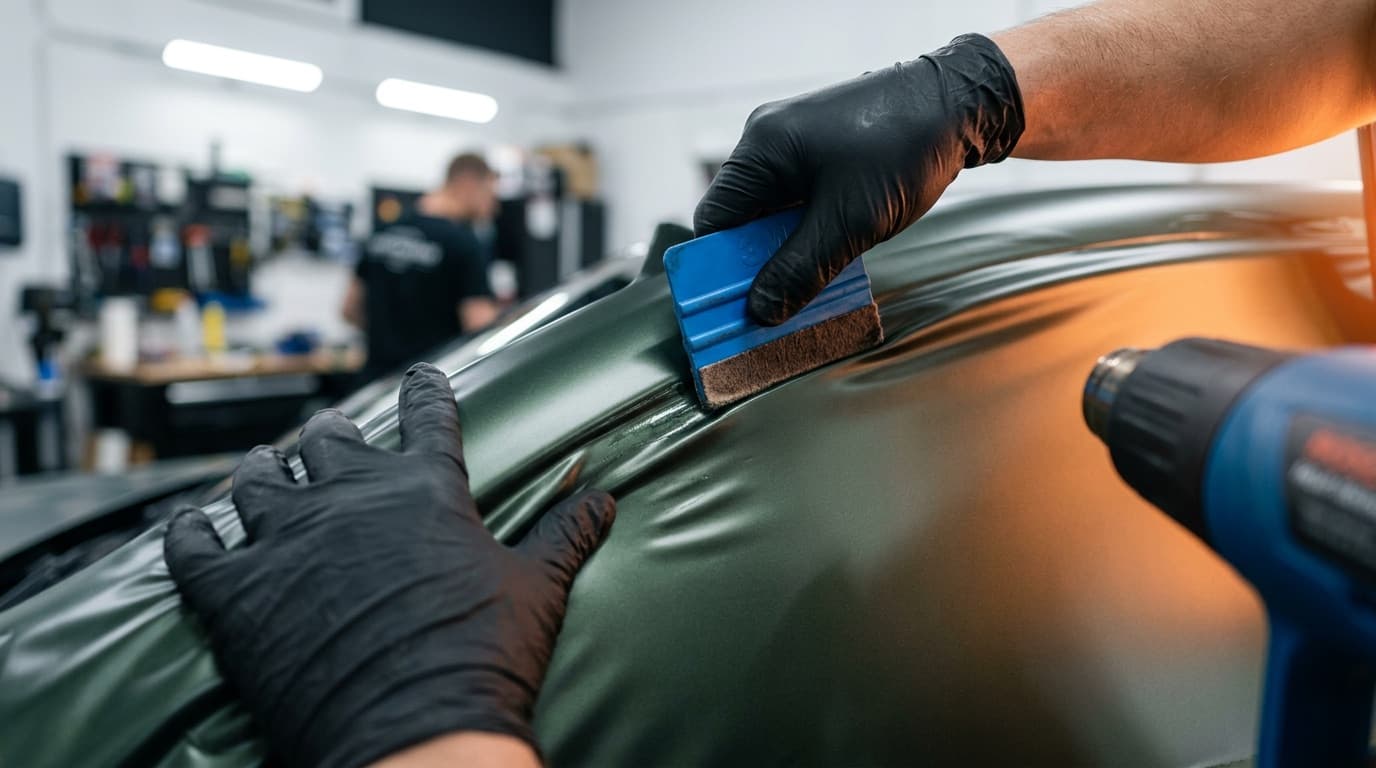
- Labor is the biggest line item. Installation accounts for 30–45% of a professional quote. A full wrap is 2–4 days of skilled hands working film around bumpers, mirrors, handles, and recessed panels — the places where cheap installs fail first.
- Film is second. The vinyl itself is 25–35% of the total. Premium cast film from 3M or Avery Dennison runs $8–$12 per square foot, and an average car needs roughly 250 square feet. Budget calendered film costs less up front and shrinks, fades, and lifts sooner.
- Your car's size and shape. More surface area means more film and more hours. But complexity matters as much as size — a curvy coupe with door cups and a diffuser can out-cost a slab-sided van.
- Prep and design. Shops charge $200–$1,000+ for paint correction if the surface needs it (vinyl amplifies every chip it covers), and commercial jobs add a $250–$400 design fee.
How much does a wrap cost by vehicle size?
Vehicle size sets the floor of any wrap quote. YesWrap's 2026 price guide lays out the standard-vinyl, professional-install ranges: compact cars $2,500–$3,500, sedans $3,000–$4,500, SUVs $3,500–$5,500, pickup trucks $4,000–$6,500, and vans $4,500–$7,500. The jump from compact to van is almost entirely surface area — a van carries nearly twice the film and the install hours of a hatchback. Luxury and exotic bodywork breaks the scale in the other direction: complex curves, sensors, and disassembly push full wraps on high-end cars to $8,000–$12,000+ regardless of their footprint.
| Vehicle | Full wrap, standard vinyl (2026) |
|---|---|
| Compact car | $2,500–$3,500 |
| Sedan | $3,000–$4,500 |
| SUV | $3,500–$5,500 |
| Pickup truck | $4,000–$6,500 |
| Van | $4,500–$7,500 |
| Luxury / exotic | $8,000–$12,000+ |
What about matte, chrome, and color-shift finishes?
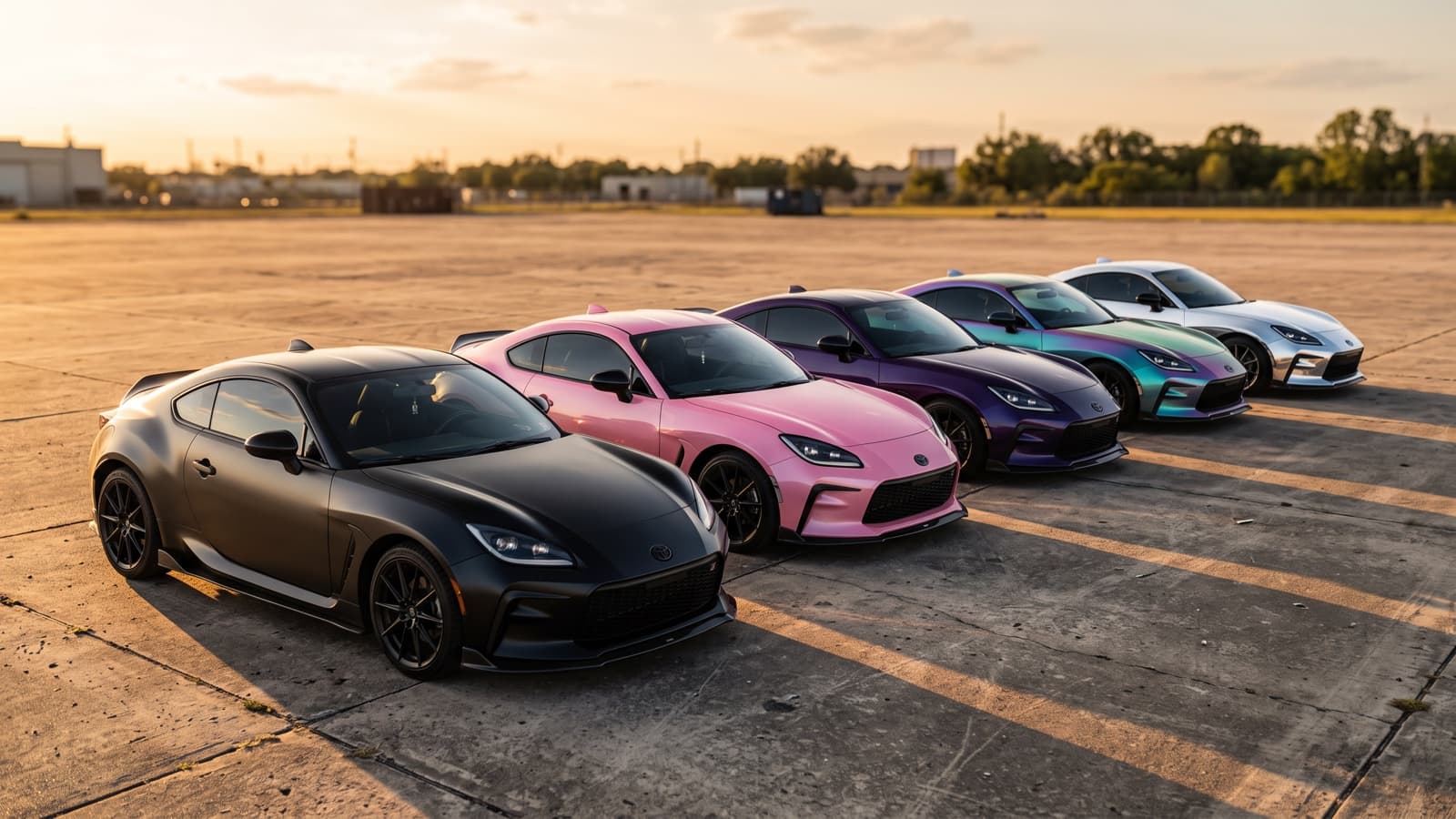
Finish choice is where identical cars end up with wildly different invoices. Gloss is the baseline. Satin and matte typically add 10–25% — the film costs more and shows every installation flaw, so shops price in the extra care. Metallic and pearl films add a moderate premium on top of that.
Chrome and color-shift are their own category. The film is expensive, unforgiving to stretch, and slow to install, which is why chrome full wraps start around $6,000 and climb well past $10,000. If a shop quotes you chrome at gloss prices, ask what film they're using — then ask again.
Here's the uncomfortable part: a finish is exactly the thing you can't judge from a swatch. Satin black transforms some cars and deadens others. A 5 cm sample square under shop lighting tells you nothing about how it reads across your car's body lines in daylight — which is why finish regret, not color regret, drives most wrap-removal stories.
Is DIY wrapping worth it?
Financially, the math is tempting: $300–$800 in film and tools versus $3,000+ at a shop. Practically, the labor you're saving is 30–45% of a professional quote because it's genuinely hard. Flat panels — hood, roof — are learnable in an afternoon. Bumpers, mirrors, and door handles are where first-timers create wrinkles, overstretched patches that fail in the sun, and torn film that has to be bought twice. A realistic middle path: DIY the flat panels or start with a partial wrap, and pay a professional for the compound curves. And if your car's paint is flaking or chipped, stop — vinyl needs sound paint to grip, and removal will take loose paint with it.
What hidden costs should you budget for?
The quote is rarely the whole number. Four extras show up often enough to plan for:
- Removing an old wrap: $500–$2,000. Aged, sun-baked vinyl comes off in fragments and takes hours of steaming. If your car is already wrapped, say so when you ask for quotes.
- Paint correction: $200–$1,000+. Wrap film telegraphs whatever is underneath it. Shops will (rightly) refuse to warranty film over damaged paint.
- Replacement panels down the road. A keyed door or parking-lot scrape means re-wrapping that panel — one advantage over paint, since it's a panel and not a blend, but still a cost. Keep your color code.
- Shortened lifespan from how you park. A wrap lasts 3–5 years, but that's the range, not a promise. Daily sun and automatic car washes push you toward year three; a garage and hand washes toward year five. Same invoice, two very different cost-per-year outcomes.
See the wrap on your car before you pay for it
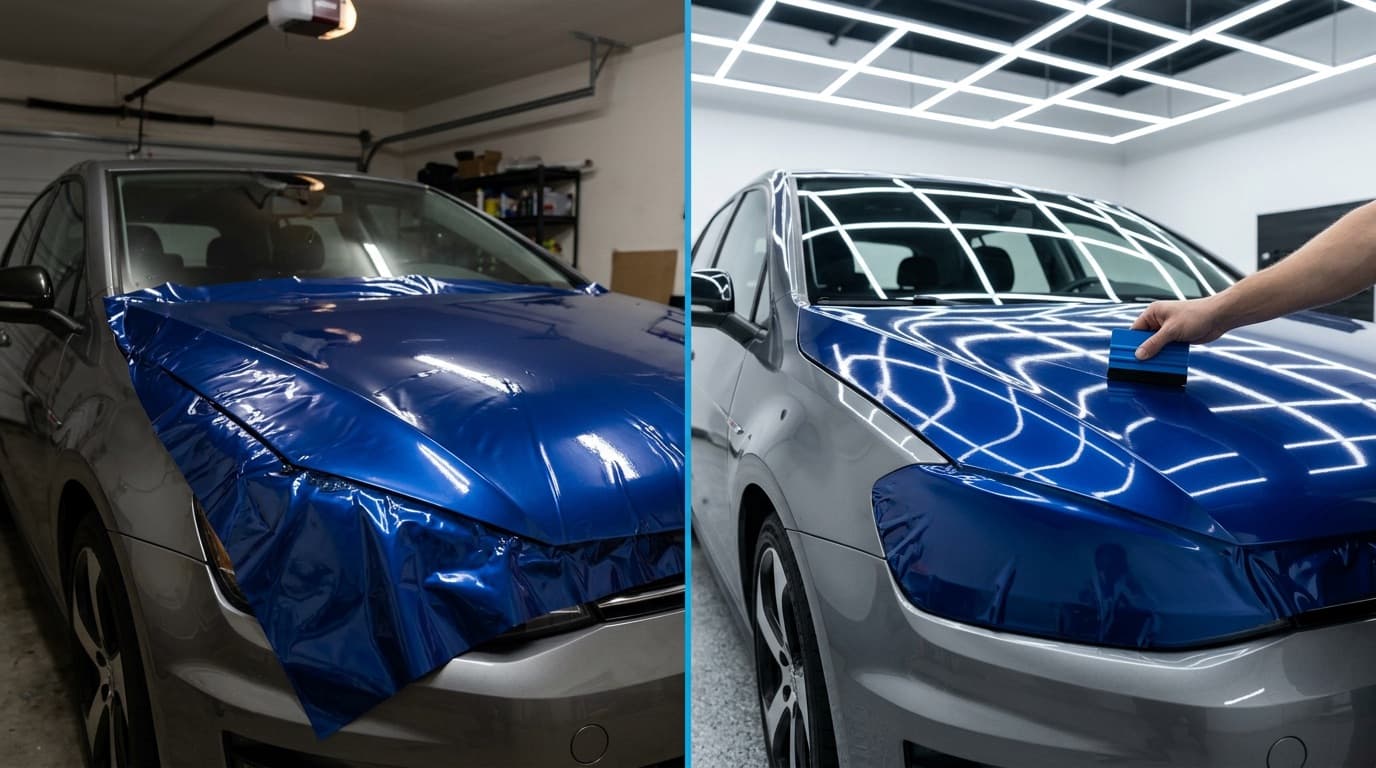
The real risk in a wrap isn't the price — it's paying $3,500 for a finish you've only ever seen on someone else's car. Color and finish behave differently on every body shape, and a wrap is the most visual purchase you'll make for your car with the least ability to preview it. Or at least it was.
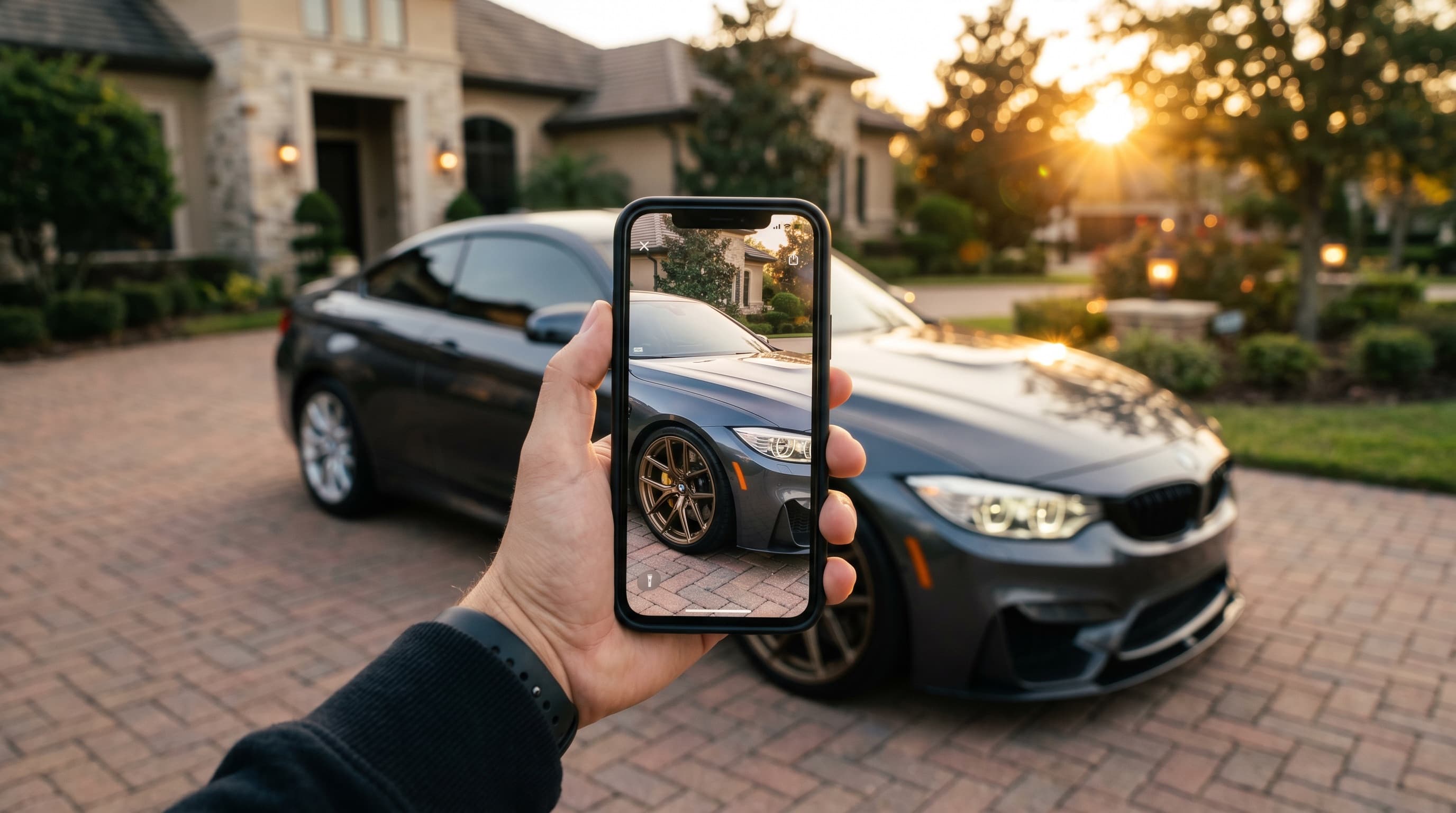
AI try-on fixes the preview problem. Upload one photo of your actual car — your model, your stance, your driveway lighting — and see it rendered photorealistically in the wrap you're considering, in about a minute. Not a template car in roughly your color. Yours. It's the same virtual try-on approach tuning shops use to stop quotes from dying at the counter, pointed at the biggest-ticket visual decision of all.
Try it now on the free demo shop — pick a wrap or color, upload your car, no account needed. Two minutes of previewing beats three years of satin-black second thoughts.
If you run a wrap shop: every customer who walks in has this exact hesitation, and a render of their car in your film is the strongest closer you can add to a quote. See how VizTunr works for shops.
WrapCar Wrap CostVinyl WrapWrap Pricing
July 6, 2026 · 7 min readCategory: Wraps
Explore related